Roof Systems
Built-Up Roofing
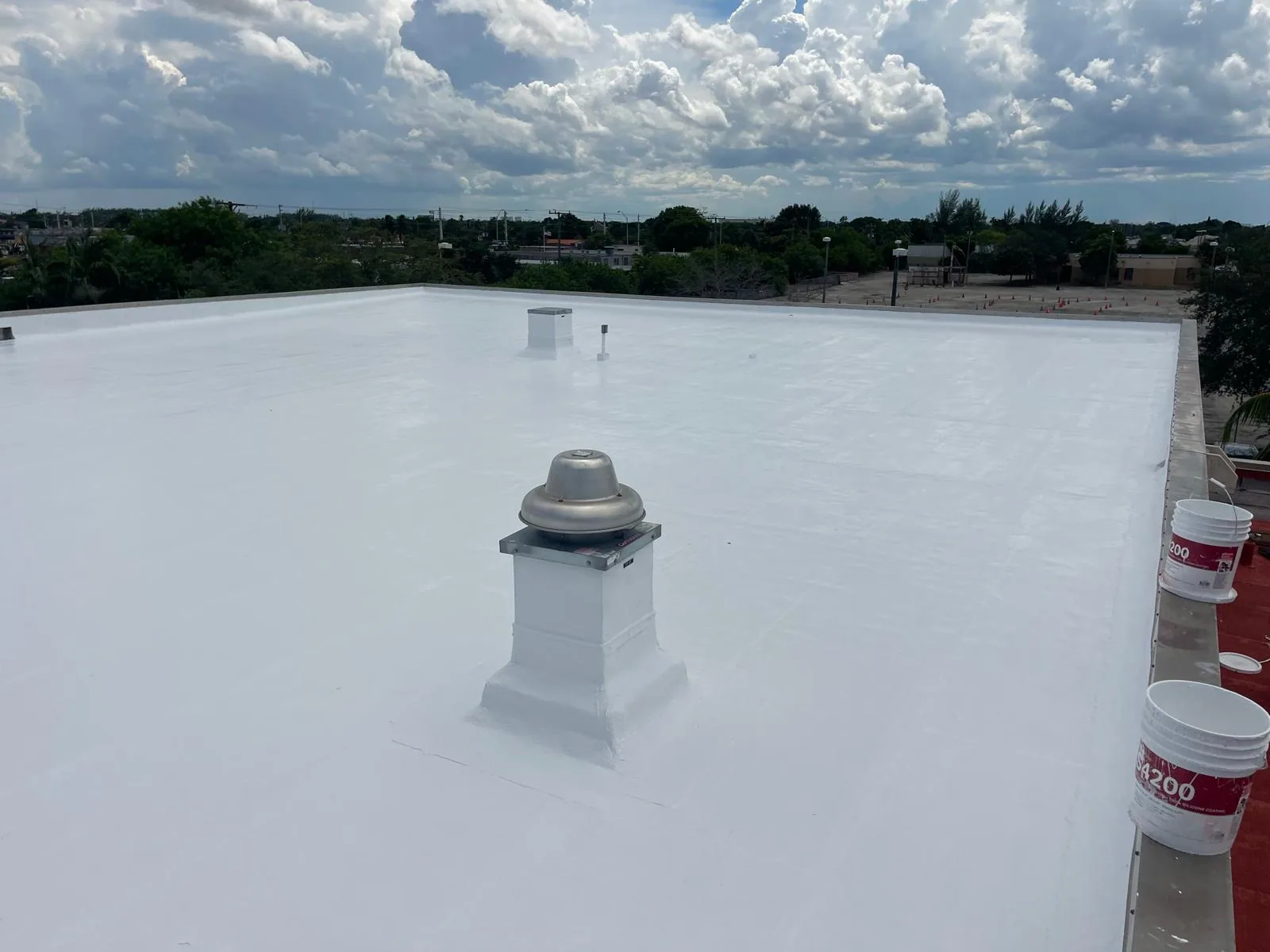
A built-up roof can hide the first failure below gravel or a reflective coating. We inspect exposed surfacing, seams, flashing, drains, and prior patches before deciding how much of the assembly to open. Indianapolis normals list 8.8 inches of snow in January, 6.0 in February, and 6.4 in December. We review drains and perimeter transitions after winter exposure on Fishers roofs. The field record identifies what was visible, what was sampled, and which layer remains unconfirmed. That keeps a repair estimate from assuming the entire roof matches one exposed corner.
How many layers remain?
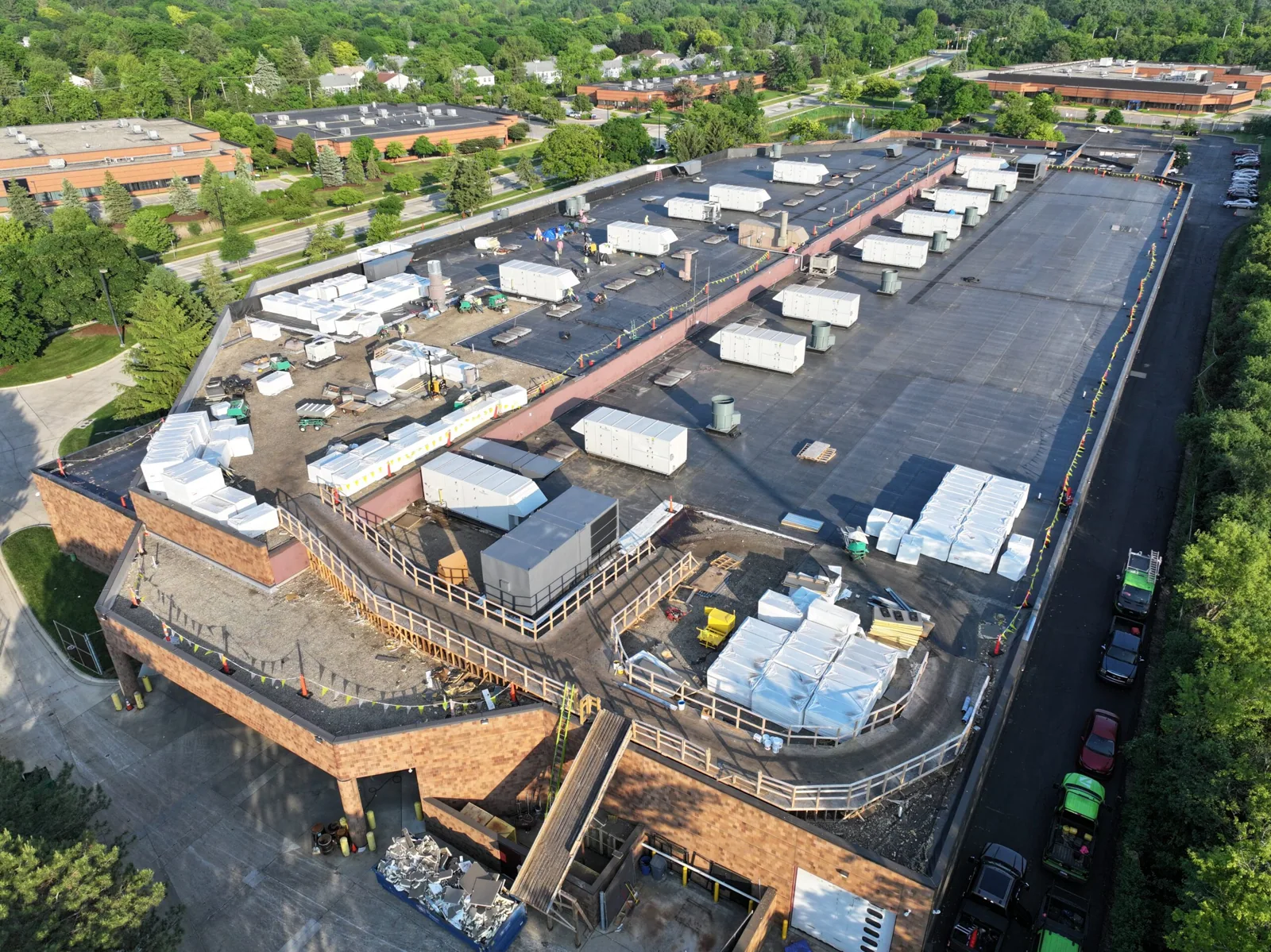
Built-up roofing combines multiple asphaltic plies and surfacing, but additions and previous recover work can change the stack. We review records, exposed edges, drains, and wall transitions to identify layer count where possible. If the assembly is unclear, a test cut can show the materials and condition at one location. We document the sample, restore the opening, and keep its result tied to that roof section. The owner can then compare patching, recover, and tear-off using a defined test boundary.
Fishers Life Sciences and Innovation Park covers more than 70 acres and includes suppliers, research and development, and contract manufacturing organizations. For work there, the facility contact sets shutdown and access windows while our inspection verifies the roof layers. A Life Sciences Park visit coordinates location and access, while a roof inspection records layers, drainage, and visible conditions.
What does gravel or coating conceal?
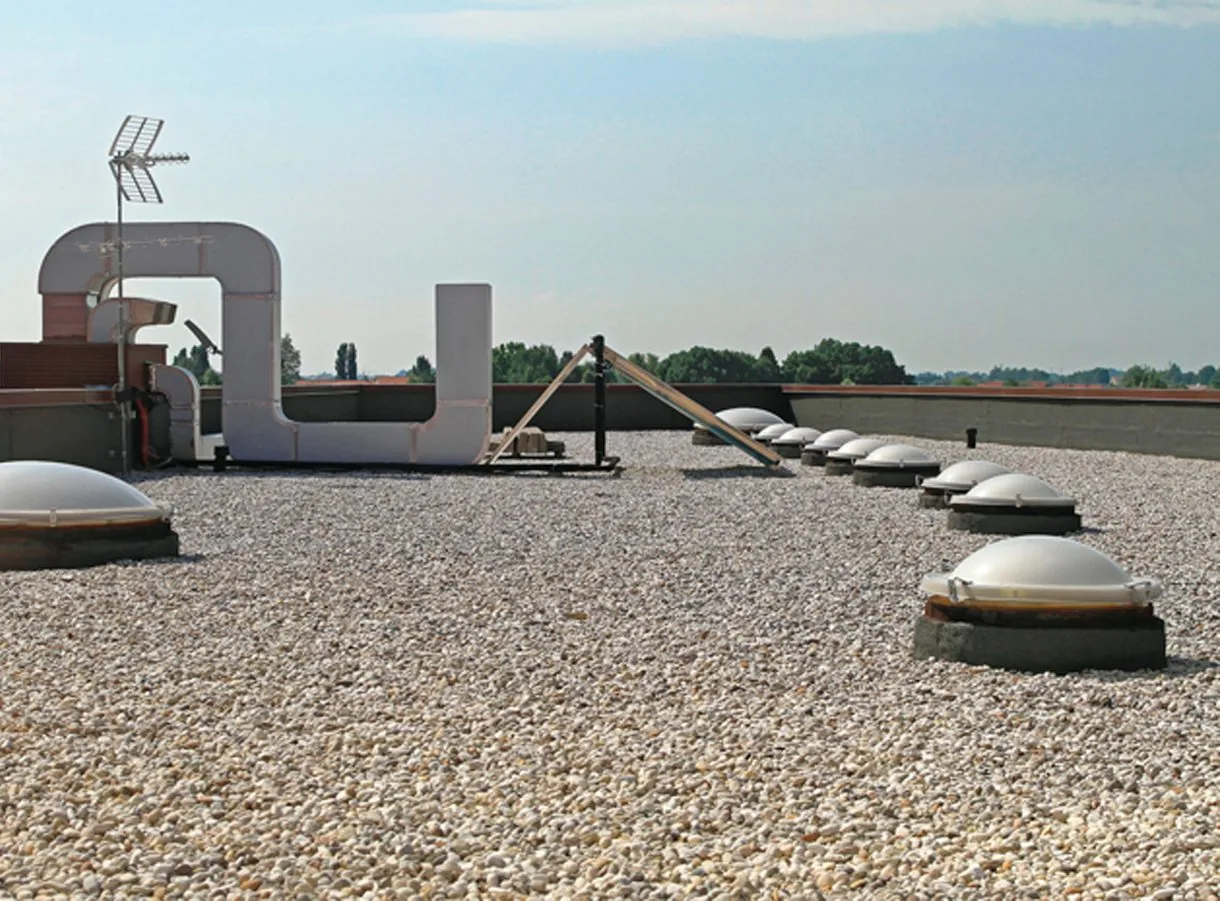
Surfacing protects the asphaltic plies but can cover open seams, blisters, or old repair edges. We inspect representative areas, look for displaced gravel, split flashing, soft spots, and water staining, and check whether the surface remains attached. Where gravel is present, the repair method must clear enough material for a sound tie-in and restore protection afterward. On a coated built-up system, we identify the coating and its condition before selecting a new product. A surface appearance alone does not establish the layer condition below.
Fishers’ commercial core follows I-69 and State Road 37, and the 116th Street corridor connects downtown with commercial destinations near I-69. A 116th Street property may have different access requirements from a site at the Life Sciences park. We confirm delivery and roof-entry rules with the owner. The roof assembly determines the repair sequence, while the location helps plan the route and work window.
Roof Systems
Where do leaks move through the plies?
Water can pass through a split cap sheet, move between plies, and appear inside away from the entry point. We compare the reported room with roof slope, drains, flashing, expansion joints, and previous repairs. If a wet area appears broad, moisture readings or test openings can help define the removal boundary. We note test locations, layer condition, and whether water has reached the deck. The repair plan describes which plies will be removed and where the new material will tie into the remaining assembly. Loose gravel around a curb or drain should be cleared only within the repair area and restored after the tie-in is complete. The closeout records the finished surfacing so a later walk can distinguish new work from displaced material.
Indianapolis normals record 43.63 inches of annual precipitation, with wet months and winter snow placing ongoing demand on drainage. We inspect drain sumps, scuppers, overflows, and low spots before closing the roof. A drainage review can identify a blocked outlet, while a leak investigation follows the interior report to the roof detail. If an opening requires immediate protection, we document temporary dry-in separately from permanent work.
Roof Systems
How does a built-up repair close?
We remove loose surfacing and failed material to a stable boundary, prepare the exposed area, and rebuild the required plies. The repair may use hot asphalt, cold-applied products, or compatible sheet materials depending on the existing system and project requirements. Flashing at walls, drains, and curbs needs its own tie-in. We protect the opening during removal and close each shift with a dry-in that preserves drainage. If the deck is soft or insulation wet beyond the assumed limit, work stops for an owner decision.
For a multi-ply repair, work sequencing matters because each exposed layer must remain protected while the next is installed. We agree on the opening size, material staging, fire precautions where applicable, and the point where the roof will be closed each day. If the schedule changes, the general contractor and facilities contact receive the updated work boundary. We record which plies are complete and where another trade must finish before the final flashing can be installed.
When another membrane is under consideration, the project team compares the current BUR with a modified bitumen assembly or a TPO system based on the building and design. Those options have different seams, attachment, and transitions. A repair scope should identify materials, layer count, surfacing restoration, test points, and any work assigned to another trade.
When should the roof enter renewal planning?
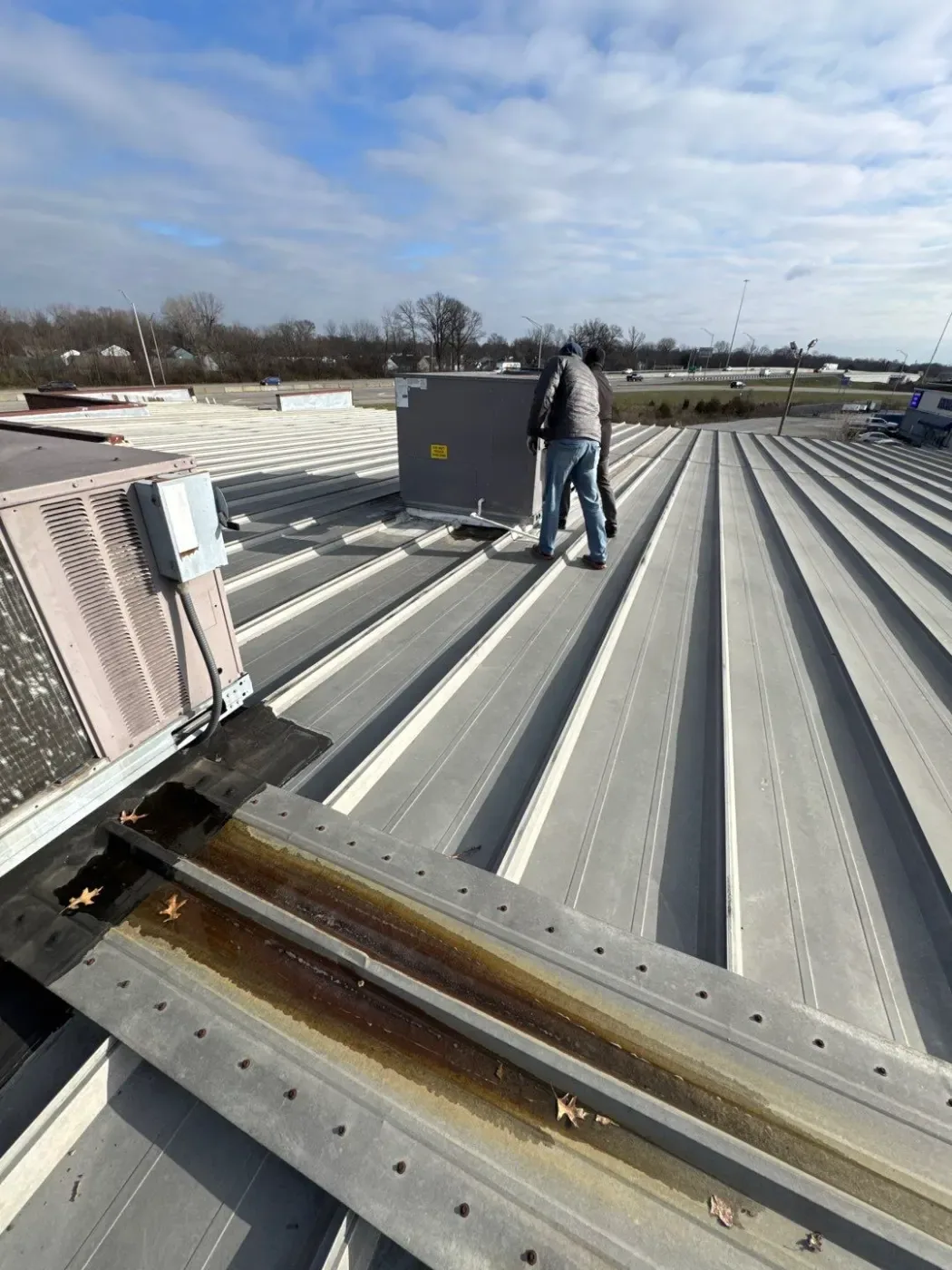
Repeated leaks, deteriorated surfacing across multiple zones, wet insulation, or a high layer count can change the repair decision. We compare the tested areas with the owner’s capital window and the cost of continued access. Recover work depends on attachment, moisture, height, and drainage. Tear-off scope depends on removal depth, disposal, insulation, cover board, perimeter details, and protection below. The proposal states which assumptions are confirmed and which could change after opening.
Budget comparison should include recurring access, temporary protection, disposal, and the disruption associated with repeated repairs. We list these costs qualitatively alongside measured quantities and the test results. That allows the owner to compare a local patch with a broader roof section without treating uncertain layers as confirmed work.
Noblesville's featured development districts include Innovation Mile, Washington Business Park, Campus Center, and Deer Creek. For an owner with facilities in both cities, a shared review can compare photos, test boundaries, repair history, and renewal timing for each roof.
Talk to Our Roofing Team
Call 555-555-5555 or request a roof assessment. Tell us the address, the roof type if you know it and where water or damage is showing. We work across Fishers, Carmel, Noblesville, Westfield, Zionsville and the surrounding communities.
Roof Systems
Preserve the roof history
Closeout includes the layers observed, material installed, surfacing restored, photos, test locations, and the repair boundary. We list areas that were not opened and any follow-up needed after drying or another trade’s work. The next inspection should revisit drainage, flashing, and recurring leak zones. That creates a usable record for a future reroof, where the owner can compare actual layer conditions with the prior repair map.
Share the roof plan, leak history, closeout records, access requirements, and construction schedule. We will inspect the assembly and identify whether a local repair, a larger section, or a capital review fits the evidence. The Diligence Notes should leave the general contractor with a clear tie-in and closure sequence.
Frequently Asked Questions
How do you inspect a built-up roof with gravel surfacing?
We review exposed transitions, remove surfacing only where needed for inspection or repair, and record what layer is visible. A test opening can confirm the stack at its sample point.
Can built-up roofing be repaired without removing every ply?
Yes, when the surrounding assembly remains serviceable and the repair can tie into stable material. We define the layer and boundary before pricing removal.
Why does water show up far from a BUR opening?
Water can move between plies or along the deck before reaching the interior. We compare roof slope, drains, flashing, and test results with the reported room.
How does Fishers precipitation affect built-up roof maintenance?
Indianapolis normals show 43.63 inches of annual precipitation and 25.5 inches of snowfall. We keep drains, flashing, and temporary dry-in in the maintenance cycle.
When should a built-up roof be considered for replacement?
Multiple wet zones, deteriorated surfacing, repeated repairs, or added layer height can change the comparison. We document test results and estimate the removal boundary before recommending renewal.
Fishers, IN
Map the built-up roof layers
Share the roof plan, repair history, leak locations, access window, and construction schedule. We will document the assembly and define the next scope decision.