Industries We Serve
Manufacturers
A leak above a production line can disrupt a shift before the roof opening is located. We trace the report to a roof section, identify the assembly, and coordinate protection with the plant contact. Manufacturing buildings may combine process space, labs, offices, loading areas, and equipment yards. Each zone has a different access and shutdown condition, so the inspection record should connect roof observations to the production area below without assuming all operations can pause.
Fishers Life Sciences & Innovation Park supports suppliers, research and development, and contract manufacturing, and sits east of I-69 near 126th Street. The city's broader commercial core follows I-69 and State Road 37. A roof visit in the life-sciences park starts with that facility's map, production schedule, and approved access route.
Which production areas cannot take water or debris?
The plant contact identifies active lines, sensitive equipment, raw-material storage, finished-goods areas, and routes that must remain open. We record the reported interior location, shift, and recent weather, then agree on covers, barriers, and any ceiling access before opening the roof. If one production line can stop for a short interval, the manager sets that window and the person who approves its restart.
Large process equipment can make roof access different from ground access. We confirm hatch routes, lift clearances, overhead services, and where material can be staged. If a crane, exhaust stack, or pipe rack constrains the repair, the scope identifies the interface and the trade responsible for equipment movement. Roofing crews do not disconnect process lines or operate plant machinery. A phased work sequence can place roof tasks around production handoffs and define a secure daily stopping point.
Fishers has seen commercial construction activity, including 137 commercial permits in 2024 compared with 123 the year before. When construction overlaps roof work, we compare current drawings with field conditions and coordinate the general contractor's access, penetrations, and dry-in responsibilities. A general-contractor coordination plan can identify those interfaces before new equipment or rooftop curbs are installed.
What roof system and interfaces are present?
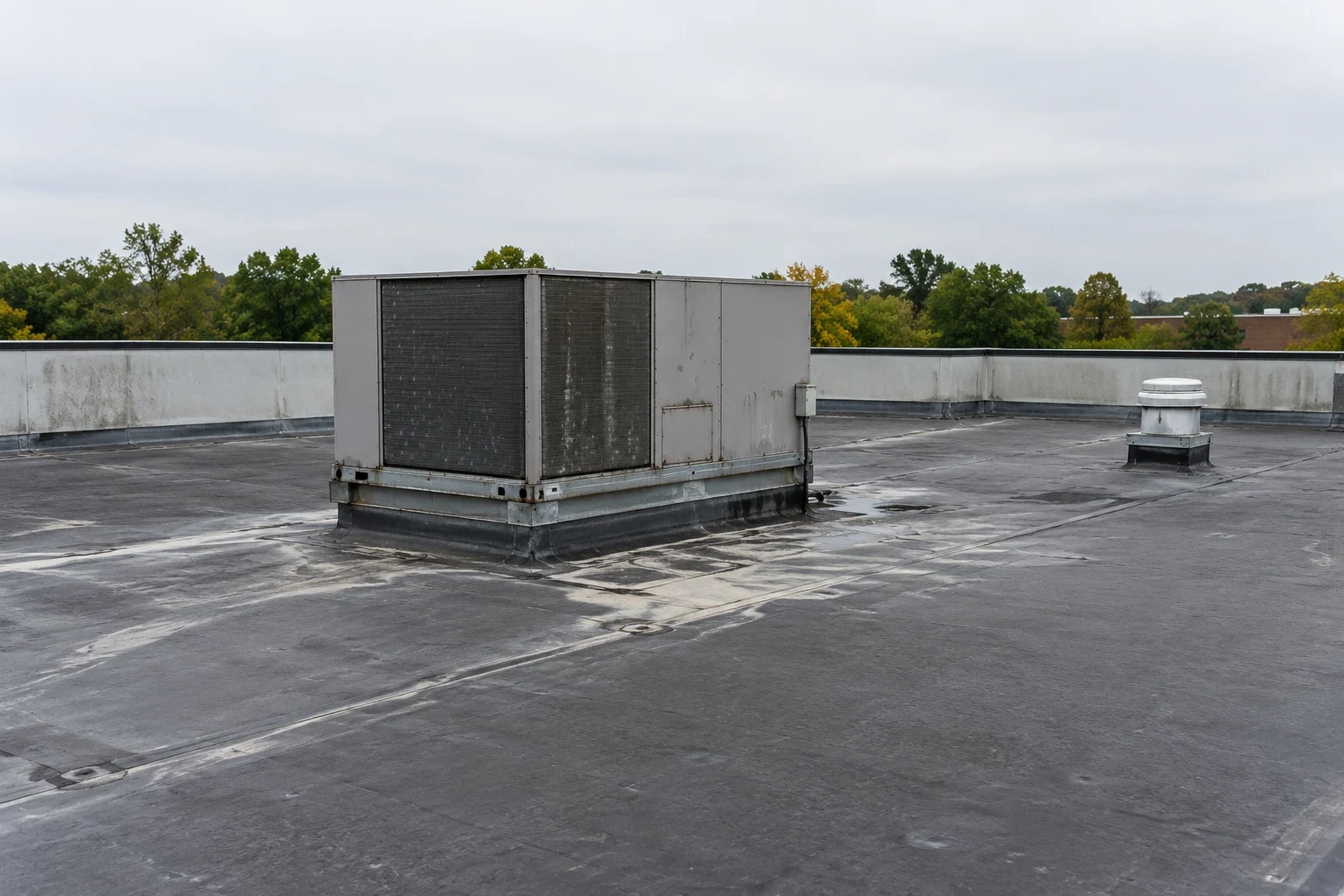
Manufacturing does not imply one roof type. We identify membrane, metal panel, built-up, coating, insulation, and cover-board layers from available records and visible details. At a seam, we check bond or weld, movement, prior patches, and whether adjacent material can accept a compatible tie-in. At metal, we inspect fasteners, panel laps, corrosion, and transitions. The repair method follows that verified assembly rather than the plant's industry label.
New exhaust, process piping, solar supports, or ventilation work can change a roof detail. We note the curb or penetration, identify flashing condition, and ask which contractor controls the unit. If a process line must remain active, the facility confirms the permitted access and any shutdown through its responsible trade. A membrane assembly review or metal-panel review can help frame the inspection questions while keeping the recommendation tied to field evidence.
A roof leak may cross an expansion joint or wall before reaching a ceiling. We compare slopes, drains, penetrations, and interior marks, then map the likely water path. If the layer is concealed, a test opening or moisture survey may be useful. The plant approves its location, protection below, and restoration before testing begins. The report separates confirmed opening from a suspected route that requires further evidence.
Industries We Serve
How can seasonal conditions change the work window?
Indianapolis normals include about 25.5 inches of snow and recurring freeze-thaw conditions. Snowmelt can expose a blocked drain, while overnight refreezing can make roof access unsafe or change how water reaches an edge. We inspect outlets and overflow paths when conditions allow, record any inaccessible area, and set a return trigger. We use the seasonal pattern to schedule checks of outlets and overflow paths, then record the condition found at each roof section.
Rain forecasts, surface temperature, humidity, and wind can affect membrane welding, adhesives, coating cure, and temporary dry-in. The crew verifies material conditions and leaves each work zone secure before exiting. If a production window ends before a permanent tie-in is complete, the facility contact receives the temporary protection boundary and next visit condition. A rapid response can stabilize active water entry while permanent installation waits for a safe, compatible window.
After a reported severe-weather event, we inspect edge metal, panel joints, membrane laps, equipment supports, and penetrations, then photograph the observed conditions before separating urgent work from maintenance.
Industries We Serve
When does a repair become a capital decision?
A localized defect can be repaired when the surrounding membrane, metal, attachment, and substrate support a durable tie-in. We define preparation, materials, measured area, and access assumptions. If removal reveals wet insulation, corrosion, or deck damage, we secure the opening and submit the new quantity for approval. The agreed boundary is maintained unless the facility authorizes a change.
Leaks in multiple production zones, broad moisture, failed seams, or weak attachment may justify comparing recover with replacement. Recover requires a dry, stable, compatible retained system and acceptable elevations at drains, curbs, and edges. Replacement can add tear-off, insulation, deck work, flashing, and a production-by-production dry-in. A renewal estimate should identify shutdown dependencies and separate roof quantities from equipment work.
Manufacturing teams may need to rank many facilities. A building-management record system can preserve roof maps, repair history, open risks, and approval contacts across a portfolio. A capital planning review can then sequence projects by evidence and production constraints, not by an unsupported lifespan assumption.
What records help operations resume?
Closeout identifies the affected building, roof grid, repair detail, material, photographs, test results, and zones not reached. It states whether the roof is permanently repaired or temporarily protected, names any remaining exposure, and assigns follow-up with another contractor. The plant can use that record to align roof maintenance with planned shutdowns and equipment servicing. Before production resumes, closeout should identify any opening, test, or temporary cover still awaiting a return visit. Match the roof section to the line or equipment below only when the facility map supports the link. This gives maintenance staff a route to report a repeat symptom without extending findings across the plant.
A broader site register records each building's delivery route, security procedures, approved staging, photographs, and next action by roof section.
Send the roof plan, line or room affected, production calendar, equipment list, prior repairs, safety restrictions, and shutdown contact. We will inspect the authorized area, document the verified assembly, and give the plant a repair boundary tied to its actual work window.
Talk to Our Roofing Team
Call 555-555-5555 or request a roof assessment. Tell us the address, the roof type if you know it and where water or damage is showing. We work across Fishers, Carmel, Noblesville, Westfield, Zionsville and the surrounding communities.
Frequently Asked Questions
Can roofing work happen while production continues?
The plant identifies lines, material routes, and hours that can tolerate nearby work. We set an authorized roof section, protection zone, and stopping point around that operating plan.
Will you shut down rooftop process equipment?
The responsible facility or mechanical contact authorizes any shutdown and restart. Our proposal identifies roof work at the curb or flashing and names the separate equipment interface.
What if a leak appears above sensitive equipment?
For an urgent report, the plant contact identifies the protected area and immediate controls. We inspect the roof detail, document temporary stabilization, and separate emergency work from permanent repair.
How do you inspect a roof with many penetrations?
We map units and process lines to roof sections, then check flashing, attachment, and adjacent membrane or panels. The record distinguishes observable defects from details that need testing.
When should a manufacturer replace a roof?
We consider moisture extent, repair recurrence, attachment, substrate, drainage, and the condition of separate zones. Renewal is compared when evidence extends beyond isolated failures.
Fishers, IN
Plan a manufacturing roof review
Send the roof plan, production schedule, affected line or room, equipment contacts, leak history, and access restrictions. We will define the work boundary and next scope decision.