Roof Systems
KEE Roofing
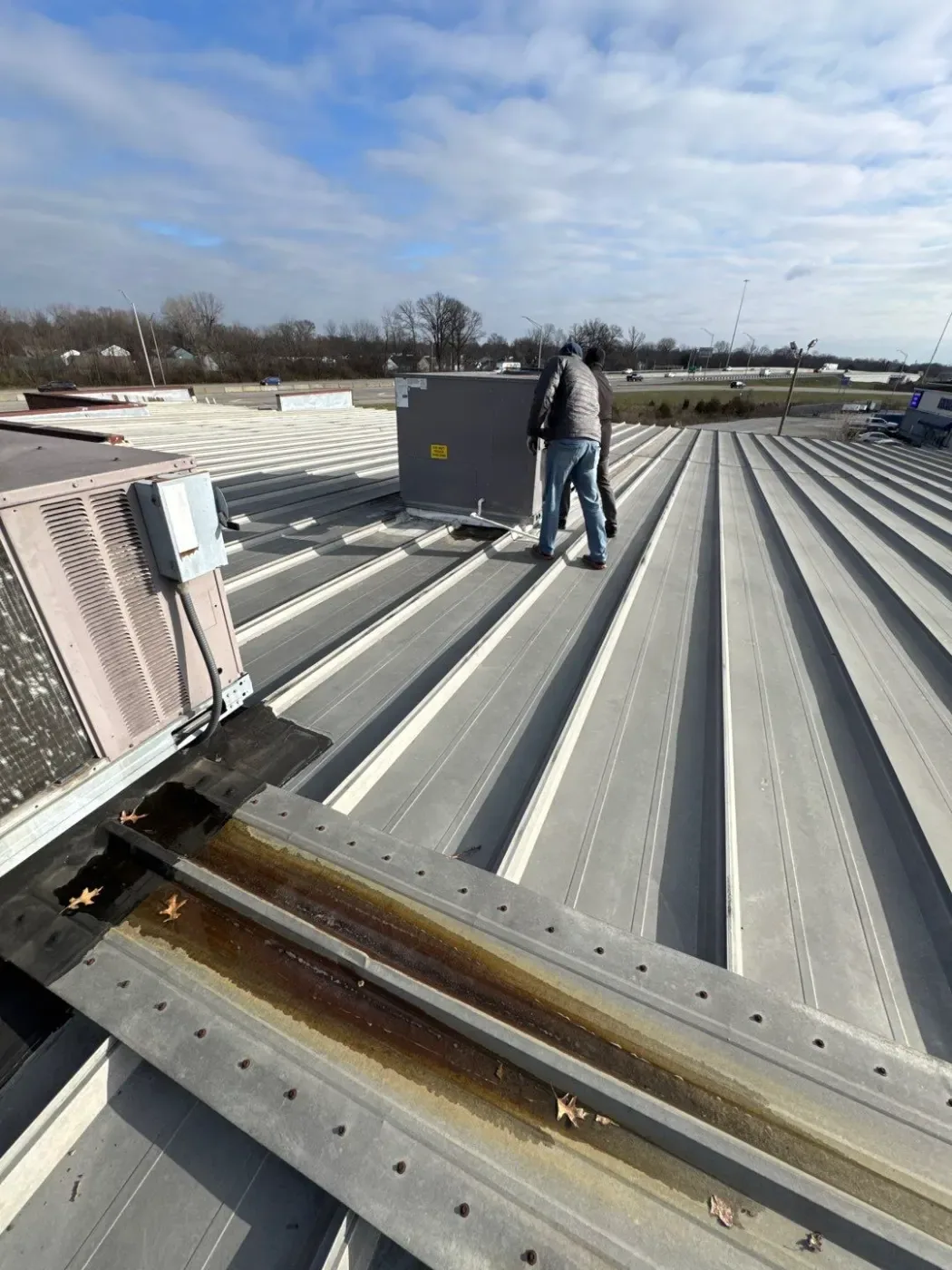
A KEE label does not tell us how a particular roof was installed or repaired. We confirm the membrane, seams, flashing, and prior materials before defining work. Fishers summer heat and recurring rain place steady demands on the roof surface and drainage details. The owner receives a record of the verified assembly and any test needed before ordering repair material. That keeps the scope tied to the actual sheet rather than a product name in an old file.
What membrane is in place?
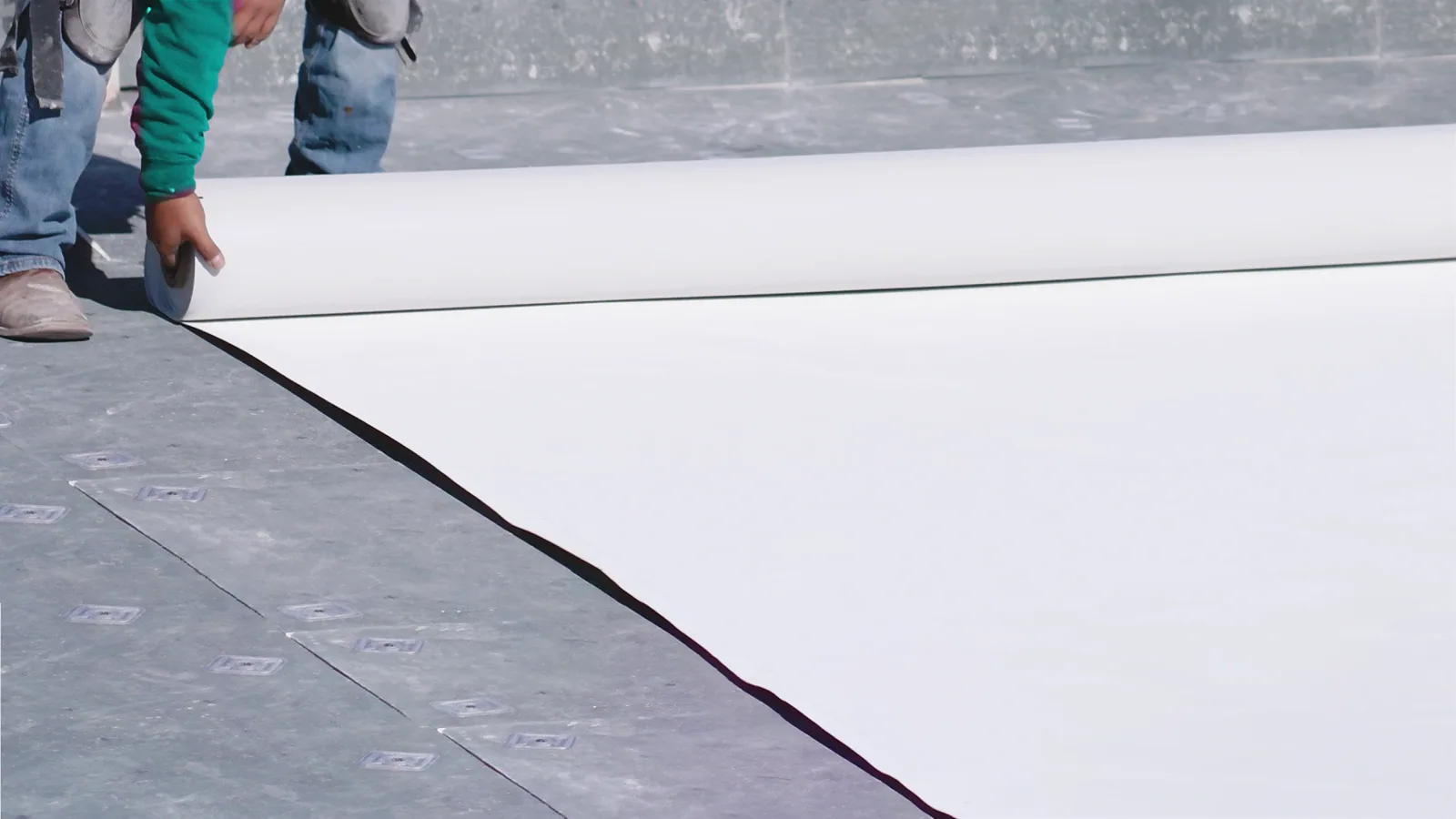
KEE is a PVC alloy membrane, but sheets and accessories can vary by system and installation history. We review product markings, warranty or closeout records supplied by the owner, and field characteristics. The inspection checks seam welds, patch material, curb corners, pipe penetrations, perimeter terminations, and drainage. If a past repair used another product family, we identify the transition before applying a new patch. A test weld or compatibility check can be appropriate when the existing sheet is aged, coated, or difficult to identify.
Fishers Metropolitan Airport is a commercial redevelopment area. For each KEE roof visit there, the facility contact sets the access route and work window. We inspect the membrane and record installed details before repair. A Metropolitan Airport area visit provides a local route reference, while a roof inspection verifies the field assembly and any access limit.
Where do KEE details fail?
Water can enter at a seam, curb, drain, penetration, or wall termination. We inspect the edge of the weld, adjacent sheet, fasteners, and the path to the next outlet. A surface split may be local, while movement at the substrate can open the same detail again. We photograph the connection, check material around the defect, and note whether the repair line reaches attached sheet. If the membrane is covered or access is blocked, we identify the limit and set a test or return plan.
A seam near the perimeter needs a wider look than the visible split. We compare the weld with adjacent sheet and flashing, then photograph movement before setting the repair limit. After a reported storm, we inspect the roof zone for actual displacement, punctures, and open details.
Roof Systems
How does water move below the sheet?
Water entering a KEE seam may travel below the membrane before it reaches a ceiling. We compare the interior report with roof slope, curbs, drain locations, equipment service, and previous repairs. If the suspected area is not obvious, a moisture survey can direct attention to a smaller roof section. A core or test opening confirms layers at one location, after the owner approves the sample and restoration method. The field record identifies what the test found and which neighboring areas remain untested.
At properties near I-69, access and deliveries may involve several contractors during active development. We establish who controls the lift, where sheets and tools can be staged, and how rooftop units remain available. The same sequence applies when an existing building stays in operation: define the repair zone, secure the open edge, then leave a dry-in that the facility contact can inspect at shift end. If the schedule changes, we update the handoff rather than extend an unprotected work area.
June precipitation averages 4.95 inches at the Indianapolis station, and summer heat can create short weather windows for exposed work. We check the forecast and substrate before opening a KEE section. A drainage review follows flow from the field to the outlet; a leak investigation compares that route with interior evidence. If equipment work contributed to the opening, we coordinate its roof-side connection with the responsible trade.
Roof Systems
Choose a compatible repair
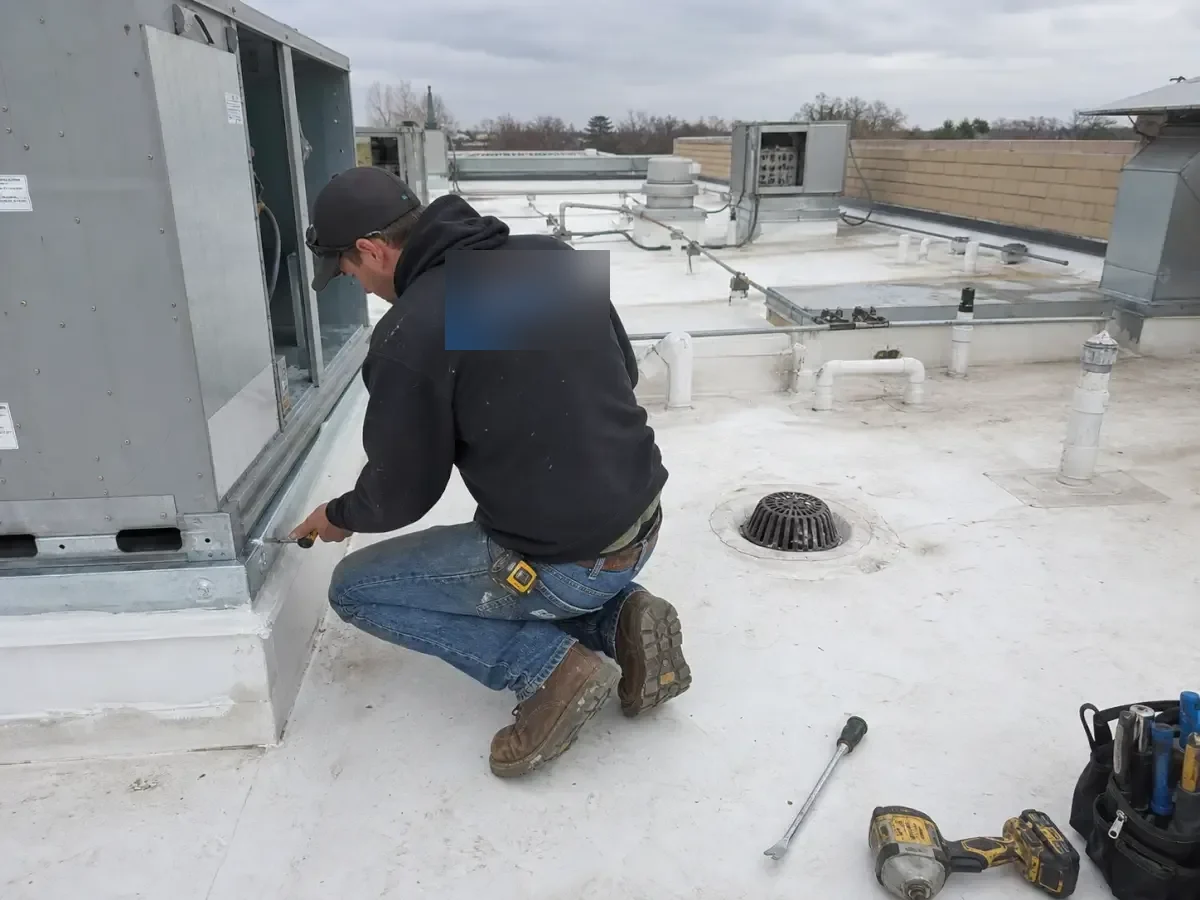
We clean and prepare the repair area, confirm compatibility, and weld or patch according to the selected system. A test weld helps set preparation and heat conditions before the final seam is extended. We probe completed edges and photograph the tie-in. At a curb or pipe, the scope may include new flashing, a reinforced corner, or a boot matched to the installed membrane. If surrounding sheet cannot support a new connection, the repair boundary moves to suitable material. We seek approval before expanding removal beyond the agreed area.
The Nickel Plate District downtown is a mixed-use center where businesses eat, shop, work, and live. Occupied uses can shape roof access and delivery timing, while the membrane itself controls the repair method. A Nickel Plate District site visit starts with the property contact’s access rules. If the surface appears suitable for restoration, a coating evaluation checks preparation and compatibility separately; it does not replace a failed weld or wet substrate correction.
When should the owner review the whole section?
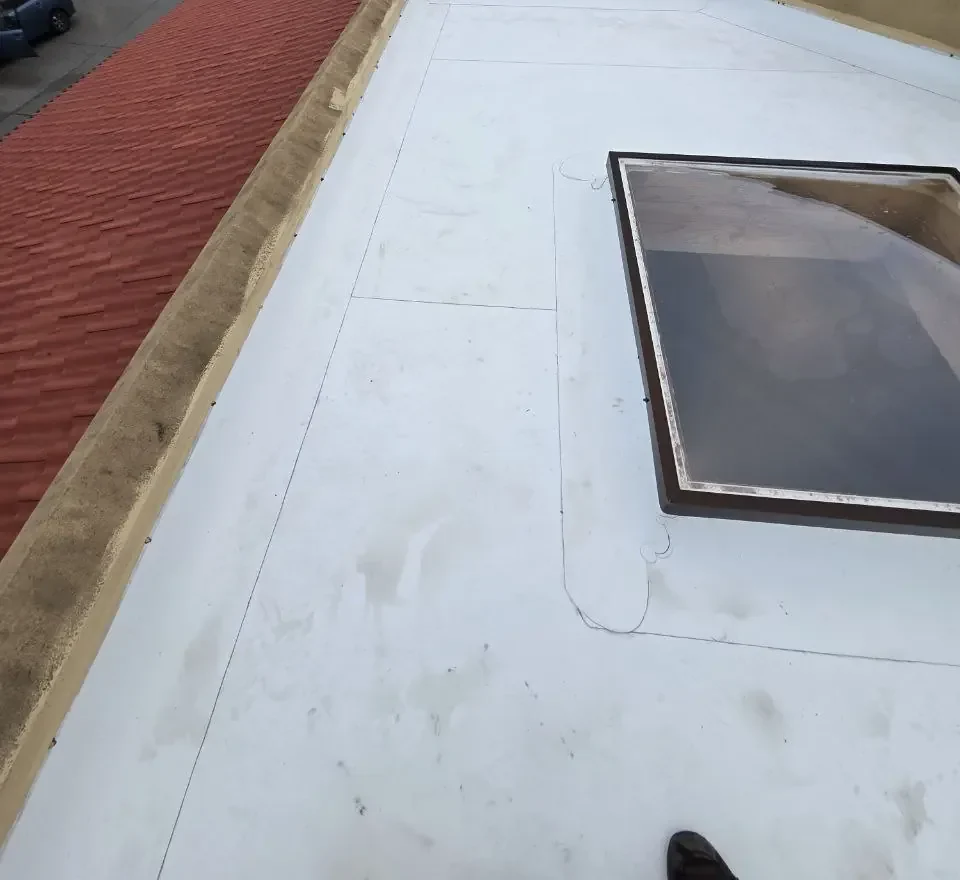
One seam failure can remain a local repair if the sheet and attachment around it are stable. Multiple leaks, widespread deterioration, wet insulation, or repeated patches may justify a broader review. We map confirmed openings, note the test boundary, and compare repair history with the remaining serviceable area. The estimate states material, preparation, access, and any item that could change after removal. A recover or replacement option should include the drain, curb, and edge tie-ins needed to finish the assembly.
A KEE repair record is also useful when later work adds equipment or penetrations. The facility team can compare the new detail with the original sheet, identify who disturbed the flashing, and keep the roof map current. We note the material transition and whether a follow-up inspection is needed after another trade finishes.
Fishers reported $524 million in 2025 total investment and 656 new job commitments. That growth can bring new construction and active sites, but each owner still decides how a roof fits the current budget year. A field condition record preserves the test area, while a capital review compares repair with planned renewal. For a membrane comparison, a PVC evaluation or TPO review should follow the verified assembly rather than assume interchangeability.
Talk to Our Roofing Team
Call 555-555-5555 or request a roof assessment. Tell us the address, the roof type if you know it and where water or damage is showing. We work across Fishers, Carmel, Noblesville, Westfield, Zionsville and the surrounding communities.
Roof Systems
Keep the KEE record specific
Closeout should include the verified membrane, repair location, preparation, material, test weld or adhesion check, photos, and any area not reached. If the work included an opening, we record how the assembly was restored. Equipment or interior work by another trade is listed separately from the roof repair. The next visit can compare the same seam or curb corner, track any water entry, and identify whether the system remains stable.
Share the roof section, leak history, material records, access window, and construction schedule. We will verify the assembly, define the repair boundary, and identify what test could change the scope. If the building is part of a larger portfolio, each roof retains its own record and follow-up timing.
Frequently Asked Questions
Which records and tests can identify a KEE roof assembly?
We review owner records, field markings, membrane features, and prior repair materials. If the system remains uncertain, a product or compatibility test may be needed before material is selected.
Can a KEE seam be patched with standard PVC material?
Not without checking compatibility and system requirements. We confirm the installed sheet and test the proposed connection before extending a repair.
What should happen after a Fishers storm?
We inspect reported roof zones, photograph actual changes, and check seams, edges, curbs, drains, and equipment details. The repair follows observed and tested conditions at the property.
Can coating solve a KEE seam failure?
A coating does not replace a failed weld or correct wet insulation. We inspect and repair the detail first, then assess whether the surface and system support restoration.
What should a KEE roof closeout preserve?
Record the verified assembly, material, preparation, weld test, repair limit, photos, and any open follow-up. That gives the next inspection a specific seam and roof zone to revisit.
Fishers, IN
Confirm the KEE assembly before pricing
Share the roof section, leak history, membrane records, access window, and construction schedule. We will identify the test and repair boundary supported by the field evidence.