Commercial Roofing Services
Commercial Roof Recover
A new membrane can hide wet insulation without correcting it. In Fishers, IN, we inspect the existing assembly before deciding whether a recover can stay within a sound repair boundary. The roof has to support another layer, drain at the finished elevation, and accept compatible attachment and flashing. We verify those conditions through records, a roof walk, and tests where they change the decision. The general contractor receives a scope that separates confirmed work from conditions still concealed beneath the existing membrane.
What must the roof prove first?
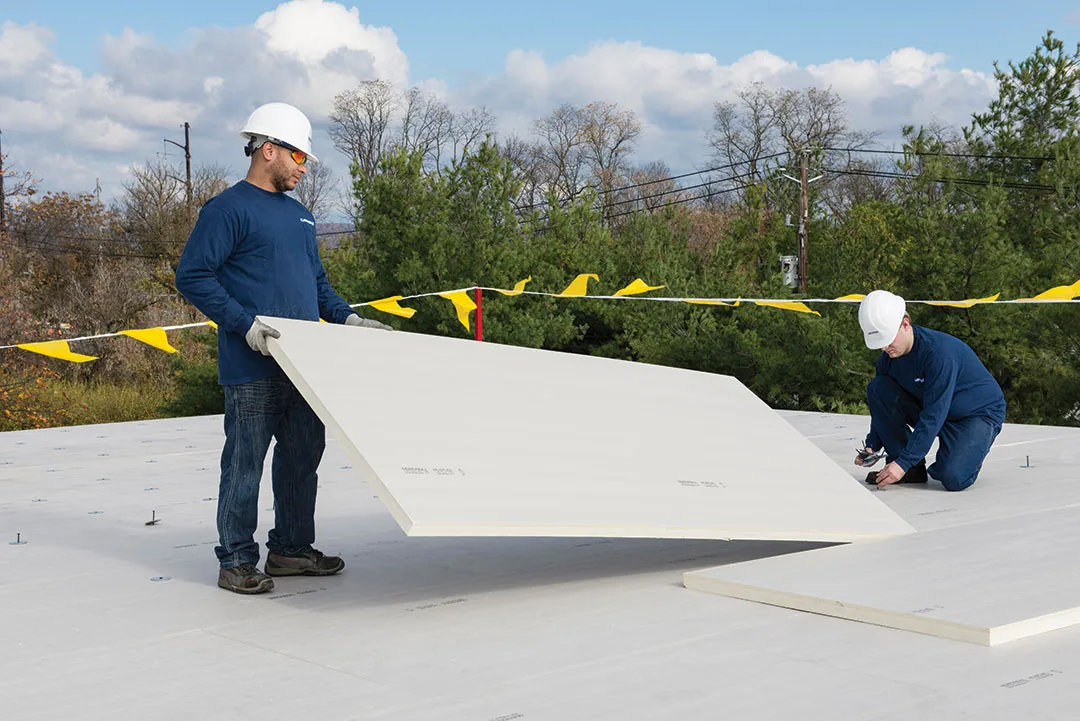
A recover is considered only after the existing layers, deck, attachment, moisture, and drainage are understood. We review available plans, repair history, and visible details, then select test locations where a core or opening can confirm the assembly. A scan can help target investigation, but a thermal pattern alone does not establish wet insulation. The infrared moisture survey records the method and marked locations; openings confirm the layers at the sampled point.
One sample does not certify every section. We compare readings with roof zones, record where equipment or access blocks inspection, and identify whether different additions use different assemblies. If confirmed moisture extends beyond a small repair area, we measure that boundary before considering a new layer. At Crosspoint Business Park, the property contact supplies the roof plans and access details, and we map confirmed layers and conditions by section.
How many layers can remain?
Existing roof layers affect weight, attachment, edge height, flashing reach, and future service access. We identify what is present and whether local rules or project specifications limit another assembly. Indiana enforces the 2014 Indiana Building Code with state amendments. The authority having jurisdiction determines how that code applies to a specific project, and we coordinate design and permit questions before finalizing the recover scope.
Old patches, coatings, and previous recover work can leave a roof with mixed materials or uncertain adhesion. We verify the surface and substrate in each proposed work zone before selecting compatible materials. A loose or saturated layer is not a stable base. If conditions require full removal, the tear-off replacement option documents removal, deck review, and new transitions instead of carrying an unsuitable layer forward.
Commercial Roofing Services
Will drainage and edge height still work?
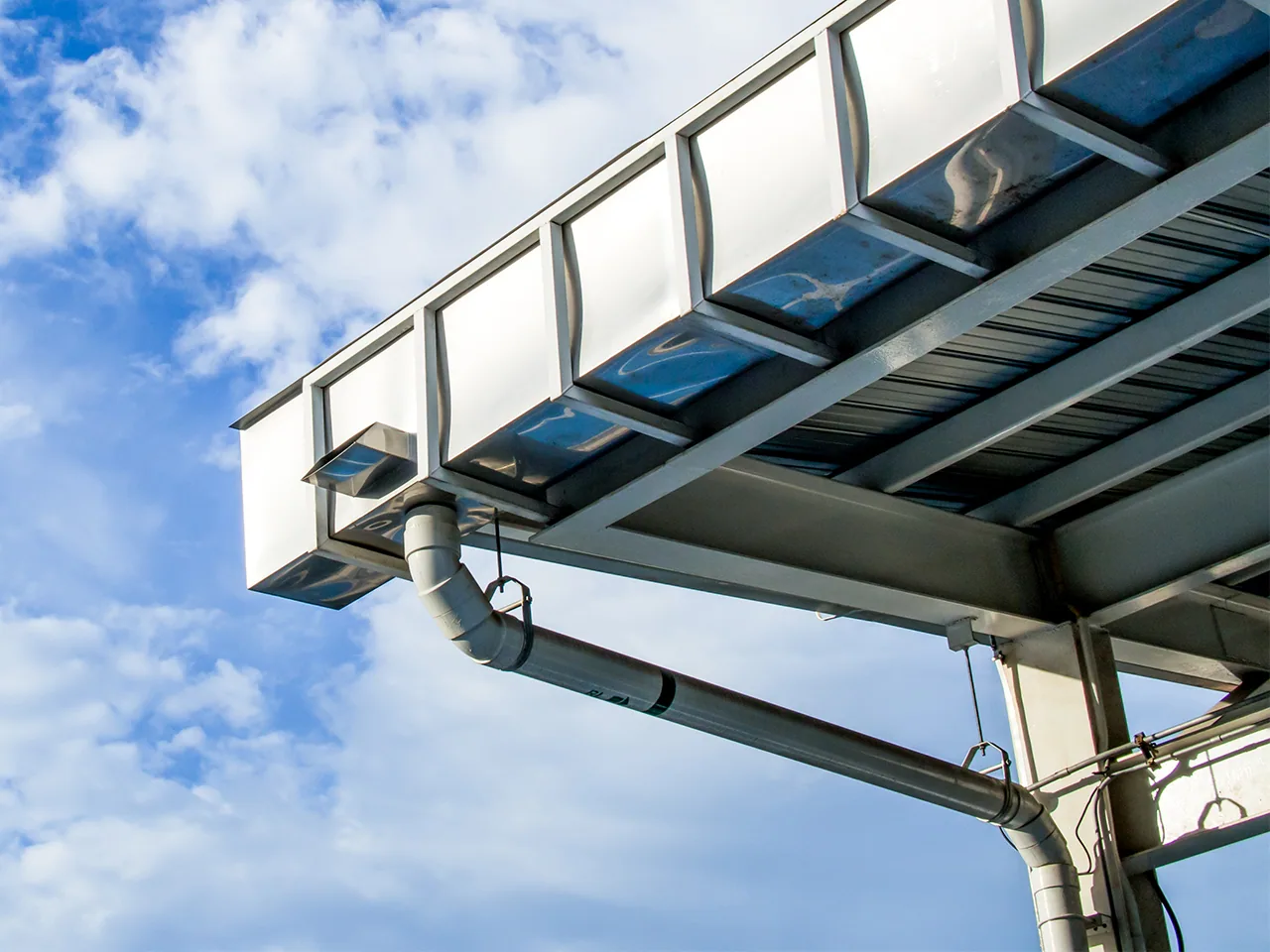
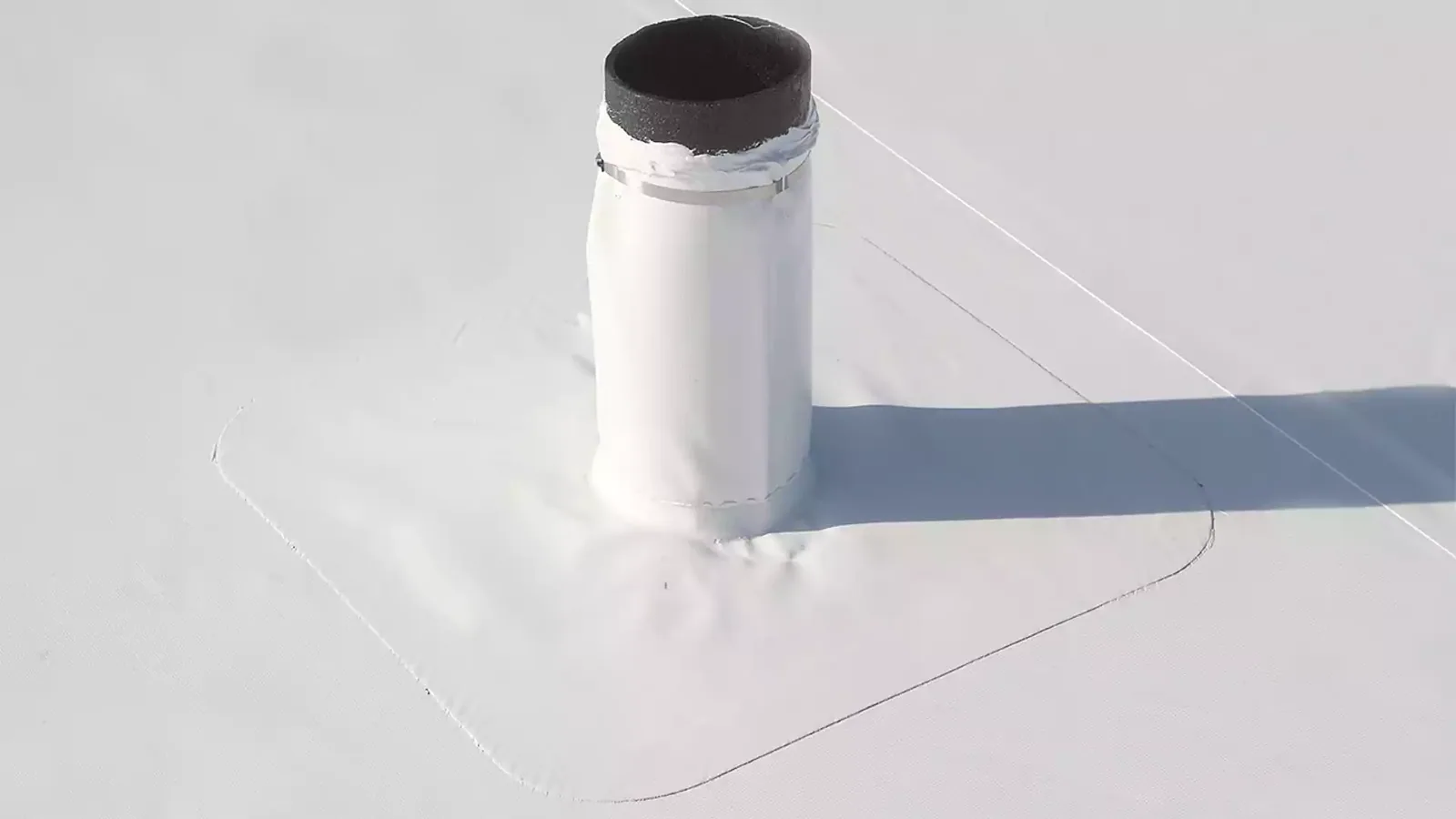
A recover raises the finished roof surface, which can change drain flange height, overflow paths, curb clearance, parapet termination, and door transitions. We check those elevations before specifying insulation or attachment. The drainage route review identifies bowls, scuppers, and overflows that need adjustment. If a low area remains after an outlet is clear, we test the assembly and measure the roof plane before adding material that could retain water.
Indianapolis normals show recurring precipitation, winter snow, and freeze-thaw periods. For a Fishers recover, we check water movement, outlet height, and safe winter access before setting the assembly details. At the Fishers Tech Park, as at any commercial site, we inspect the actual roof section and drainage route before accepting an overlay detail. A new system should not obstruct an overflow or leave a curb with too little flashing height.
Commercial Roofing Services
Which test changes the decision?
Testing is useful when the result changes what stays or what comes off. A core can confirm the membrane, cover board, insulation, and deck at a selected location. Moisture readings can compare suspect and reference areas, while a probe can check seam condition. We mark each test on the roof plan, photograph the opening, and restore it with materials compatible with the assembly. The hands-on roof inspection distinguishes observations from confirmed layers and records sections that could not be reached.
If a sample shows wet insulation, the next step is to determine whether moisture is local, follows a drainage path, or appears across separate roof sections. We do not transfer one core result to an untested area. The proposal states what evidence supports the recover, what remains unknown, and what finding would change removal quantities. A roof condition record keeps those limits with photos and zone labels so a later review does not treat an open question as a completed test.
How can the work stay weather-tight?
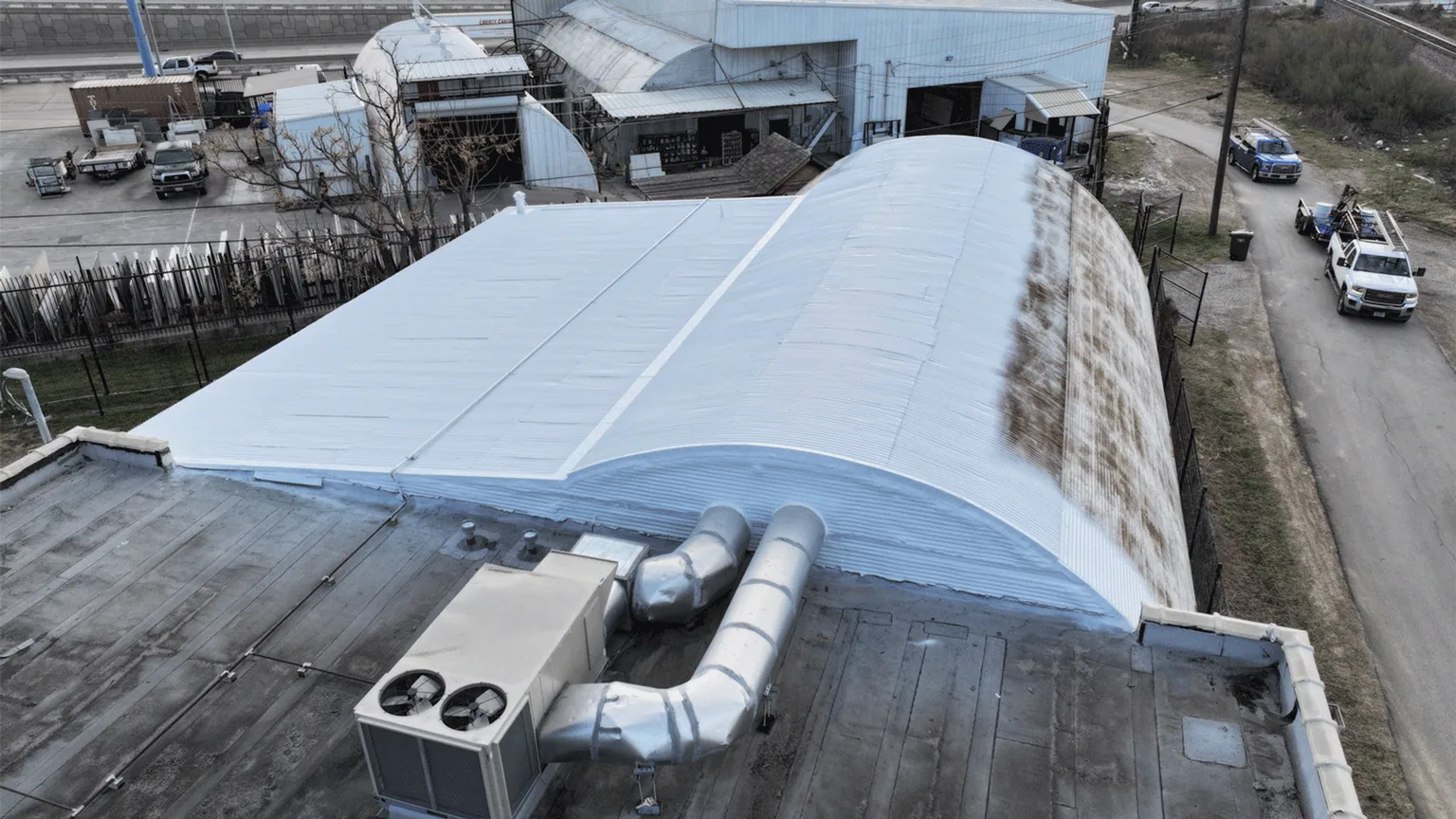
The sequence starts with access, delivery, protection below, and a daily limit for exposed work. We prepare the surface, correct the accepted substrate, install the specified layer, and close each section before weather or the work window changes. If the roof is occupied, the contractor and facility contact coordinate equipment, noise, staging, and interior routes. A phased roof sequence lists handoffs and the dry-in condition required at shift end.
Snow and meltwater can narrow winter access in central Indiana. We plan around material limitations and the roof’s drainage route, then identify areas that should wait for a suitable installation window. An active opening may need temporary roof protection while permanent work is scheduled. That stabilization is documented separately and does not count as a completed recover. The work record shows which section is sealed, what remains open, and who approves a change if the existing layers differ from the test results.
Talk to Our Roofing Team
Call 555-555-5555 or request a roof assessment. Tell us the address, the roof type if you know it and where water or damage is showing. We work across Fishers, Carmel, Noblesville, Westfield, Zionsville and the surrounding communities.
Commercial Roofing Services
When is tear-off the clearer choice?
Removal may be the stronger option when the deck is unsound, insulation is broadly wet, attachment cannot be confirmed, or the existing build-up leaves too little height for proper flashing. We compare that condition with a recover using the same roof map and measured sections. The targeted repair scope remains an option when the defect is contained and surrounding materials are stable. Cost and timing depend on access, disposal, insulation, edge work, mechanical interfaces, and required dry-in.
Attachment can also change at perimeters, corners, and areas exposed to service traffic. We inspect fasteners, adhesive patterns, cover-board joints, and edge metal where access permits. A test pull or opening is useful only if it answers a specific assembly question and can be restored correctly. The proposal identifies the sample location, method, and limit, then states whether the finding supports another layer or requires removal. No test result is applied beyond the roof zone it represents.
I-69 and State Road 37 connect Fishers’ commercial core with Indianapolis and Hamilton County destinations. We coordinate delivery timing around those routes and set the renewal scope from confirmed layers, access, and construction schedule. We list which quantities are confirmed and which require an opening before approval. If the owner selects a recover, the final documents name the installed materials, perimeter details, drain changes, test areas, and future inspection points. If tear-off is selected, the record explains why concealed layers could not remain.
Frequently Asked Questions
Can a new membrane go over a wet roof?
No. We test suspect areas and remove confirmed wet material where required. A new layer over trapped moisture can leave the underlying problem in place.
How do you decide whether the existing layers can remain?
We review records, attachment, moisture, deck condition, roof height, drainage, and applicable project requirements. Test openings confirm layers where the result changes the scope.
Will a recover fix ponding water?
Not by itself. We clear and inspect outlets, measure low areas, and determine whether slope, insulation, or deck conditions need correction before adding a layer.
What happens if a test opening finds a different assembly?
We stop at the test boundary, document the layers and condition, and revise the scope for owner review. Removal quantities stay separate from untested sections.
What should be included in a recover proposal?
Look for confirmed layers, test locations, attachment, drain and edge changes, materials, daily dry-in, and the approval path for concealed conditions. We identify what remains outside the proposal.
Related Roofing Work
Fishers, IN
Review the existing layers first
Send the roof plan, leak history, prior repair records, access window, and construction schedule. We will map the test area and identify the next recover or tear-off decision.