Commercial Roofing Services
Emergency Commercial Roof Repair
Water running above electrical controls or a sagging ceiling changes the response order. In Fishers, IN, we first help protect people and equipment below, then determine whether roof access is safe. Our emergency crew can respond nights, weekends, and holidays to assess active entry and install temporary protection when the assembly and conditions allow. We record where the dry-in begins and ends, what remains open, and which inspection must follow. That gives the facility contact a clear handoff while permanent work is being defined.
What needs attention before roof access?
The first call establishes the affected room, whether water is still entering, who can open the building, and which operations cannot stop. Keep occupants away from a bulging ceiling, wet electrical equipment, or a floor where water is spreading. The facility contact can isolate the affected area and identify sensitive equipment while we arrange access. We ask for roof plans, recent service records, and photos when available, but those materials do not replace a field inspection.
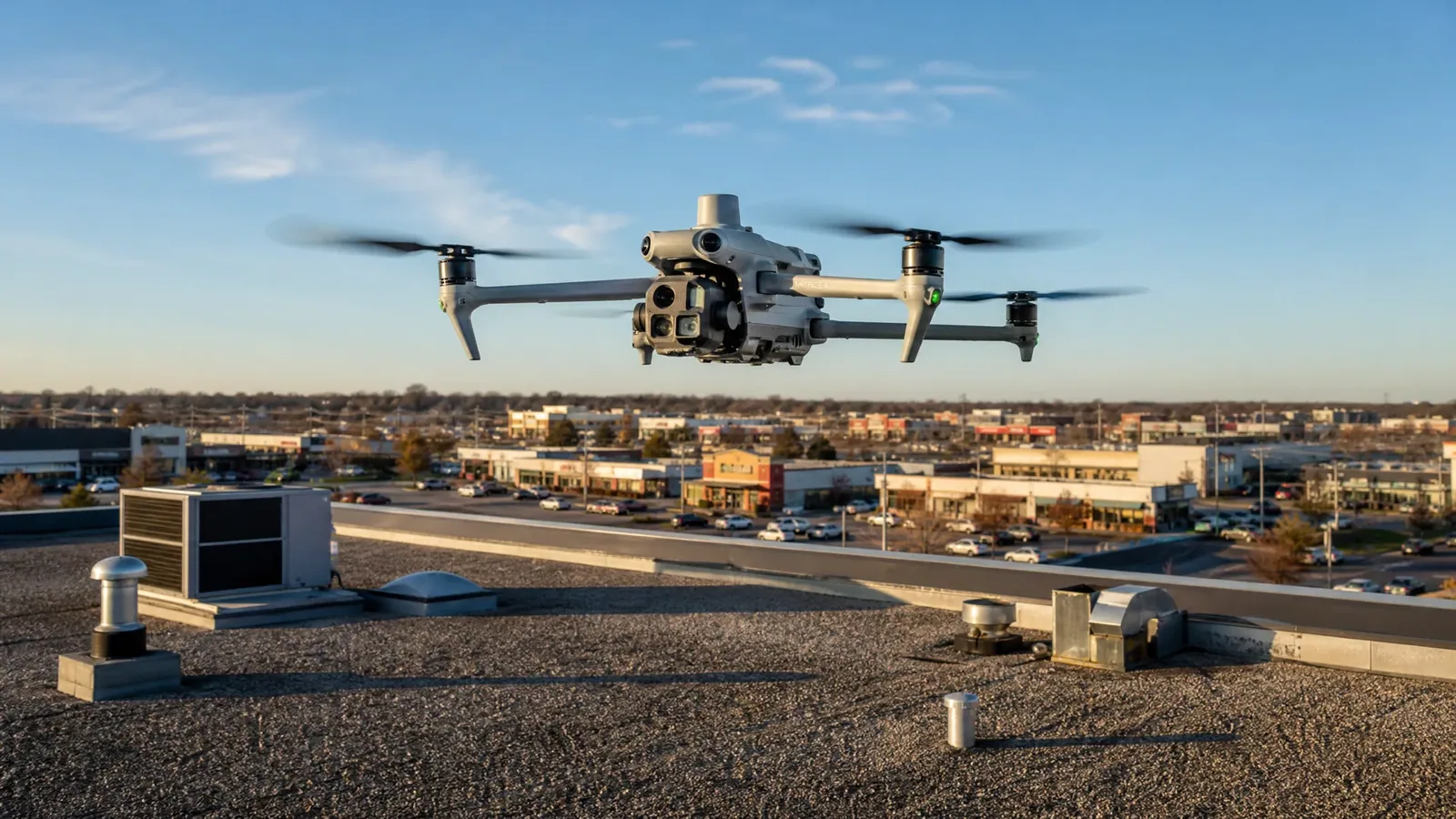
Before anyone climbs, we check roof access, wind, lightning, standing water, ladder or hatch condition, and the assembly around the leak. If roof entry is unsafe, we limit interior exposure and explain the return condition needed for a roof check. The commercial leak repair visit can trace a recurring path after immediate stabilization. Temporary protection is recorded separately so the owner can distinguish an urgent control measure from completed permanent work.
How is immediate exposure reduced?
A temporary cover has to stay secure without damaging an unknown roof assembly. We identify the material, attachment point, runoff direction, and limits before placement. If a roof cannot accept a fastened cover, another method may be appropriate after access and conditions are checked. We avoid directing water toward an open seam, occupied entry, or equipment intake. The field record identifies the protected section and the area that still needs inspection.
When a leak enters an occupied facility, interior protection can include moving contents, isolating a room, or coordinating with the responsible electrical or mechanical contact. We identify who owns each action and what must remain accessible. Fishers' commercial core follows I-69 and State Road 37. Before staging for emergency work, we confirm each property's entry, vendor coordination, and approved access window with the site contact.
Commercial Roofing Services
What should the emergency inspection establish?
A ceiling stain can sit below a roof defect several feet away. We inspect seams, curbs, penetrations, wall transitions, drains, and edges above and around the reported room. Photos capture the roof zone and nearby details, while records separate direct observations from suspected causes. A puncture, open lap, displaced flashing, blocked drain, and saturated assembly call for different next steps. The hands-on inspection records what was accessible and which area remained covered or unsafe.
If the surface does not show where water entered, we may recommend moisture readings or a controlled opening after temporary protection is secure. A reading is not proof of a wet assembly without a method appropriate to the system. We mark test areas and restore any opening made during diagnosis. If the event affected several roof sections, each gets a separate boundary instead of borrowing a result from the nearest sample. The owner sees the evidence needed before a repair quantity expands.
Commercial Roofing Services
How do Fishers conditions affect the response?
Indianapolis weather normals show recurring precipitation and snowfall, followed by freeze-thaw periods. A storm can leave an outlet blocked or a surface unsafe even after the heaviest rain has passed. We check actual roof access, drainage, ice, and material temperature before choosing a temporary measure. If the surface cannot support a permanent repair, we preserve the opening and schedule the next inspection when conditions allow. The drain and scupper review can determine whether a restricted outlet is contributing to water at the affected zone.
Hamilton County appears in National Weather Service tornado climatology, and an EF2 tornado crossed the county into Madison County in 2024. After a reported wind or hail event, we document the building's actual edge, fastener, seam, and flashing condition before describing storm damage. For a facility near the Fishers District, access and public activity can affect staging; physical roof findings still determine the stabilization plan.
When can permanent repair begin?
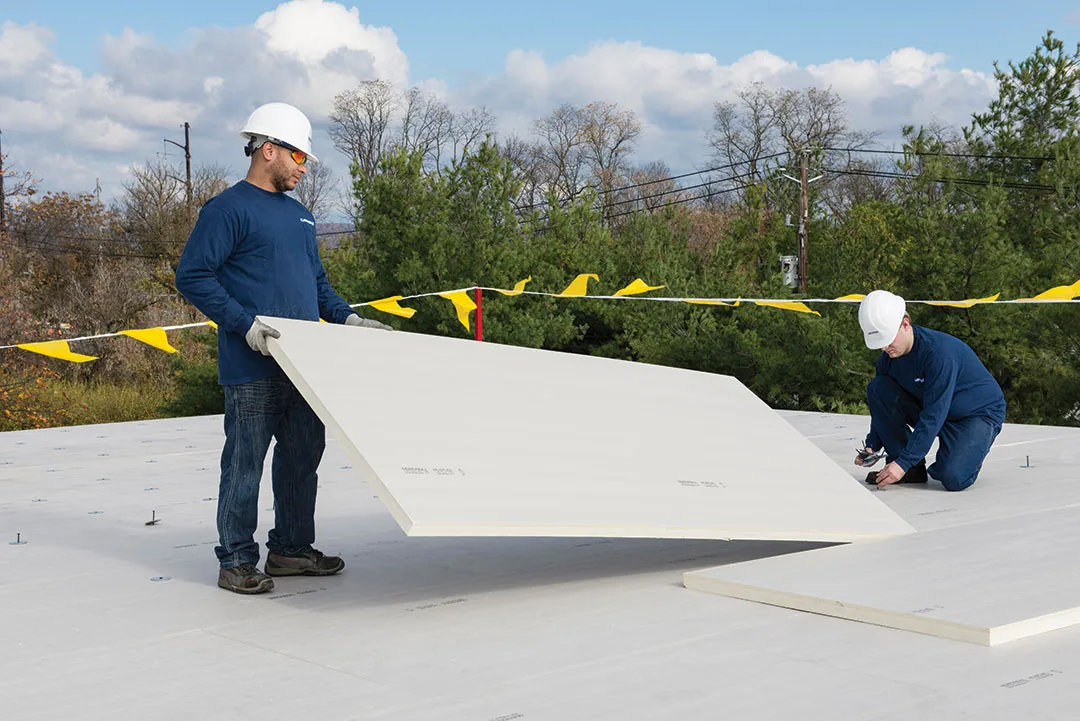
Permanent work begins after the affected surface can be inspected and prepared for a compatible repair. We identify the confirmed assembly, remove unstable material only within the approved boundary, and restore the seam, flashing, or penetration that failed. If moisture extends below the surface, the scope includes the confirmed removal and dry-in needed to close the section. The permanent repair scope separates confirmed work from any additional test or removal that needs owner approval.
Water that continues to enter after a first cover needs a new observation, not a larger cover by default. We check whether runoff is reaching the same roof opening, bypassing an edge, or entering at another detail. Interior symptoms are compared with the first map and time of each report. If the cause remains unclear, we identify the next safe test and keep the existing protection in place only while it remains secure and useful.
A temporary cover may need to be lifted or removed before the permanent tie-in can be inspected. We coordinate that work with the forecast, site access, and any mechanical or electrical trade. If the roof is too wet or cold for selected materials, the crew documents the protection and return window instead of forcing a bond or weld. A broad failure may need a replacement comparison after the assembly and deck are tested; an emergency visit alone does not determine that larger decision.
Talk to Our Roofing Team
Call 555-555-5555 or request a roof assessment. Tell us the address, the roof type if you know it and where water or damage is showing. We work across Fishers, Carmel, Noblesville, Westfield, Zionsville and the surrounding communities.
Commercial Roofing Services
What does the emergency handoff include?
The response record lists the call time, affected interior zone, roof section, conditions observed, temporary materials, photographs, access limits, and open work. It records whether water was still entering when the crew left and what could not be tested. If another trade owns equipment shutdown or interior drying, the contact and next action are named. A roof condition record can preserve emergency findings beside planned repair work without treating a dry-in as permanent restoration.
For a return visit, we need the roof plan, leak history, access contact, current operating limits, and construction schedule. If temporary protection moved or water appeared elsewhere, the field record identifies that change. A storm damage inspection can document observed event-related conditions, while a separate repair proposal sets the permanent scope. Where the site has several roof areas, such as the broader Fishers Life Sciences and Innovation Park, we still map each building and roof section individually.
Frequently Asked Questions
Can you respond if the leak starts overnight?
Yes. Emergency response is available at all hours, including weekends and holidays. We confirm the affected area, access contact, current conditions, and safe entry before dispatching roof work.
Will a tarp stop the leak permanently?
No. A tarp or dry-in is temporary exposure control. We document its location and return to inspect the assembly and complete a compatible permanent repair.
What if the roof is unsafe to enter?
We keep people away from unsafe areas, protect the interior where possible, and set a return condition for roof access. An unsafe entry is not treated as a completed inspection.
Does a storm report prove that our roof was damaged?
No. We inspect the actual membrane, edges, fasteners, drains, and interior conditions. After a reported storm, we inspect the building's membrane, edges, fasteners, drains, and flashing, then record observed conditions.
What should the facility contact have ready?
Share the affected room, current leak status, access route, roof plan, safety limits, and equipment contacts. Photos and prior repair records can help focus the first inspection.
Fishers, IN
Get an emergency roof response
Call with the affected area, active leak status, access contact, and operating limits. We will assess safe entry, document temporary protection, and set the permanent repair step.