Industries We Serve
Property Management Companies
A water report from one tenant should not become a repair allowance for every building in a portfolio. We identify the affected property, roof section, reported interior location, and approval contact before inspecting. Property managers need a record that separates urgent protection, confirmed repair, and work that still depends on testing. That structure helps a regional team compare findings without blending the condition of one asset into another.
Fishers has a commercial core around I-69 and State Road 37, while Fishers Life Sciences & Innovation Park supports suppliers, research, development, and contract manufacturing. Those settings can produce different access, tenant, and equipment needs across a managed portfolio. A roof visit in the life-sciences park begins with the assigned building, site contact, and lease-specific access rules.
What should remain comparable across buildings?
A useful portfolio record gives each property its own roof map, assembly, leak history, photos, repairs, open conditions, and next review trigger. We keep those details tied to a building and roof section. A manager can compare repair patterns without treating different ages, systems, or exposures as equivalent. If ownership or management changes, the record still identifies what was observed and what work was approved.
We confirm who may authorize inspection, testing, emergency protection, and scope expansion. A tenant report may start the review, but the property manager or owner sets access to the roof and interior. For a multi-building site, we assign separate work boundaries, contacts, and daily handoffs. A condition report can consolidate findings while preserving the source location of every item.
Fishers District includes an event-center campus, restaurants, retail, and mixed-use development. A managed property near that area may have traffic or event timing that differs from an industrial building near I-69. The district fact provides context, not a schedule for a particular tenant. We ask for each building's service hours, delivery route, and reserved access window before setting the work sequence.
Which report needs a response first?
Active water near electrical equipment, occupied rooms, or sensitive inventory can require immediate containment while the roof source is investigated. We gather the reported room, time, recent weather, photos, and any temporary steps already taken. The first visit identifies reachable roof details and a safe dry-in option. The written update separates emergency protection from permanent repair so the manager can route each approval correctly.
Less urgent findings still need a defined priority. An open seam, blocked drain, damaged edge, or recurring stain may justify a planned inspection before the next weather cycle. We note the condition, likely consequence, and evidence needed to confirm scope. A urgent roof response addresses active exposure; a later repair estimate can remain separate if the area needs drying, testing, or another trade's input.
Indianapolis averages roughly 25.5 inches of snow each year, with winter temperatures repeatedly crossing freezing. Managers can use seasonal checks to look at outlets, overflow routes, and edges after snowmelt, but that regional climate does not prove that a specific roof is holding water. We document the actual condition and access limits. A drainage inspection keeps outlet maintenance and membrane failure as distinct findings.
Industries We Serve
How can tenant work stay predictable?
Before mobilization, we confirm occupied areas, business hours, loading routes, fire lanes, rooftop equipment, and any tenant notice period. The manager identifies who can approve barriers, ceiling access, equipment shutdown, and temporary closures. We divide the roof into work zones that match the building layout and state which areas remain open. The daily plan lists the site contact and the condition for returning a space to use.
A retail or restaurant property can require customer access throughout the day, while office and production tenants may have different quiet periods. We coordinate lift placement, debris removal, deliveries, and noisy work with those schedules. For a shared campus, the manager confirms whether a central loading route or common walkway must remain available. A phased roofing sequence can define notices and handoffs before a larger project starts.
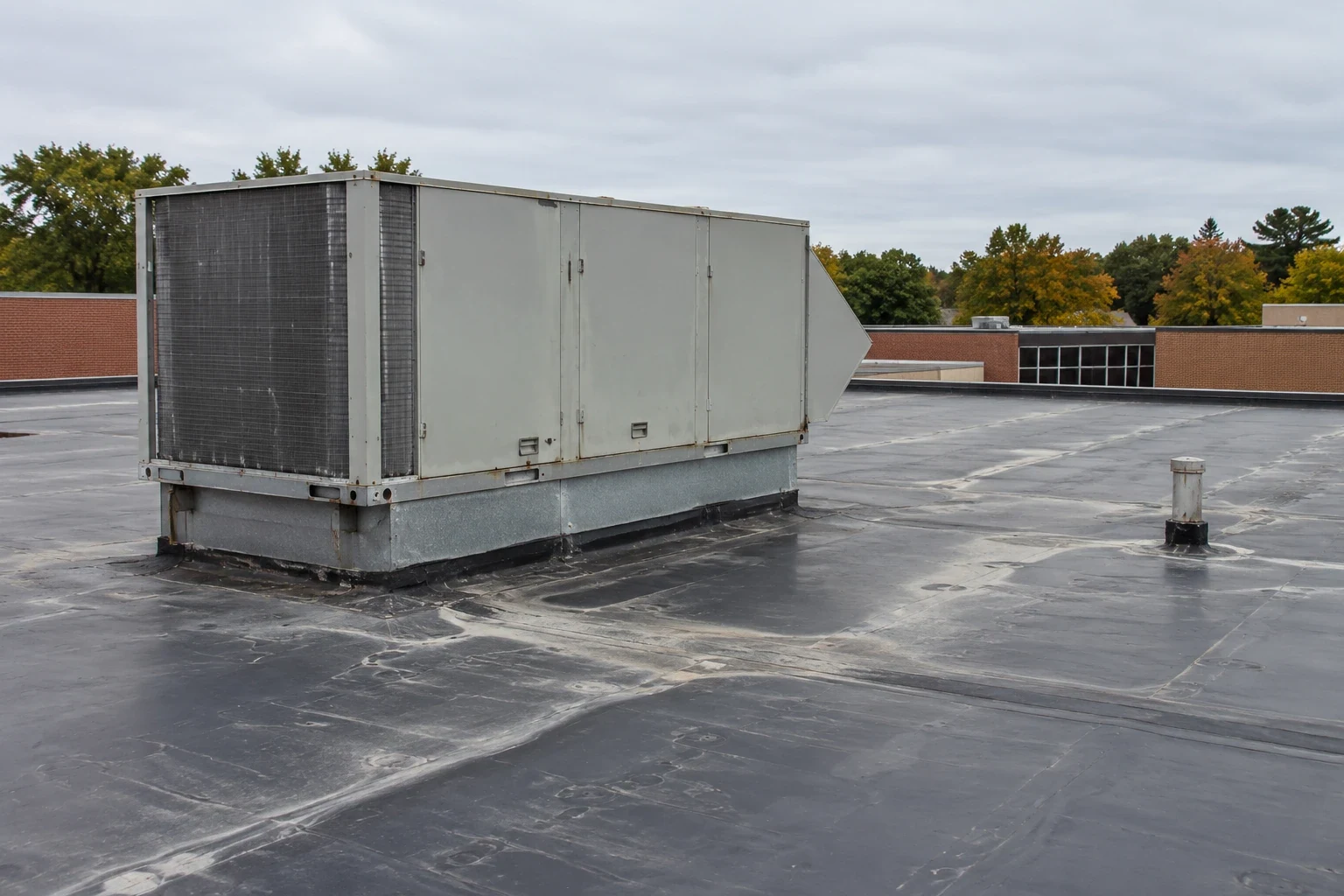
When a tenant's mechanical contractor has recently changed a curb or unit, we note that interface and ask who controls the equipment. Roofing repair and mechanical correction remain separate unless the owner assigns both. This keeps proposals clear about who will disconnect, reset, test, and complete each piece of work. A portfolio manager can see the remaining coordination item instead of receiving one blended allowance. A health-system portfolio may also need separate facility and tenant handoffs.
Industries We Serve
When does one building need more than repair?
A local patch can be appropriate when the affected seam, curb, or flashing is isolated and the surrounding assembly accepts a sound tie-in. We identify preparation, material, measured area, interior protection, and any limits on access. If removal reveals saturated board or a weakened substrate, the crew covers the exposure and submits measured findings before extending the approved repair. The repair boundary remains visible through closeout.
Repeated leaks, broad moisture, weak attachment, or edge deterioration can support a recover or replacement comparison. An overlay is considered only after moisture, attachment, and compatibility checks support keeping the existing assembly, with workable heights at drains, curbs, and doors. Replacement may involve tear-off, insulation, deck corrections, and a staged dry-in. A replacement estimate should list each property and roof zone separately so capital decisions can be ranked from observed evidence.
Managers often coordinate routine maintenance and due diligence. For a sale or refinance, a roof survey for a transaction records accessible conditions and limitations. For ongoing ownership, a real-estate portfolio review can connect findings with reserve planning while preserving building-level quantities.
What does a clean handoff include?
Closeout identifies the building, roof section, repair performed, material, photos, test results, temporary protection, and any item not completed. It states who owns a mechanical or access follow-up and what condition triggers another visit. The manager can attach the record to a work order and use the same roof map for a later report. If a property has several structures, each gets its own closeout entry.
Fishers' life-sciences park has research, development, supplier, and contract-manufacturing uses, while Indianapolis Metropolitan Airport appears in a separate redevelopment area. Portfolio records are more useful when they reflect each property's actual function and access plan. We do not infer roof needs from a district name; the inspection documents the assembly and visible condition.
Send the property list, roof plans, active leak reports, prior repairs, approval contacts, tenant schedule, and any planned sale or capital deadline. We will separate urgent protection from permanent work and return building-specific findings that the team can act on.
Talk to Our Roofing Team
Call 555-555-5555 or request a roof assessment. Tell us the address, the roof type if you know it and where water or damage is showing. We work across Fishers, Carmel, Noblesville, Westfield, Zionsville and the surrounding communities.
Frequently Asked Questions
Can one roof inspection cover several managed buildings?
Yes, when the property list, access, and schedule are confirmed. We record each building and roof section separately so findings and quantities do not blend across assets.
How do you handle tenant reports that may share a roof source?
We map each reported room, compare timing and roof details, then identify any common route that evidence supports. Unconfirmed connections remain separate until testing narrows the source.
What should an emergency update include?
It identifies the affected property, observed water entry, temporary protection, access limits, and approval needed for permanent work. The manager can route that update without treating a dry-in as final repair.
Can the portfolio team use reports for capital planning?
A consistent record of assembly, condition, repair history, and open risks supports comparisons. Each recommendation remains tied to the building and quantities inspected.
What information speeds up a roof call?
A roof plan, property contact, leak location, tenant hours, prior repair photos, and approval limits help set the visit. We verify conditions in the field before pricing added work.
Related Roofing Work
Fishers, IN
Set a portfolio roof review
Share the managed-property list, roof plans, active reports, tenant hours, access contacts, and approval limits. We will separate each building's condition and identify the next action.