Roof Systems
Modified Bitumen Roofing
A blistered cap sheet can signal trapped moisture, a weak bond, or heat exposure; it does not set the removal limit by itself. We inspect the surface, laps, flashing, drains, and underlying assembly before pricing repair. In Fishers, winter snow followed by melt can leave water at a low point or seam. The field record identifies the sample or probe location and what remained covered. That helps the owner decide whether to patch, test further, or include the section in a larger capital scope.
What is the layer sequence?
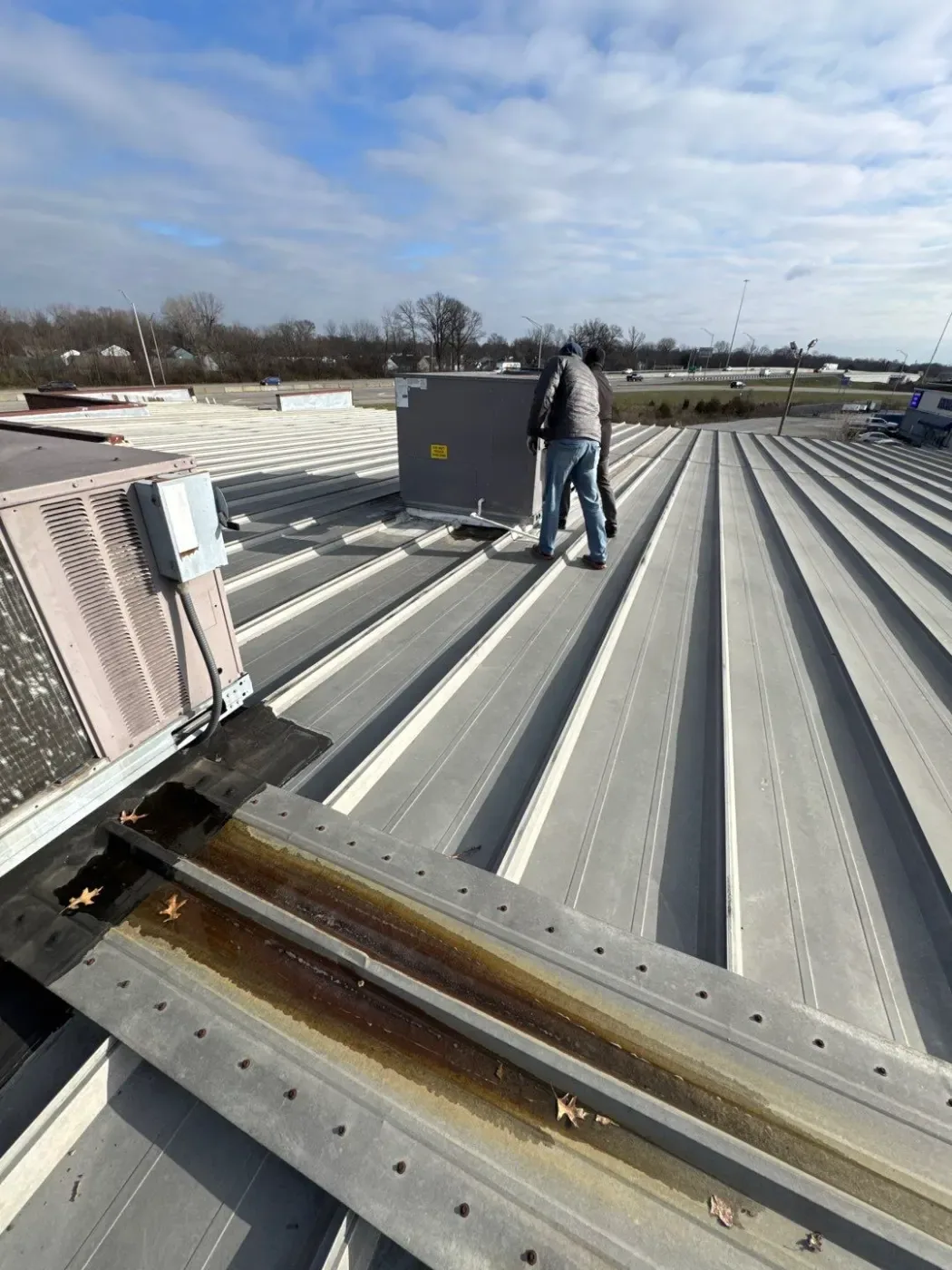
Modified bitumen systems use asphaltic sheets with reinforcement and surfacing, but the number of plies and attachment vary. We review records, exposed edges, prior openings, and transitions to identify what sits below the visible cap sheet. At a repair, we check whether the membrane is adhered, mechanically attached, or tied into an older layer. We record blistering, alligatoring, open laps, loose flashing, and exposed reinforcement. If the roof has coatings or several patch generations, a test area may be needed before new material is selected.
Britton Industrial Park and Nuckols appears in Fishers’ planned-development history, while Britton Park is a separate redevelopment area. For either location, the property plan and inspection identify the assembly and access limits. A Britton industrial-area review can document site access, and a roof inspection records the layers and details visible on the building.
Where do laps and surfacing break down?
Heat, water movement, traffic, and incompatible repairs can weaken a seam or surface. We inspect lap edges, end joints, base flashing, drain sumps, parapets, and equipment penetrations. Mineral surfacing may be displaced or embedded in a prior patch. A loose cap sheet can allow water beneath the membrane, while a surface crack may remain limited to the weathering layer. We distinguish these conditions and test when the answer changes whether the repair can stop at the surface or must replace a deeper layer.
Indianapolis normal July highs reach 85.2 degrees, and June precipitation averages 4.95 inches. Heat and wet periods can shape when asphaltic materials are placed and protected. We check current conditions, material requirements, and the area that can be closed before the shift ends. If outlet flow is part of the problem, a drainage check maps the discharge path separately from the sheet repair.
Roof Systems
How does water move beneath the cap sheet?
Water can travel across an asphaltic ply, along a deck flute, or beneath insulation before reaching an interior ceiling. We compare the leak location, weather timing, roof slope, drains, and earlier repairs. If moisture readings or a controlled opening confirm wet insulation, we measure the affected area and define removal limits. A sample point does not describe every roof section, so we record where testing occurred and what remains open. The owner can then approve additional testing or keep the current scope limited to confirmed material.
City work where Olio Road meets Southeastern Parkway is aimed at safer trips into northeast Fishers. For a roof near that east-side route, we confirm delivery and entry windows with the property contact before setting a repair sequence. An east Fishers roof visit starts from the building entrance; a leak investigation follows water from the interior report to the cap sheet.
Roof Systems
Choose the repair method
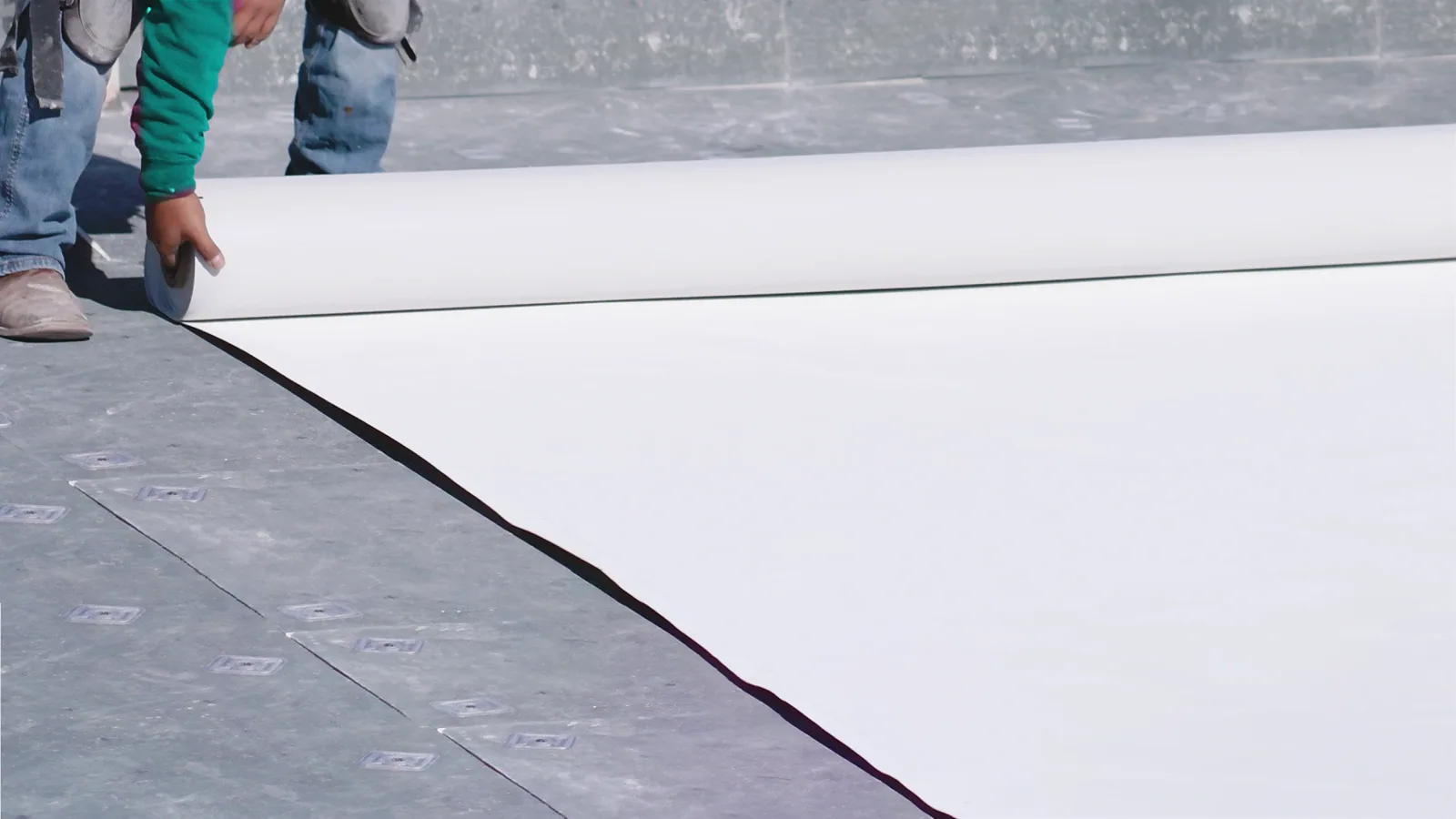
A localized patch may fit when the surrounding sheet is bonded and the underlying insulation is serviceable. We remove loose surfacing, prepare the substrate, and tie the new material into stable membrane. A torch-applied detail requires controlled fire safety and a suitable work zone; cold-applied or self-adhered materials have their own preparation and temperature limits. We state method, ply count, surfacing, flashing, and test steps in the scope. If the repair reaches a drain, curb, or wall, the tie-in must restore the complete transition.
Access and labor affect the estimate as much as the visible patch area. We measure roof height, material staging, haul distance, protection below, and whether hot work needs a separate permit or fire watch at the property. If demolition exposes another layer, we stop at the approved limit and document what changed. The owner receives the added quantity and tie-in detail before the work continues. That preserves the construction schedule without folding concealed removal into an undefined allowance.
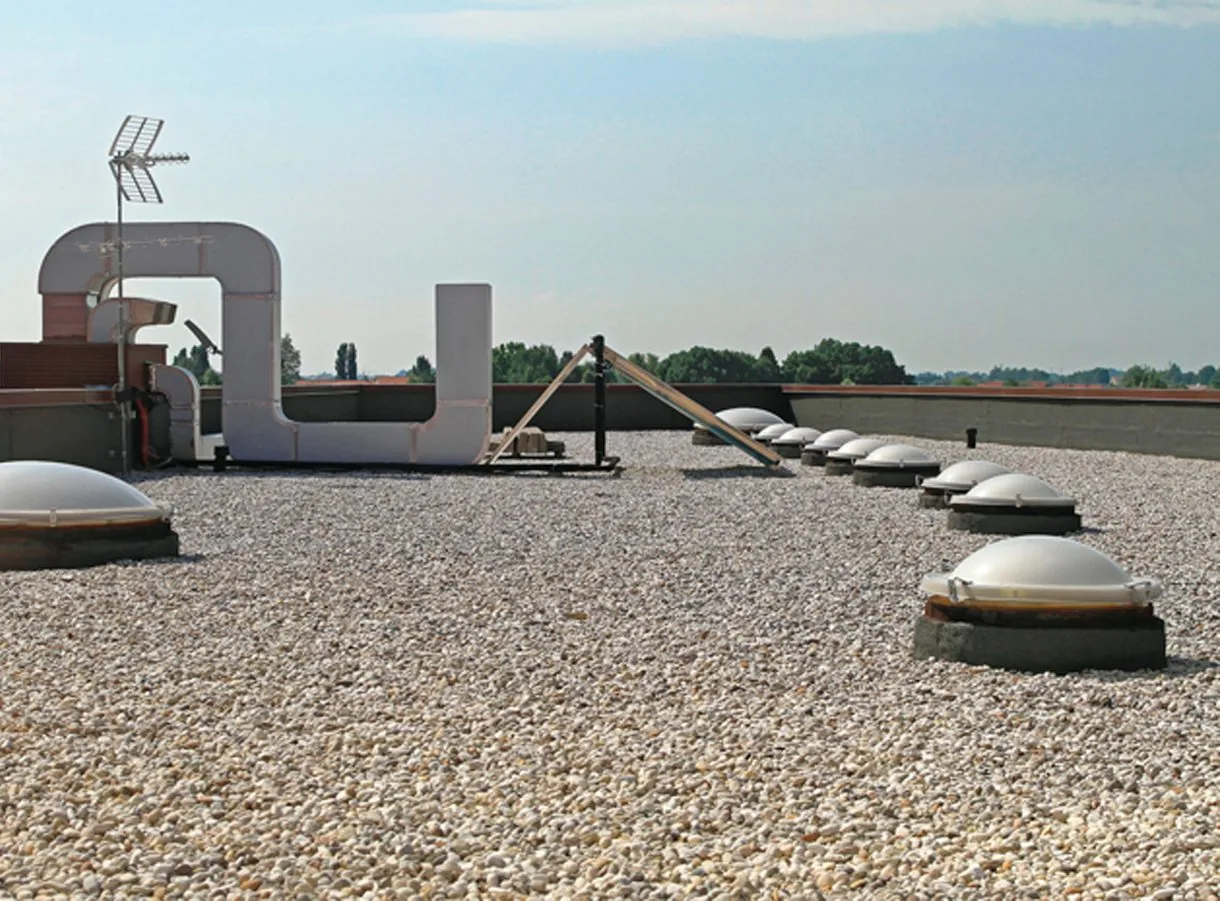
For a building with multiple roof assemblies, an built-up roof assessment follows its ply and surfacing configuration, while a TPO review examines heat-welded sheet. These systems do not share repair details by default. The general contractor receives the specified material, work boundary, dry-in point, and handoff needed before another trade covers the area.
When does repair become a replacement discussion?
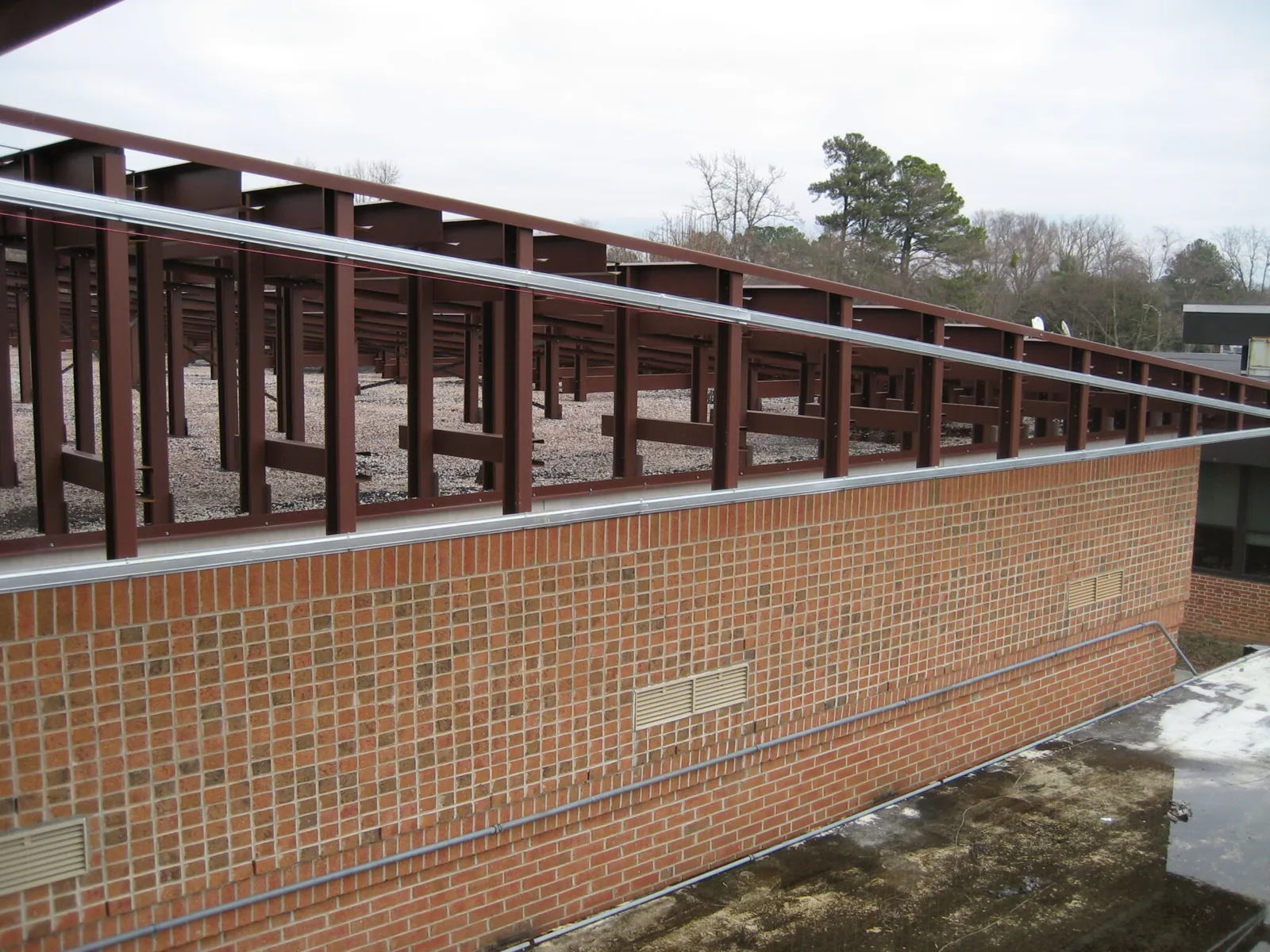
Repeated leaks across several zones, wet insulation, loose attachment, or deteriorated surfacing can make repeated patches less useful. We compare the measured repair area with the remaining serviceable roof and the owner’s construction schedule. If a recover is considered, we check layer count, attachment, moisture, added height, and drainage. Replacement planning includes removal depth, insulation, cover board, flashing, and protection below. The proposal separates immediate exposure from work that can wait for a capital window.
A condition record can keep test locations and repair photos attached to each roof section. A portfolio owner can compare repeated work without assuming that every Fishers roof uses the same system. If the assembly changes at an addition, we map that boundary and estimate it separately. Share the roof section, prior repair history, access window, and construction schedule before the next budget decision.
Talk to Our Roofing Team
Call 555-555-5555 or request a roof assessment. Tell us the address, the roof type if you know it and where water or damage is showing. We work across Fishers, Carmel, Noblesville, Westfield, Zionsville and the surrounding communities.
Roof Systems
Record the repaired section
Closeout identifies the installed layers where confirmed, preparation, patch materials, surfacing, photos, tested boundaries, and any area not reached. If material was removed, we note the substrate and insulation observed. If the work remains temporary, the record names its limit and follow-up date. The next inspection can compare the same detail and determine whether water has returned or the repair remains stable.
If repairs recur near the same wall, curb, or drain, the follow-up visit compares the original photos with the current detail. We identify whether a new opening developed or the first boundary remained unstable. That comparison keeps the next estimate tied to the failure mechanism rather than repeating the prior quantity.
For a facility near I-69 or the Olio Road employment areas, operating schedules and delivery routes still come from the site contact. We coordinate staging, access, and daily dry-in before work begins. The report leaves the owner with a measurable repair boundary and a clear next action.
Frequently Asked Questions
Can you patch modified bitumen over a blister?
We first check whether the blister is dry, bonded, or holding moisture below the sheet. The repair method depends on the tested layer and the surrounding membrane condition.
Does a cap-sheet crack mean the roof needs replacement?
Not necessarily. We inspect surfacing, laps, insulation, attachment, and repair history. Widespread deterioration or repeated leaks can change the comparison, but the scope follows the measured condition.
How does Fishers weather affect modified bitumen work?
Indianapolis summer normals combine warm temperatures with wet periods, while winter brings snow and thaw. We check current substrate and forecast conditions before heating, bonding, or exposing the assembly.
Can one test opening establish how much insulation is wet?
It confirms material at that sample point. We mark the location and use nearby readings or additional testing if the removal quantity depends on conditions beyond it.
What should the closeout include?
Record the roof section, layer observed, repair materials, photos, tested boundary, dry-in status, and any follow-up. Those notes help a later inspection distinguish a new condition from the completed repair.
Fishers, IN
Inspect the modified-bitumen layers
Share the roof section, leak history, prior repairs, access window, and construction schedule. We will identify the test and repair boundary supported by the assembly.