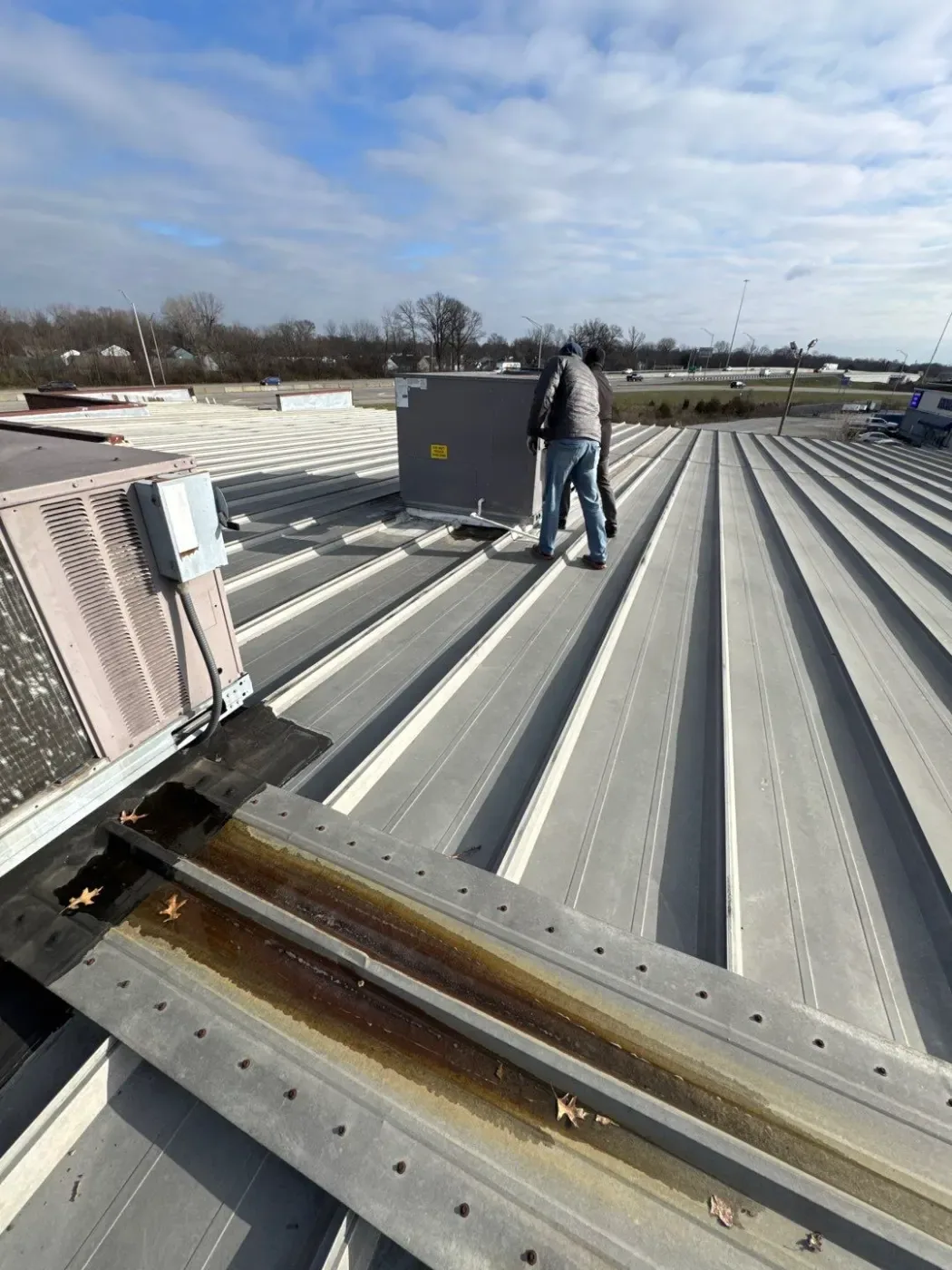
Roof Systems
PVC Roofing
A failed PVC seam can create a narrow entry point with a much wider repair consequence. We inspect the weld, adjacent sheet, flashing, and drainage route before estimating work. The first question is whether the material remains sound enough to accept a new tie-in. The field record names the roof section, test location, and conditions that could change the boundary. That lets the owner and general contractor compare repair with broader work using the same information.
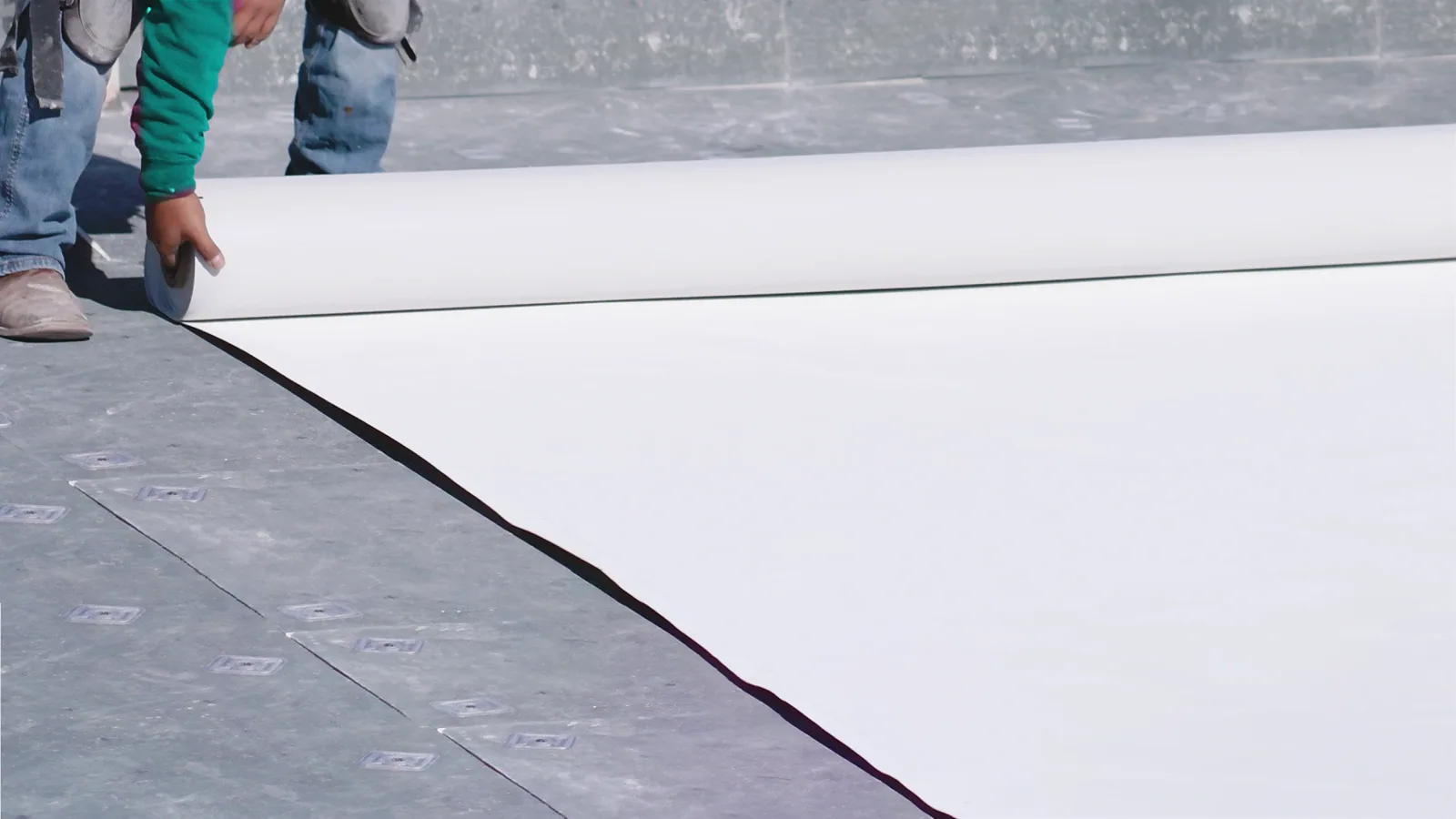
What is installed at the work area?
PVC membrane is a thermoplastic sheet joined by heat welds, but its actual assembly can vary by building and addition. We review available closeout records, field markings, attachment, cover board, insulation, and previous patches. A probe can identify an open seam. A test weld can check whether the sheet accepts a new connection after cleaning and preparation. If the roof has coatings or repairs from another material family, we identify those areas before selecting a solvent, cleaner, or accessory. The proposal keeps any unconfirmed layer separate from measured work.
Fishers Tech Park is a redevelopment district. For work there, we confirm equipment, delivery, and roof access with the facility contact before testing the assembly. A roof plan establishes the work area, and projects in Fishers Tech Park still need a field inspection to identify PVC details and access limits.
Where does a PVC seam let go?
Heat welds can fail when the surface is contaminated, the weld was incomplete, the sheet moved, or a previous repair disturbed the lap. We inspect the seam edge, check adjoining areas, and note whether fasteners or plates have shifted. At penetrations, the flashing and boot must connect to compatible PVC and remain protected from equipment service traffic. A repair that covers only the visible split can miss an open corner or a loose termination just beyond it. We mark the full observed defect and explain whether testing should extend farther.
In 2024, an EF2 tornado touched down in Hamilton County and continued across the line into Madison County. After a reported wind or hail event, we inspect the PVC sheet, perimeter details, equipment supports, and drains at the property. A storm record can help schedule the visit, but the report stays with roof-zone observations and tests.
Roof Systems
How can a seam affect interior conditions?
Water can enter at a lap and move beneath insulation before appearing inside. We compare the reported room with slope, drain locations, curbs, and prior repairs, then follow the likely route. If the roof field is dry at the seam but the interior remains wet, moisture testing or a controlled opening may be needed. We record the instrument, sample location, and restoration detail. One test applies to that location only. The owner can then decide whether a local PVC patch is enough or whether the repair needs to include wet material below the membrane.
116th Street connects downtown, I-69 commercial destinations, and eastern Fishers. On projects along the 116th Street corridor, we confirm property access, then inspect slope and details to trace the water path. A drainage check records the outlet and overflow, while a leak investigation connects interior reports with tested roof areas.
Roof Systems
How is PVC prepared and welded?
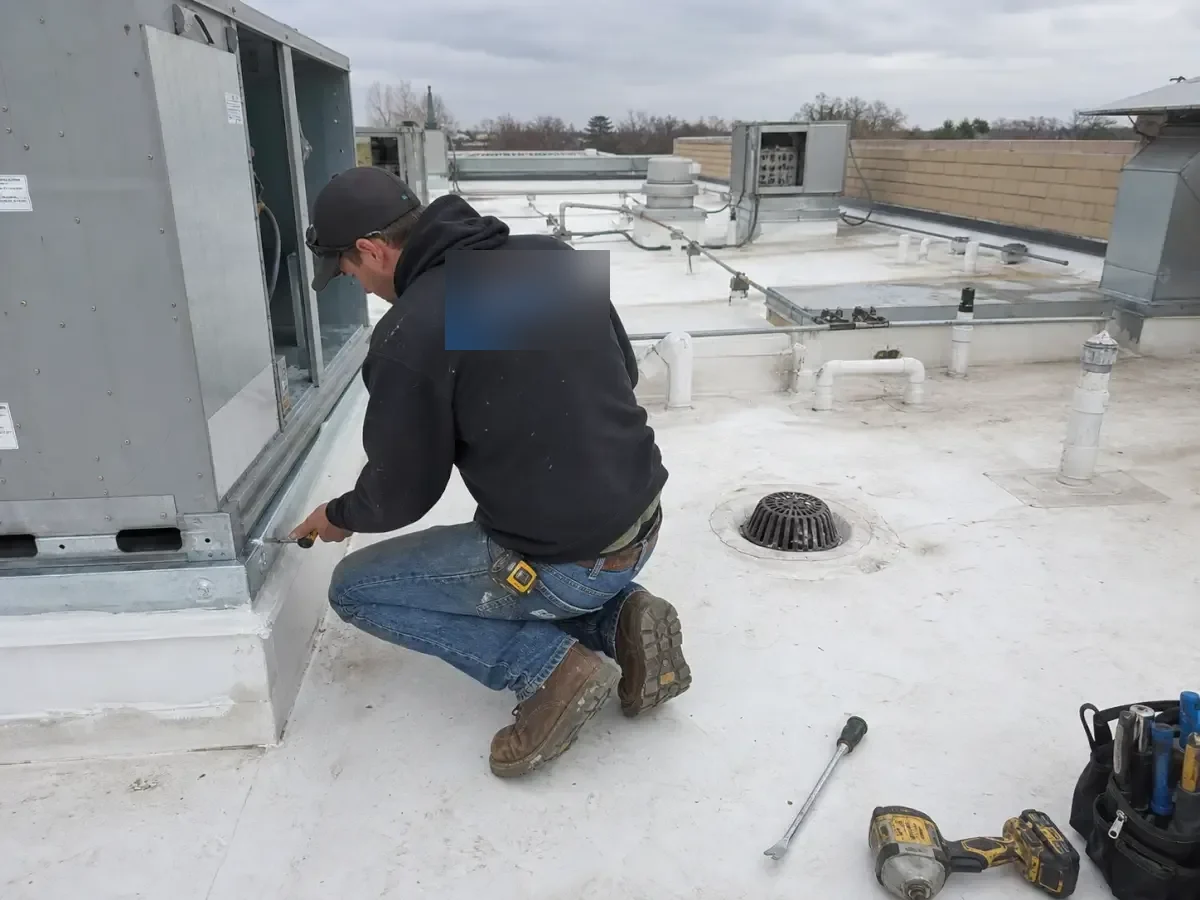
We remove loose or contaminated material to a sound repair limit, prepare the surface, and make a test weld before extending the seam. The repair sheet and flashing should match the installed system and follow its current product requirements. We probe completed welds and photograph the tie-in. At curbs and penetrations, a corner patch, reinforced flashing, or accessory may be required. If the sheet is brittle or the substrate has failed, the repair boundary must move. We obtain owner direction before expanding removal or changing the material scope.
The final walk checks every restored lap, termination, pipe boot, curb corner, and drain connection within the repair boundary. We record the test weld, installation date, surface preparation, material data, and photos before the next trade crosses the area. If a section remains outside the approved scope, it stays on the field map as an open item. The owner can then distinguish a completed repair from a nearby condition that still needs access or testing.
The Fishers commercial core follows I-69 and State Road 37, while many local buildings remain occupied during repair. The site contact sets the access window and any equipment shutdown. A phased work plan can coordinate tenants and other trades. For comparison with another thermoplastic assembly, a TPO roof review considers sheet compatibility and details, while KEE roofing has its own membrane composition and product requirements.
Weld quality changes with surface preparation, temperature, wind, and the condition of the sheet. We clean and dry the approved repair area, make a test weld, then adjust the equipment before extending the connection. A probe checks the finished seam after it cools. At a corner or penetration, we inspect how the field seam meets the flashing so a sound lap does not leave a weak transition at its edge.
When should the scope include more than a patch?
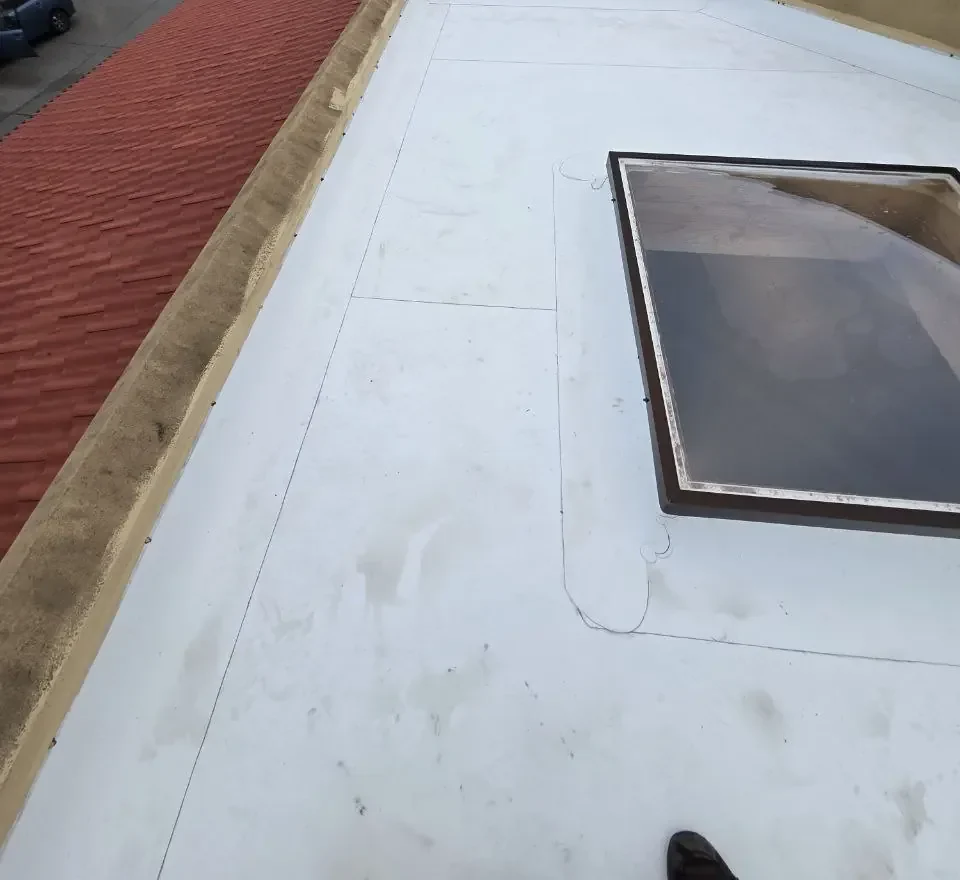
A localized weld repair can be appropriate when the surrounding PVC remains attached and the insulation is serviceable. Repeated open seams, multiple wet zones, loose attachment, or an aging field can move the decision toward recover or replacement. We compare the number and location of repairs with test results and the owner’s construction schedule. If a different material sits below the PVC, we identify the transition before removing more roof. The scope separates emergency dry-in, permanent work, and any later replacement decision so one price does not conceal several assumptions.
Timing can change when the repair requires a test opening, equipment isolation, or protection of production below. We identify who approves each step and which trade must finish before the flashing closes. On multi-tenant buildings, the work area and any interior barrier are set before removal starts. If the forecast shortens the shift, we stop at the dry-in point in the approved sequence. The closeout shows where the crew stopped, what material remains exposed, and who accepts the next access window. Those details help a general contractor keep the roof scope aligned with the rest of the job.
Carmel’s Meridian Street Corridor has a high concentration of office workers and complementary employment uses. For a Fishers portfolio with projects in Carmel, each roof retains its own assembly record and access plan. A portfolio schedule can compare repair trends without blending separate assemblies or building histories. Share the roof section, leak history, equipment work, access window, and construction schedule; we will identify the next supported scope choice.
Talk to Our Roofing Team
Call 555-555-5555 or request a roof assessment. Tell us the address, the roof type if you know it and where water or damage is showing. We work across Fishers, Carmel, Noblesville, Westfield, Zionsville and the surrounding communities.
Frequently Asked Questions
Can every PVC seam be repaired with a new weld?
No. The sheet must be clean, sound, and compatible with the new connection. We test a representative area, probe the completed weld, and move the boundary if the material cannot hold a reliable tie-in.
How do you check damage after a Fishers storm?
We inspect reported roof zones, seams, edges, flashings, equipment supports, and drains. The report ties any storm-related recommendation to observed conditions and tests.
Does an open PVC seam mean the insulation is wet?
Not by itself. We map the entry detail and use moisture readings or a controlled opening when concealed layers could change the removal boundary.
What if PVC meets another membrane at an addition?
We identify both assemblies and document the transition before specifying a tie-in. The repair scope names compatible materials and any testing needed at the interface.
What information speeds a repair estimate?
Send the roof plan, seam location, leak history, prior repairs, equipment schedule, site access rules, and construction window. We will identify the test and repair boundary before pricing additional removal.
Fishers, IN
Inspect the PVC seam before expanding the scope
Share the roof section, leak history, access window, and construction schedule. We will identify the seam condition and the next repair decision.