Commercial Roofing Services
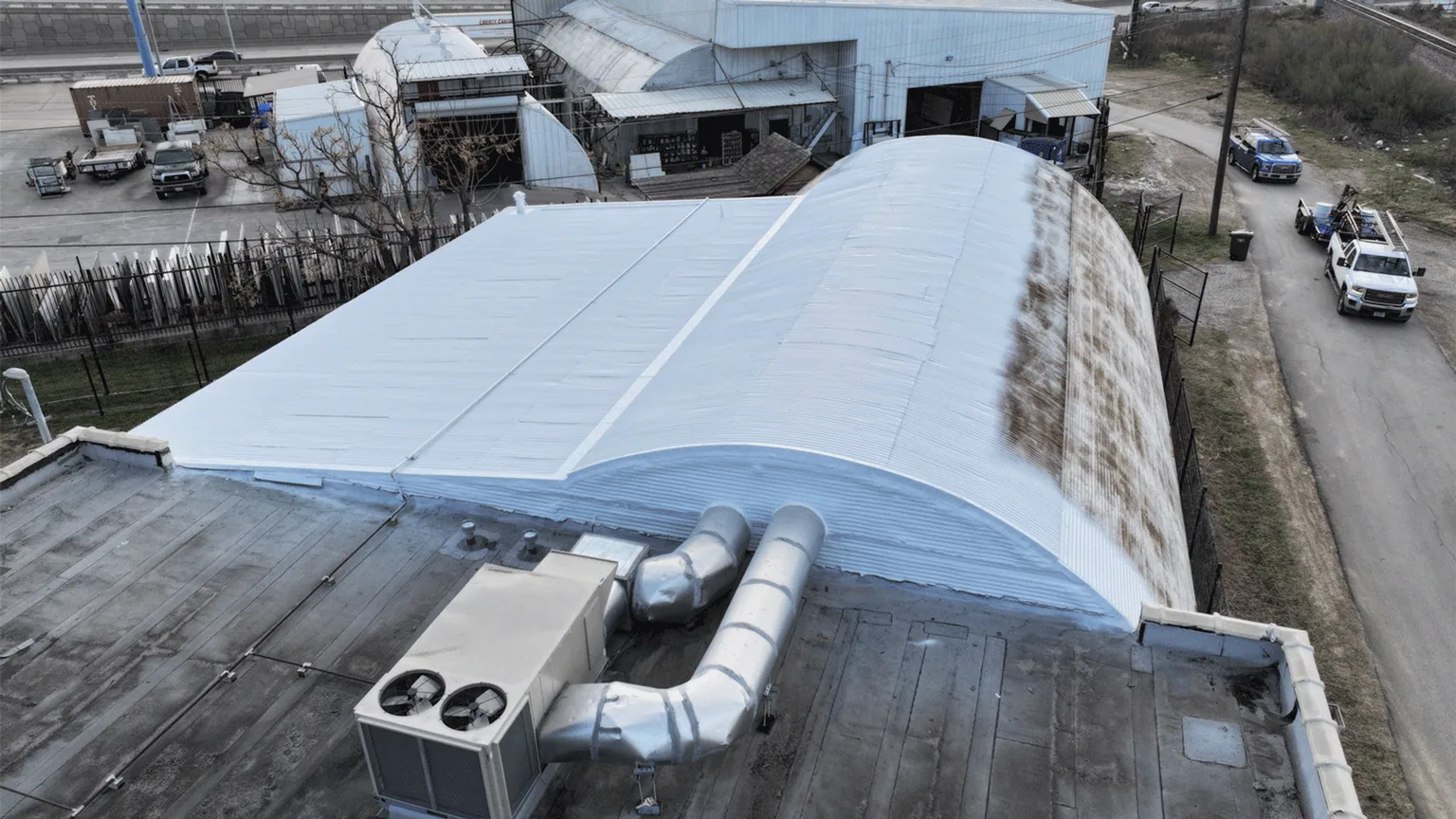
Commercial Roof Coating Restoration
A coating cannot restore an assembly that is wet, loose, or moving at its seams. In Fishers, IN, we first determine whether the existing roof can accept another surface system and whether its drainage and transitions can remain. The review checks membrane condition, prior repairs, moisture, adhesion, and areas where water stands. If those conditions support restoration, the scope identifies preparation, repairs, material, and application limits. If they do not, the owner receives the reason a coating would conceal rather than correct the roof problem.
What must the existing roof support?
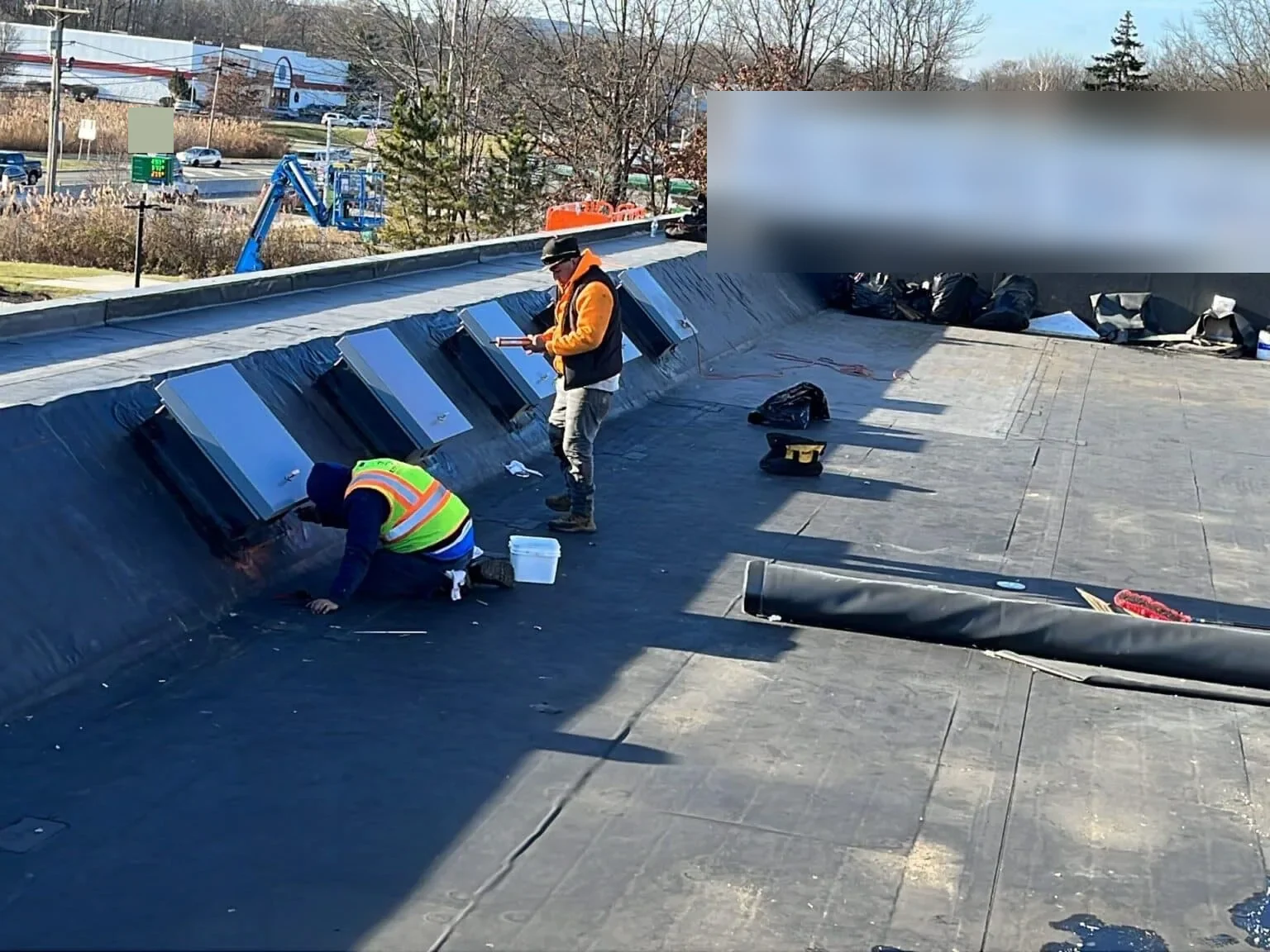
We start by identifying the assembly, age information available to the owner, repair history, and conditions reported inside. A roof walk checks seams, fasteners, perimeter transitions, penetrations, drains, and patches. We look for loose sheets, blistering, open laps, wet insulation, soft deck, and areas where an old coating has lost adhesion. A coating is a surface treatment; it does not replace failed attachment or stabilize a compromised deck. If the condition varies by addition, we map separate zones rather than treating a large roof as one uniform surface.
Testing may include adhesion checks, moisture screening, and controlled openings where the result affects whether the existing assembly can remain. Each method answers a different question. A pull test measures bond at its test area, while a core exposes the layers at one point. The moisture survey can identify candidate areas, but a thermal pattern alone does not establish a wet layer. A roof condition inspection records the visible details and test locations before the restoration boundary is set.
Indianapolis climate normals include a normal July high of 85.2 degrees and 4.95 inches of June precipitation. Heat and wet-weather exposure affect when a coating can be applied and how the surface must be prepared. We coordinate collection and installation windows with product conditions, forecast, roof temperature, and the building schedule. A planned application may need separate mobilization when rain, dew, or a cold surface would prevent proper cure. We do not treat a calendar date as proof that a surface is ready.
Where can a coating stop working?
Weak adhesion can lead to peeling or loss of a continuous film. Trapped moisture can continue to affect the assembly below it. An uncorrected drain problem can leave water at the same low point, and a moving seam can split a coating that bridges it. Before application, we remove incompatible material, clean the surface, repair approved defects, and prepare test areas according to the selected system. The silicone system review compares conditions suited to that coating; an acrylic coating assessment addresses a different material and exposure profile.
The coating selection follows the existing membrane, surface condition, slope, drainage, and project requirements. Silicone and acrylic systems do not have identical resistance to standing water or identical application requirements. We identify primer needs, reinforcement at transitions, target coverage, and the places where coating should terminate. The edge metal and coping inspection includes terminations where a coating must end cleanly without covering a movement joint or blocking a drainage path.
At Crosspoint Business Park, office operations make staging and roof access part of the work plan. We coordinate with the property contact, then inspect each roof section and document its surface, transitions, and equipment. A roof with multiple additions may need different repairs or coating limits by area.
Commercial Roofing Services
How does restoration prepare the surface?
Preparation can include removing loose coating, cleaning contaminants, drying the surface, repairing seams, and replacing failed flashing at selected details. We define what is included before mobilization because pressure washing, scraping, debris containment, and protection of equipment can change access and labor. Drains and scuppers remain open throughout the work. The drainage review checks outlets, overflows, and low points so restoration does not leave an existing water path unresolved.
Repairs must use materials compatible with both the existing roof and the coating system. A seam that needs reinforcement is prepared and treated as a detail, not simply covered in a field pass. At a curb or pipe penetration, we determine whether the flashing can be restored or needs replacement before the coating reaches it. The penetration-flashing scope can address skylights, curbs, and other roof openings as separate work. If larger sections need removal, we compare the restoration scope with recover evaluation or tear-off before the owner commits to a surface treatment.
During application, we track coverage by roof zone, confirm material transitions, and protect areas that cannot be coated in the same sequence. A staged application has to leave a clean tie-in between completed and pending areas. Equipment, electrical pathways, and drains cannot be buried under coating. The field plan lists who will move or protect each item and when it can return to service. At closeout, photographs and zone labels show the finished boundary and any detail that remains outside the coating work.

Commercial Roofing Services
When can the crew apply the coating?
Application depends on the substrate being clean and dry, the roof temperature meeting product limits, and enough time for the material to cure before rain or dew. Wind, shade, roof moisture, and equipment activity can change the usable window from one section to another. We divide the work into areas that can be prepared and closed under the forecast. If a section cannot cure safely before conditions change, the schedule moves rather than leaving an exposed edge without a return plan.
Fishers’ commercial core follows I-69 and State Road 37, with offices, retail, and other commercial uses near those routes. Material staging and access are set with the individual property contact, not assumed from the corridor. A site near the Fishers District may also require coordination around occupied retail, event, and office activity. We confirm delivery paths, operating hours, roof access, fire-lane constraints, and work-zone limits before materials arrive.
Indianapolis snowfall normals are concentrated in winter, including 8.8 inches in January, 6.0 in February, and 6.4 in December. Cold-season exposure can restrict cleaning and coating work; snow, ice, and meltwater also affect safe access. We schedule surface preparation for conditions that allow the chosen system to bond and cure. If the roof needs temporary stabilization before the coating window opens, a targeted repair visit can address the immediate defect without pretending the restoration is complete.
What belongs in the restoration proposal?
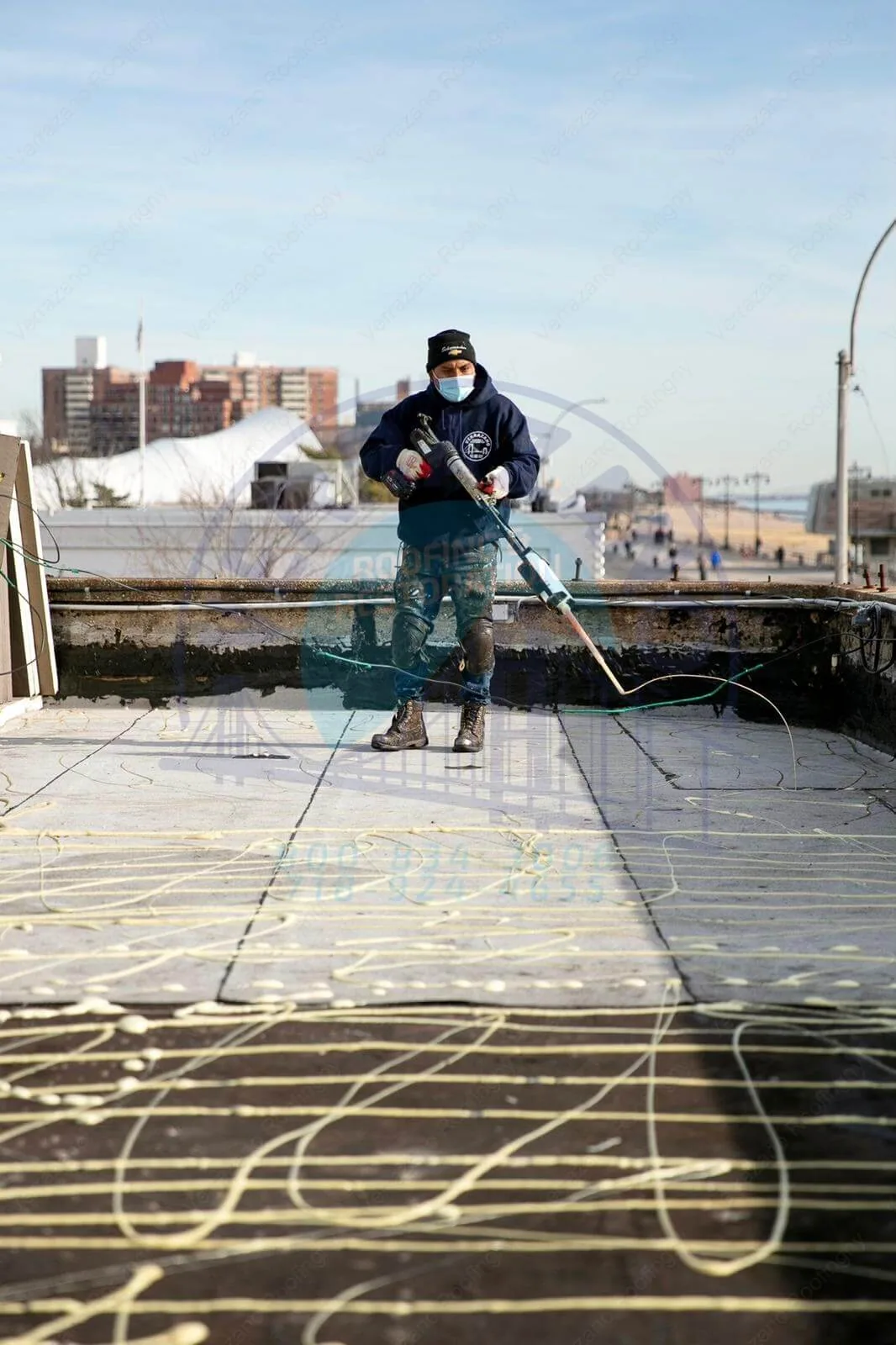
A useful proposal names the existing roof sections, test locations, preparation method, repairs, coating material, coverage requirements, reinforced details, exclusions, and closeout checks. It states how substrate concerns will be handled if additional defects appear after cleaning. We identify measured quantities separately from assumptions and set an approval point before adding removal, new flashing, or deck work. For a capital decision, a roof capital plan can compare restoration with recover or replacement using the same map and assembly information.
Cost changes with roof height, access, cleaning needs, old coating removal, repair quantity, material system, detail density, and the amount of staging required. Wet insulation, incompatible surface material, or repeated movement can make a coating unsuitable. We explain which finding changes the recommendation and what test would resolve an open question. Skipping preparation can lead to adhesion failure or water at an untreated transition.
Closeout preserves application conditions, test results, coverage by area, photographs, and excluded sections. We identify the follow-up needed at drains, equipment penetrations, and transitions after other trades return. Concealed layers remain outside the coating boundary unless they were separately tested.
Talk to Our Roofing Team
Call 555-555-5555 or request a roof assessment. Tell us the address, the roof type if you know it and where water or damage is showing. We work across Fishers, Carmel, Noblesville, Westfield, Zionsville and the surrounding communities.
Frequently Asked Questions
Can a roof coating fix active leaks?
A coating can be part of restoration only after the leak path, assembly, and substrate are assessed. We repair active defects and test for moisture before setting an application scope.
Which roof conditions guide a silicone or acrylic choice in Fishers?
The existing surface, drainage, standing-water exposure, product requirements, and project conditions guide the selection. We identify the system and its preparation needs in the proposal.
What if testing finds wet insulation?
We map the affected area and determine whether additional openings change the removal boundary. Confirmed wet material is addressed before coating; a surface application does not dry concealed layers.
What should be included at closeout?
Expect marked areas, material and application records, preparation details, photographs, test results, and exclusions. Any section outside the work remains identified for a separate decision.
Related Roofing Work
Fishers, IN
Request a coating feasibility review
Share the roof plan, existing system, repair history, reported leaks, and access schedule. We will inspect the surface, identify tests that affect feasibility, and define restoration limits.