Roofing Manufacturers
GAF Commercial Roofing
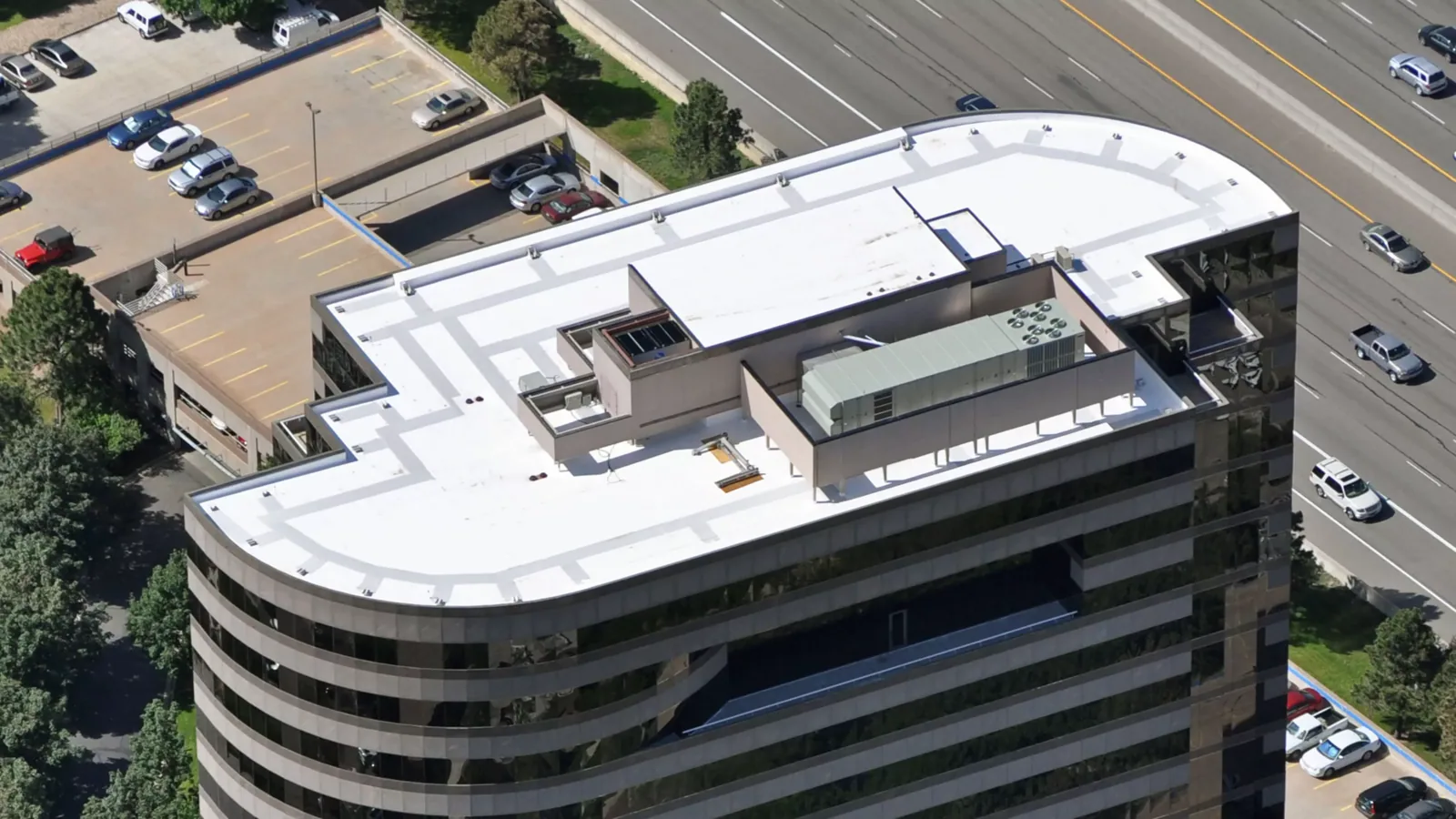
A lifted seam or recurring leak does not tell an owner which GAF roof component has failed. We inspect the exposed membrane, seams, perimeter, penetrations, and drainage before recommending a repair or larger scope. The assembly matters because a membrane patch must tie into sound, compatible material. Near I-69 and State Road 37, drainage and cold-weather exposure belong in the field record. We document what is visible, what remains covered, and which next step can resolve the open question.
GAF makes commercial roofing products, including thermoplastic membrane options. The product name alone does not establish what is installed on a particular building. We compare roof markings, available closeout records, field measurements, and visible details before selecting compatible materials. A TPO roof assembly may require a different repair method from a coating, modified bitumen, or a different membrane. Owners comparing assemblies can review Carlisle SynTec membrane options and Holcim Elevate commercial systems alongside the installed roof.
Where does the membrane stop holding water out?
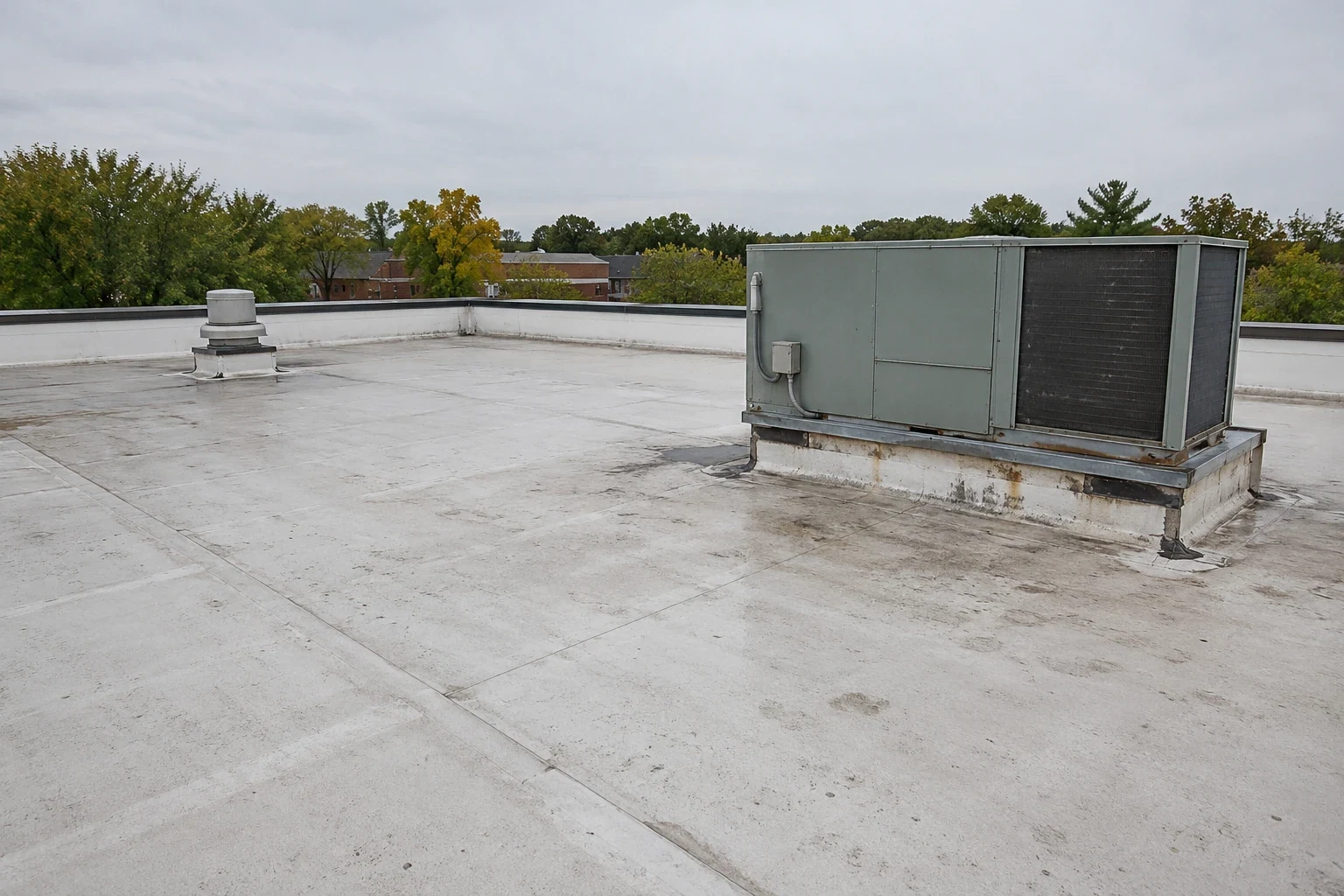
A leak at a curb can begin at a corner, seam, counterflashing, or adjacent sheet, even when the interior stain sits several feet away. We trace the water path instead of treating the ceiling mark as the roof boundary. On a thermoplastic membrane, we check whether seams remain fused, whether the sheet has pulled from a termination, and whether old repairs have changed how water reaches the detail. The inspection records the condition before we choose a patch or request a wider opening.
Repairs often fail when a new piece covers loose material or ends before the affected seam. We remove only enough material to identify the stable repair boundary, then prepare the surface and complete a compatible tie-in. If wet insulation extends beyond the visible opening, we photograph the condition and ask for direction before expanding quantities. A measured repair scope can separate immediate dry-in from permanent work, with each roof section identified for the owner and general contractor.
Traffic, equipment, and repeated wetting can change a detail. We record punctures, open corners, fastener movement, and old sealant. A coating does not reconnect a failed seam; deteriorated material may need localized replacement. The report separates observed conditions from questions that remain open.
Which field checks establish the assembly?
Before naming a GAF product or repair method, we inspect accessible roof edges, field seams, curbs, drains, and wall transitions. Available plans, invoices, product labels, and warranty documents can help identify the installed system, but conflicting records need a field check. We note membrane color and texture, attachment clues, insulation transitions, and previous repairs without assuming that every roof section uses the same materials. Where safe access allows, a hands-on roof inspection provides the first set of observations. The record also notes whether a drain was flowing during the visit, whether the outlet could be reached safely, and whether a nearby seam changed the route to that drain.
Some conditions need more than a surface view. A moisture survey can flag areas for further investigation, while a core may confirm concealed layers. We identify the test area and required approval before opening an assembly. Results include the limits of the method and any condition that still needs confirmation.
Fishers recorded more commercial building permits in 2024 than in 2023. That activity makes current records useful as buildings change or add equipment. Permit totals do not identify an individual roof, so we tie field observations to a map and record areas we could not reach.
Roofing Manufacturers
When is a patch enough for the repair boundary?
A localized repair can make sense when the membrane is generally serviceable and the failure is contained at a seam, penetration, or flashing transition. We identify the affected dimensions, nearby details, and any wet materials that need separate review. The scope states surface preparation, membrane tie-in, and perimeter finish. That lets an owner compare a targeted correction with broader work.
When leaks recur, we map each roof section and check drainage, edge movement, equipment traffic, and concealed moisture for a shared cause. A replacement review compares removal, recovery eligibility, insulation needs, edge work, and temporary protection. We do not recommend replacement from a product label alone. The existing assembly, substrate, drainage, and owner schedule determine which options can be priced responsibly.
The Fishers District commercial area is a useful service reference, but every visit needs the building map, contact, and work window. We set a dry-in point for each opened area and account for preparation conditions and tenant activity.
Roofing Manufacturers
How does a GAF scope fit an occupied building?
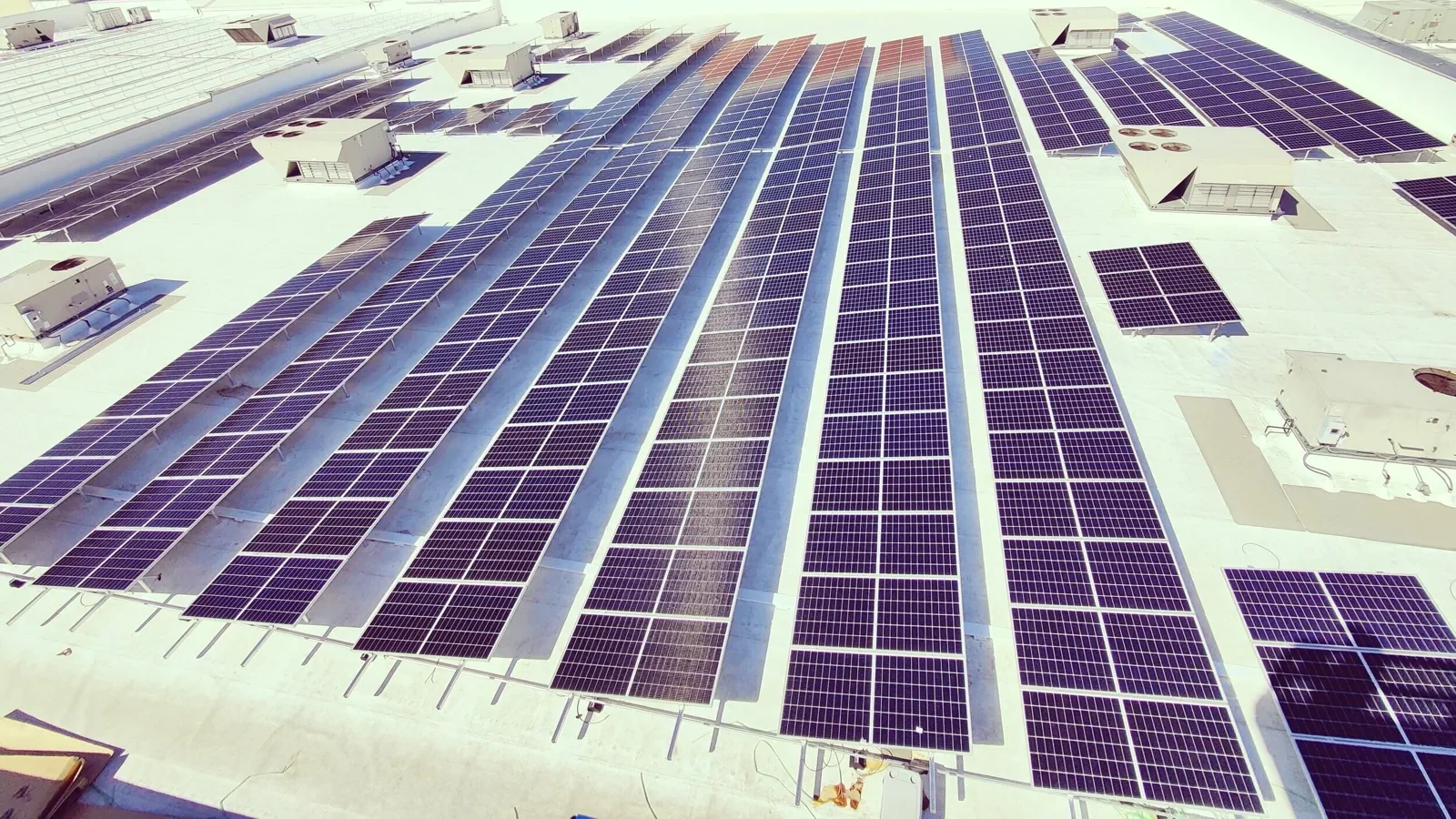
Occupied work needs a sequence for roof access, material staging, debris, and daily closeout. We divide the work by roof area when the assembly allows a controlled phase. The schedule names affected spaces and explains how we will handle concealed conditions that change the scope.
Indianapolis averages about 25.5 inches of snowfall, and freeze-thaw conditions can leave water at drains and edges. We check drainage and forecast before opening a seam. A phased occupied-building plan names daily limits, temporary cover, and the contact who can authorize a return after weather delays.
In the Fishers Life Sciences & Innovation Park, research and contract manufacturing operations may require careful access coordination. The park does not establish a roof type. A manufacturing roof work plan can record staging and production limits before mobilization.
What should the owner compare before choosing a system?
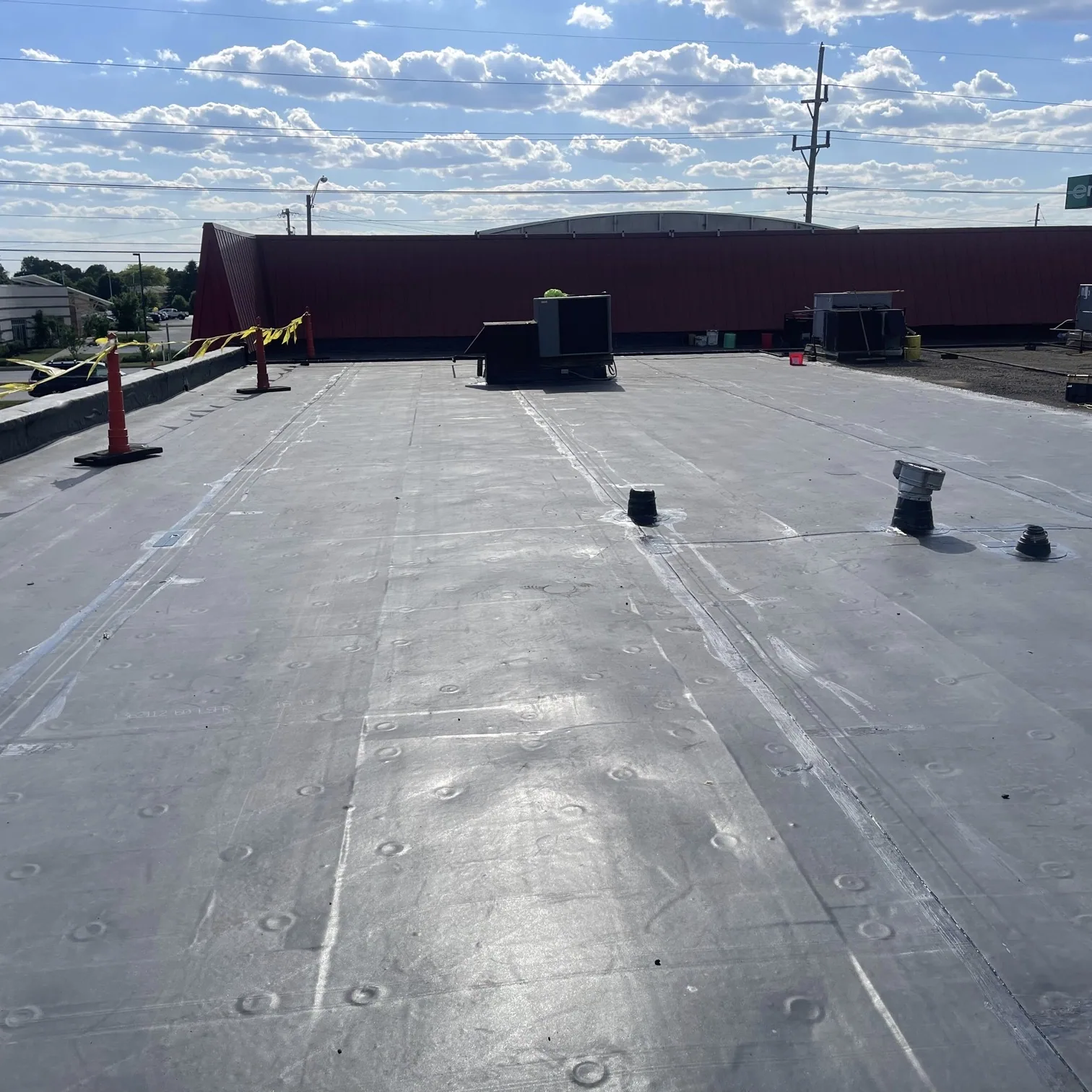
A proposal should state membrane and insulation scope, attachment, edges, drainage, removal quantity, and conditions that could change cost or timing. Compare whether it corrects one leak point or the connected roof area. We list specified components and project requirements; a brand name alone does not establish compatibility.
The issued warranty controls its terms. We review the owner's copy, note covered sections, and identify questions for the issuing party. Our record can preserve photographs, materials, test results, and open items, while the owner keeps approved submittals and closeout documents with the roof file.
A roof plan can separate immediate repair from later capital work. We record prompt actions, conditions to monitor, and tests that could change the decision. Findings remain tied to the areas we could inspect.
Talk to Our Roofing Team
Call 555-555-5555 or request a roof assessment. Tell us the address, the roof type if you know it and where water or damage is showing. We work across Fishers, Carmel, Noblesville, Westfield, Zionsville and the surrounding communities.
Frequently Asked Questions
Can you repair a GAF membrane without replacing the whole roof?
Yes, when the affected area is defined and surrounding material can support a compatible repair. We inspect the seam, flashing, substrate, and nearby repairs, then set a boundary that can be prepared and tied in. Widespread wet insulation or repeated failures may change the scope.
How do you confirm which GAF system is installed?
Field markings and project records are starting points. We compare them with seams, membrane details, attachment clues, and available closeout paperwork. If those sources conflict, we state what remains uncertain and identify whether a sample or additional record is needed.
Will a GAF warranty cover a new leak?
The issued warranty and its terms control that question. We document the location, date, observed condition, and service history, then identify the information needed for the owner to contact the issuing party. We do not assume coverage from the membrane brand alone.
What can interrupt a membrane replacement in Fishers?
Access limits, concealed deck or insulation conditions, wet weather, and the required dry-in sequence can change timing. We identify the planned work area and stop points before removal, then document any exposed condition that requires owner direction.
What should I send before requesting a GAF roof review?
Send the roof plan, available product or warranty documents, leak locations, repair history, and the contact who can authorize access. Include tenant hours or construction dates that constrain staging. We will review those records and confirm the next inspection step.
Fishers, IN
Set the repair boundary before work begins
Send the roof section, leak history, available GAF records, access window, and construction schedule. We will review the documents, inspect the approved area, and identify the repair or testing step that should come next.