Service Areas
Noblesville
A roof renewal in Noblesville starts with the building’s actual condition, not the square footage in a development announcement. Since 2020, Noblesville has had more than 7.3 million square feet of new and upcoming commercial construction, and its featured districts include Innovation Mile, Washington Business Park, Campus Center Business Park, and Deer Creek Business Park. That pace makes roof planning useful for owners and general contractors coordinating phased work, but no development total tells us the roof type or current condition at an individual property. Manufacturing, life sciences, and technology are among Noblesville’s economic-development sectors. For each project, we confirm the use, roof plan, access requirements, and construction schedule before setting a repair boundary. Indianapolis winter normals include recurring snow and freeze-thaw, so drainage and daily dry-in need to be part of the scope discussion.
What should the first visit confirm?
Begin with the reported leak, roof drawing, and repair history. We locate the affected room or equipment zone, then inspect nearby seams, drains, curbs, penetrations, edge metal, and changes in roof level. A commercial roof inspection documents what is visible, which assembly can be verified, and what the crew could not safely reach. If the entry point remains unclear, a leak investigation can test the likely water path before the estimate adopts a larger area.
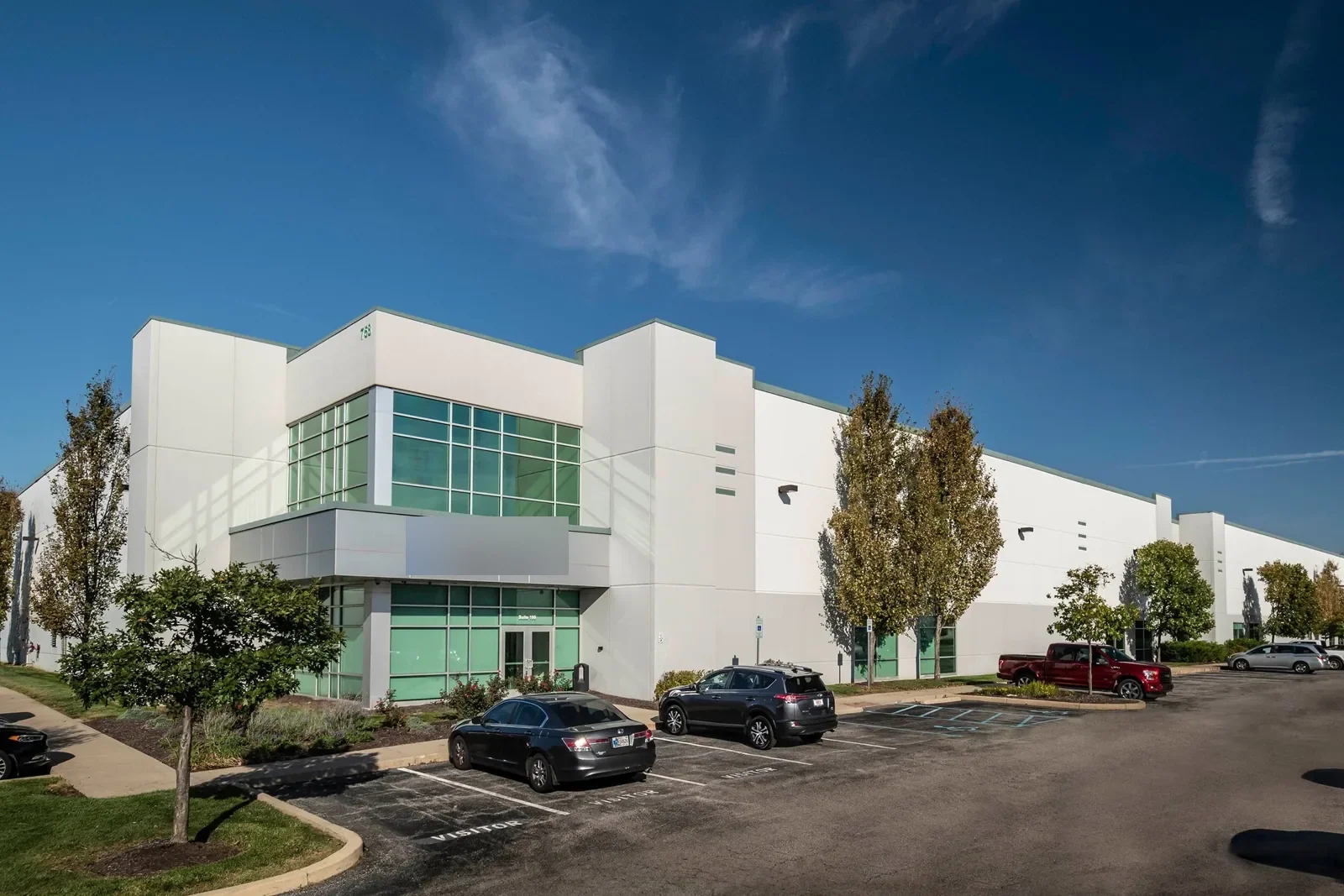
Noblesville’s development districts cover different property settings. Innovation Mile, Washington Business Park, and Campus Center Business Park are distinct areas within the municipality. We keep each building and roof section tied to its own plan and field photos. A manufacturer, facility manager, or general contractor can then use the same record without carrying one building’s finding into another scope.
When drawings and exposed edges disagree, list the mismatch and propose a specific test. A scan may help identify a candidate area, while a test opening can confirm layers at that location. Neither result should become a roof-wide conclusion without representative evidence. The owner receives the inspection limit and the next action required to resolve it.
How does winter water reach the assembly?
Snow can cover drains, seams, and low points, while thaw sends water across details that were hidden during the cold period. Indianapolis normals record 25.5 inches of annual snowfall and repeated winter-to-spring freeze-thaw cycles. We note whether the roof surface was clear, whether the outlet was accessible, and which details should be revisited after melt. A drainage inspection checks strainers, sumps, scuppers, and the route toward discharge. If water stays after an outlet is clear, slope, insulation, or deck movement may need testing before proposing a correction.
At a curb, edge, or wall, we check for loose attachment, opened seams, displaced flashing, and prior patch material. One failed transition can direct water into a broader area, so mark where the repair boundary stops and which tie-in surfaces remain sound. If temporary protection is needed, identify the covered zone and the person who will check it. The owner should know whether it limits active entry or resolves the underlying defect.
Central Indiana storm records provide regional context for hail and wind, but they do not confirm damage at a specific Noblesville building. We describe visible displacement, puncture, or seam separation and compare it with pre-existing wear when photographs or prior records are available. That makes the next scope decision rest on observed material rather than the weather label.
Service Areas
How should work be sequenced across different sites?
Confirm roof access, safety orientation, staging, delivery hours, equipment shutdowns, and interior protection with the property contact. A general contractor coordinating several projects may need different closure plans for each site. We name the area to be opened, the dry-in point, and the person authorized to approve added quantities. An occupied-building sequence can document zone handoffs and preserve tenant or production access where the building remains active.
Noblesville’s featured business districts include a mix of named development settings. A planned or partially occupied park does not tell us which buildings are open or what rules apply on the work date. Confirm the current delivery path, gate requirements, roof hatch, and permitted work window for the specific project. If an access delay shortens the shift, reduce the amount of exposed roof rather than compromising the closeout. At a project handoff, we compare the roof map with current drawings and addenda. The record marks where planned work meets the existing assembly, identifies the tie-in owner, and names who can approve a field change.
Timing and cost depend on system, roof height, material lead time, disposal, weather, staging equipment, and how much can be protected each day. Where a concealed layer affects quantities, stop at a stable edge, photograph the exposure, and request approval before extending removal. Keep a change order tied to measured conditions and a defined location.
Service Areas
When is a repair no longer the smallest sound option?
A localized repair can work when the defect is contained and the adjoining material can accept a durable tie-in. Repeated leaks, moisture at several test points, weak attachment, or widespread edge failure can support a wider comparison. We state which observations justify repair, recover, or replacement and what test could change the recommendation. A replacement estimate should separate removal, insulation, edge work, drainage, disposal, and concealed allowances rather than folding uncertain quantities into one total.
Noblesville’s manufacturing, life-sciences, and technology sectors can involve different operating constraints. We ask the owner or site manager for the actual production schedule, equipment sensitivity, and hold period; we do not infer those conditions from a sector label. A manufacturing roof review can be planned around shutdown approvals and protected work zones when those needs apply.
If a larger capital project is not ready, assign a follow-up trigger. A new leak, an opening at the same seam, or a test result that changes the moisture boundary may move the timing forward. A roof asset review can rank confirmed risk by section and keep deferred work visible without presenting deferral as a permanent solution.
What should remain with the owner after repairs?
Keep a marked roof plan, dated photographs, verified assembly, work completed, material installed, test points, limitations, and open interfaces. If snow, equipment, or access prevented a full inspection, identify the unverified zone and the next safe condition for review. Note whether temporary protection remains and who checks it. The next project manager should be able to find the same location and understand what has changed since the prior visit.
For a Noblesville roof assessment, send the building plan, leak history, access window, repair documents, and project schedule. We will define the inspection boundary and return a scope decision supported by the evidence available at that property.
Talk to Our Roofing Team
Call 555-555-5555 or request a roof assessment. Tell us the address, the roof type if you know it and where water or damage is showing. We work across Fishers, Carmel, Noblesville, Westfield, Zionsville and the surrounding communities.
Frequently Asked Questions
Does the city’s construction total describe roof area?
No. The reported square footage covers new and upcoming commercial construction, not roof area. We measure the building sections included in the inspection or estimate.
Can one roof inspection cover several Noblesville properties?
We can coordinate visits across a portfolio, but each property needs its own roof map, access record, conditions, and work recommendation.
What if snow hides the drain during the visit?
We mark the outlet as unverified, describe the inspection limit, and schedule a safe follow-up after it is visible. A hidden drain is not counted as clear.
How do you control added work after tear-off?
Stop at a protected boundary, photograph and measure the exposed condition, then submit the added quantity for approval before continuing.
Which documents help compare repair and replacement?
Provide roof drawings, test results, repair history, access limits, and operating constraints. We will separate confirmed work from unknown layers and state what could change the recommendation.
Fishers, IN
Set a building-specific roof review
Share the roof plan, leak history, access rules, and project schedule. We will document observed conditions and identify the next repair or testing decision.