Commercial Roofing Services
Roof Insurance Claim Assistance
A claim file is easier to review when the roof findings and repair scope refer to the same marked areas. In Fishers, IN, we document observed damage, prior conditions, tests, and work completed without treating a storm date as proof of cause. Photographs, roof-zone labels, and a measured repair boundary help the owner compare the inspection with estimates and insurer questions. We explain what the roofing evidence supports, what remains uncertain, and what inspection or access could answer the next question.
What belongs in the roofing record?
We identify each roof section, photograph the affected details with surrounding context, and record the date, conditions, and access limits. Close views show a seam, puncture, flashing edge, or damaged component; wider views locate that item on the roof plan. Interior photos can connect a reported room condition with the roof area inspected, but a stain alone does not establish the entry point. Prior repairs and maintenance images help distinguish a current change from conditions recorded before the event.
The findings should distinguish visible damage from concealed conditions. A photograph may show a displaced edge, while an opening may be needed to assess attachment or insulation. We state the method and location for each test and whether it confirmed a layer condition. The roof inspection can set the mapped route, and a moisture survey can help select candidate test areas where the result affects repair quantity. Any area not reached, opened, or tested remains outside that finding.
Estimates also need a stable basis for comparison. We list the materials, preparation, removal limits, flashing details, dry-in, and closeout checks included in the proposed work. If one estimate includes deck replacement and another assumes the deck remains, those scopes do not describe the same work. A condition report can preserve the photos, map, and open items together so later reviewers can see which observations support each line of work.
How do you separate damage from prior wear?
We compare reported timing with service records, patch age when documented, material condition, and nearby roof sections. Fresh displacement, a new puncture, and long-term deterioration may appear in the same area, so we describe each separately rather than applying one label to the entire roof. A storm can expose a weakness without proving when that weakness began. If the evidence cannot distinguish event damage from earlier condition, we state that limit and identify what additional inspection could clarify.
Hamilton County appears in National Weather Service tornado climatology, and a 2024 EF2 crossed from Hamilton County into Madison County. We compare the event report with dated site photographs, prior maintenance records, and the roof conditions found during inspection. The documented location and extent of each observed condition guide the repair discussion. The storm assessment documents observed conditions and repair needs; it does not determine policy coverage or replace the insurer’s decision.
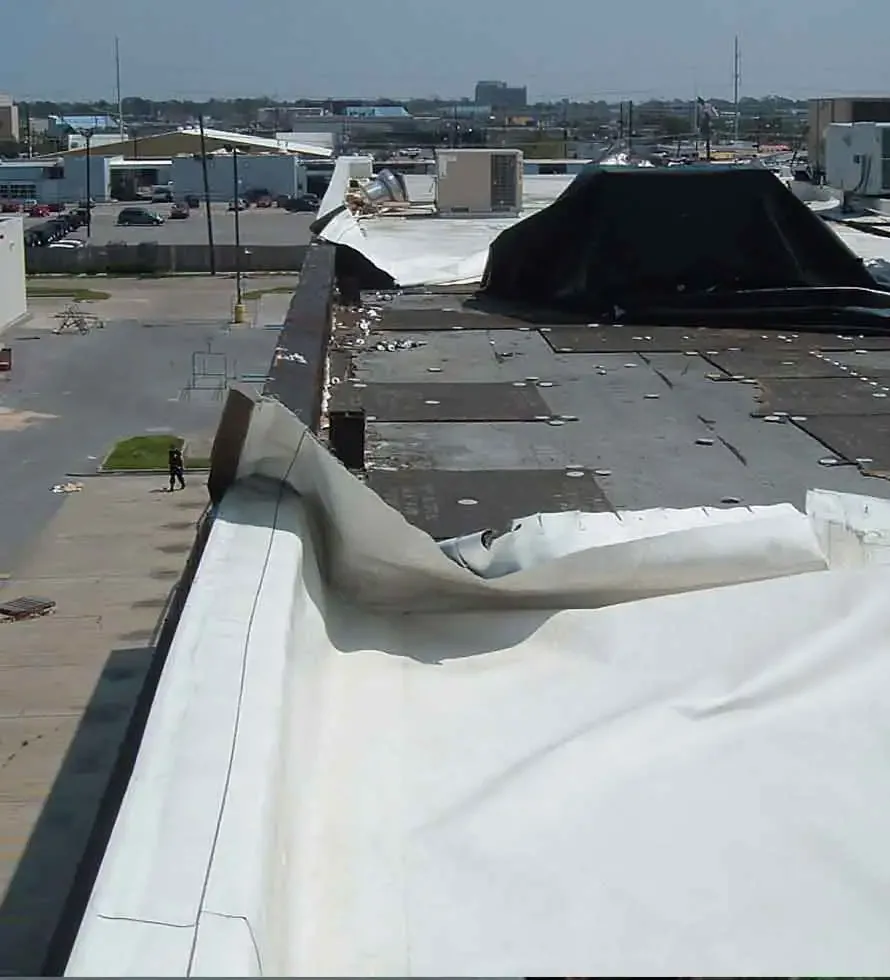
Wind, hail, falling branches, and wind-driven rain can affect different parts of an assembly. We inspect roof edges, fasteners, seams, penetrations, curbs, drains, and wall transitions, then compare damage with exposed surfaces and nearby details. A wind-related roof review may focus on edge restraint and attachment; a separate hail assessment considers the materials and impacts observed. We avoid expanding an isolated finding to roofs or sections that were not inspected.
Commercial Roofing Services
How does documentation fit the repair?
When water is active, protection and documentation can proceed in sequence. We first confirm safe access, affected rooms, and the roof area that can be reached. Temporary covering or interior protection limits exposure while we photograph the initial condition and record what remains open. The emergency response identifies temporary work separately from permanent repair so the owner can track what was stabilized and what still needs a lasting tie-in.
Permanent repair scope follows the installed system and tested boundary. We identify compatible materials, surface preparation, details to be rebuilt, and any concealed condition that could change quantity. If roof removal exposes more damage, work stops at the approved limit while the owner reviews the added evidence and estimate. The repair plan records the change and any photographs or test results related to it. Repairs completed by another trade are listed separately from roofing work.
A claim discussion may request additional images, measurements, or a revised estimate. We can identify the relevant roof section and explain the roofing scope, but we do not promise that a carrier will accept a cause, amount, or coverage position. The policyholder and insurer resolve those questions under the policy. Our role is to make the roof condition and proposed work understandable, consistent, and tied to inspected areas.
Commercial Roofing Services
What local details can affect inspection?
Fishers’ commercial core follows I-69 and State Road 37, connecting local properties with Indianapolis and Hamilton County destinations. Routes matter when crews carry ladders, lifts, test equipment, or temporary materials, but actual staging depends on the property entrance, loading area, roof hatch, and site rules. We confirm those items with the owner or facility contact. The Allisonville Road commercial corridor includes a commercial center between 106th and 126th Streets. We confirm each property's entrance, loading area, roof hatch, and access rules with its facility contact before the inspection.
Indianapolis climate normals record winter snowfall and recurring freeze-thaw periods. Snow cover, meltwater, and icy access can delay photographs or hide a roof detail until a later visit. We identify the weather and access conditions at the time of inspection, then arrange a return when the area can be assessed safely. An incomplete inspection should remain visible in the file, not appear as an affirmative finding about an unseen section.
If the property includes several buildings, we assign separate roof maps and photo labels. A shared ownership group or campus does not make one building’s condition representative of the others. Fishers District has a mixed-use boundary that includes event, office, and retail destinations. We coordinate the inspection window, staging, and roof entry with the specific property contact, then record any section that could not be reached.
What should the owner receive?
A completed package can include the inspection date, roof map, labeled photographs, accessible details, test locations, repair limits, work performed, and outstanding questions. We keep original observations distinct from later repairs and identify when each image was taken. If a field change occurs, the record shows the new boundary and approval point. Those details help the property team review a proposed scope without assuming that an image of one section describes the entire roof.
We also identify the next useful action: repair, temporary protection, a test opening, a follow-up inspection, or a separate trade handoff. If the roof requires broader replacement or restoration analysis, the record preserves the current assembly and known limits for that comparison. Send the event date, roof plan, earlier maintenance records, affected rooms, and any insurer request to begin a documentation visit. We will map the inspected conditions and prepare the roofing information available from those findings.
Talk to Our Roofing Team
Call 555-555-5555 or request a roof assessment. Tell us the address, the roof type if you know it and where water or damage is showing. We work across Fishers, Carmel, Noblesville, Westfield, Zionsville and the surrounding communities.
Frequently Asked Questions
Can you tell whether the insurer will cover the roof work?
No. We document roof conditions and proposed roofing work; the policyholder and insurer determine coverage under the policy. Our findings identify what was inspected and what remains uncertain.
What should I provide before the inspection?
Send the reported event date, roof plan, repair history, affected rooms, and any insurer request. Those records help us label the inspection route and compare current conditions with earlier work.
Will photos alone show concealed roof damage?
They show visible conditions and their location. Moisture below the membrane or attachment concerns may require a separate test or opening, which we map and describe by method.
How do you handle mixed old and new conditions?
We describe observed deterioration, prior repairs, and event-related changes separately when the evidence allows. If timing or cause remains unclear, the report states that boundary.
Can you update a roof estimate after additional damage appears?
Yes. We document the exposed condition, identify added work, and provide the revised roofing scope for review before removal expands beyond the approved limit.
Fishers, IN
Request roof claim documentation
Send the event date, roof plan, service history, affected rooms, and insurer questions. We will inspect accessible details, label the findings, and prepare a roofing scope tied to the mapped conditions.