Industries We Serve
Hospitality Groups
Guests can spot an interior stain before a roof opening is visible. We connect the room, rainfall timing, and roof details, then set barriers with the facilities contact. Lodging properties can combine guest floors, meeting suites, kitchens, pool spaces, and service areas. Each section is planned against occupancy and event calendars so a repair does not force unrelated rooms into the same closure.
Fishers District includes the Fishers Event Center alongside dining, retail, and mixed-use development. Carmel's central redevelopment program also combines residential, retail, and office uses. These destinations host different events and business activity. At a hotel near Fishers District, we set the work window with the venue calendar and the property's facilities contact.
Which guest areas need to remain usable?
The hotel identifies occupied rooms, arrival and departure peaks, housekeeping routes, meeting schedules, food service, and spaces that cannot close together. We map the roof section above each affected area and agree on barriers, overhead protection, and any room hold before opening materials. The property sets guest communication and relocation decisions; the roofing crew works within the released zone.
A leak over a ballroom can affect a scheduled event, while a guest room may need a short hold for ceiling protection. We coordinate with the person managing reservations and facilities so the work does not create conflicting directions. If a roof hatch or lift route crosses guest circulation, the property chooses its approved access path. A phased hotel work sequence can identify the daily stopping point and which room or event area is cleared after cleanup.
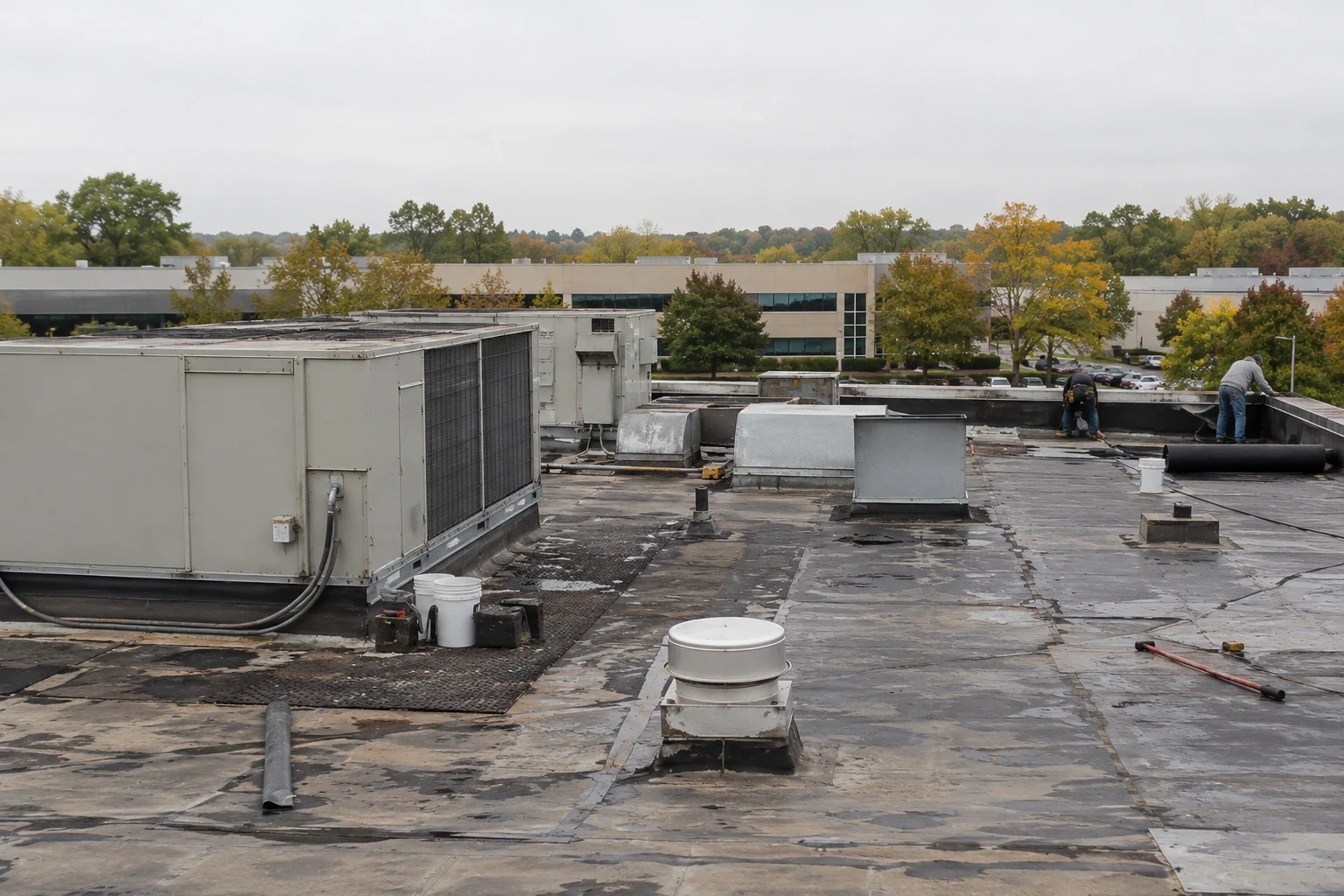
Hotels often have rooftop HVAC, exhaust, kitchen equipment, skylights, and communications devices. We inspect flashing at curbs and penetrations and identify any unit requiring shutdown by another contractor. We do not alter kitchen systems or guest-room controls. A roof equipment inspection can keep the curb repair and mechanical service assignments clear.
What detail may be feeding the interior mark?
Water above a ceiling can move along the deck before it reaches a guest room or corridor. We compare the reported location with roof slope, drains, seams, wall transitions, and prior work. The inspection record identifies the observed opening and labels a likely path as unconfirmed until evidence supports it. If access to a ceiling or room is restricted, the property can arrange a controlled window rather than treating the area as inspected.
Kitchen and pool facilities may add humidity or equipment lines that require separate consideration. We inspect the roof assembly, check visible condensate routes, and coordinate with the appropriate mechanical vendor where needed. A test opening or moisture survey may help locate concealed water, but the owner approves the location, guest protection, and restoration first. A roof condition inspection records the limitations and next question to resolve.
Indianapolis normal snowfall is about 25.5 inches, with seasonal freeze-thaw cycles. Meltwater can remain near a drain and refreeze at an edge, which can change how water enters a transition. We check drains, overflows, scuppers, and perimeter details when conditions permit. A drainage route review gives the hotel a separate finding for blockage, outlet condition, or an inaccessible roof area.
Industries We Serve
How can work fit between events and room turns?
Before mobilization, the facilities lead shares event load-in, guest turnover, deliveries, quiet hours, staff routes, and the days when rooms can be taken out of service. We plan noisy work, lift placement, debris removal, and material storage around those constraints. A work map names the active roof section and the property contact who can change the schedule if an event or occupancy need shifts.
Fishers District's broader event-center campus occupies 53 acres next to its original lifestyle development. The venue or hotel manager confirms guest drop-off, valet, loading, and reserved parking before materials are delivered. We verify those details before delivery and keep emergency routes open as directed.
Large reroofing can proceed by wing or roof section, with a dry-in point at each phase. The plan explains how exposed areas are protected overnight and which guest or event zones remain restricted. If a restaurant tenant shares the building, a retail and restaurant coordination plan can account for service and delivery timing, while the hotel retains control of guest and room operations.

Industries We Serve
When does the property need renewal instead of another patch?
An isolated curb, seam, or flashing failure may be repaired when surrounding material is secure and accepts a compatible tie-in. We define the repair area, preparation, materials, guest protection, and access assumptions. If removal uncovers wet insulation or damaged deck, the crew secures the area and submits measured findings before adding work. The property authorizes any increase beyond the approved boundary.
Repeated leaks in different wings, broad moisture, loose attachment, or failed edge details can justify a recover or replacement comparison. Recover requires a dry, stable, compatible assembly and workable height at drains, curbs, and doors. Replacement may include tear-off, insulation, flashing, and a phased room or event plan. A renewal estimate should show the affected buildings, guest restrictions, and work stages separately.
Hospitality groups often manage more than one property. A portfolio handoff can preserve property contacts, repairs, and next review dates while keeping each hotel's roof condition separate. For an event venue with a large open room, we identify overhead protection and staging needs with the facility manager.
What should the hotel team retain?
Closeout names the building, roof area, repaired detail, material, photos, testing, temporary cover, and any location not reached. It states whether a room, kitchen, or event space can return to service and who owns any mechanical follow-up. The facilities team can file the report with maintenance records and use the same roof reference when a later ceiling mark is reported. For a group with several hotels, a regional contact can receive one summary with separate property scopes. Work-order references, dates, and room holds stay attached to each building, allowing the next facilities lead to see what reopened and what remains under review.
Carmel's mixed-use districts and Fishers District have different event, business, and customer circulation. A hospitality site may be located near either activity area, but its manager controls arrival routes and quiet windows. We confirm actual conditions rather than relying on district-level assumptions. A roof visit in Carmel City Center still needs property-specific staging and guest coordination.
Send the roof map, affected room or event area, occupancy calendar, maintenance record, equipment list, and access contact. We will inspect the authorized section, document the water route, and separate immediate protection from permanent repair or broader renewal.
Talk to Our Roofing Team
Call 555-555-5555 or request a roof assessment. Tell us the address, the roof type if you know it and where water or damage is showing. We work across Fishers, Carmel, Noblesville, Westfield, Zionsville and the surrounding communities.
Frequently Asked Questions
Can guests stay in the building while the roof is repaired?
The hotel identifies room availability, event schedule, and guest routes. We plan the work zone and interior protection with the facilities contact and state any temporary closure in advance.
Can roofing be scheduled between events?
Yes, when the venue shares load-in, sound, and access windows. We set material delivery, noisy tasks, and the weather-ready stopping point against that calendar.
How do you keep a roof leak from affecting food service?
The property identifies kitchen and service areas below the report. We coordinate covers and access, then inspect the roof curb or penetration while the food-service team controls its own equipment and sanitation requirements.
What if a guest-room stain appears after the roof visit?
The room and time are added to the record, then compared with the mapped roof details and weather. A new report is treated as evidence to investigate, not proof that the prior repair failed.
How do you plan a replacement without closing the entire hotel?
We divide the roof into phases, identify guest and event restrictions, and set dry-in and release points for each stage. The hotel approves the sequence before work begins.
Fishers, IN
Plan a hospitality roof review
Share the building plan, guest and event calendar, leak history, equipment contacts, access rules, and rooms or venues that cannot close. We will define the work boundary and next step.