Roofing Capabilities
Commercial Roof Capital Planning
A replacement budget built from an old allowance can miss the condition that now drives the project. We inspect the roof, record measurable findings, and separate confirmed work from questions that need testing. Capital planning then compares near-term repair, investigation, and renewal using the same building-specific evidence. The owner can see what action is urgent, what can be scheduled, and what would change the estimate.
Fishers reported 137 commercial building permits in 2024, above the 123 permits recorded a year earlier. The increase gives owners another reason to keep project scopes current as commercial properties change. Permit totals do not describe an individual roof, so we inspect the building before setting its repair or replacement allowance. A roof planning visit near 126th Street begins with the asset plan and current condition.

What evidence should support a budget line?
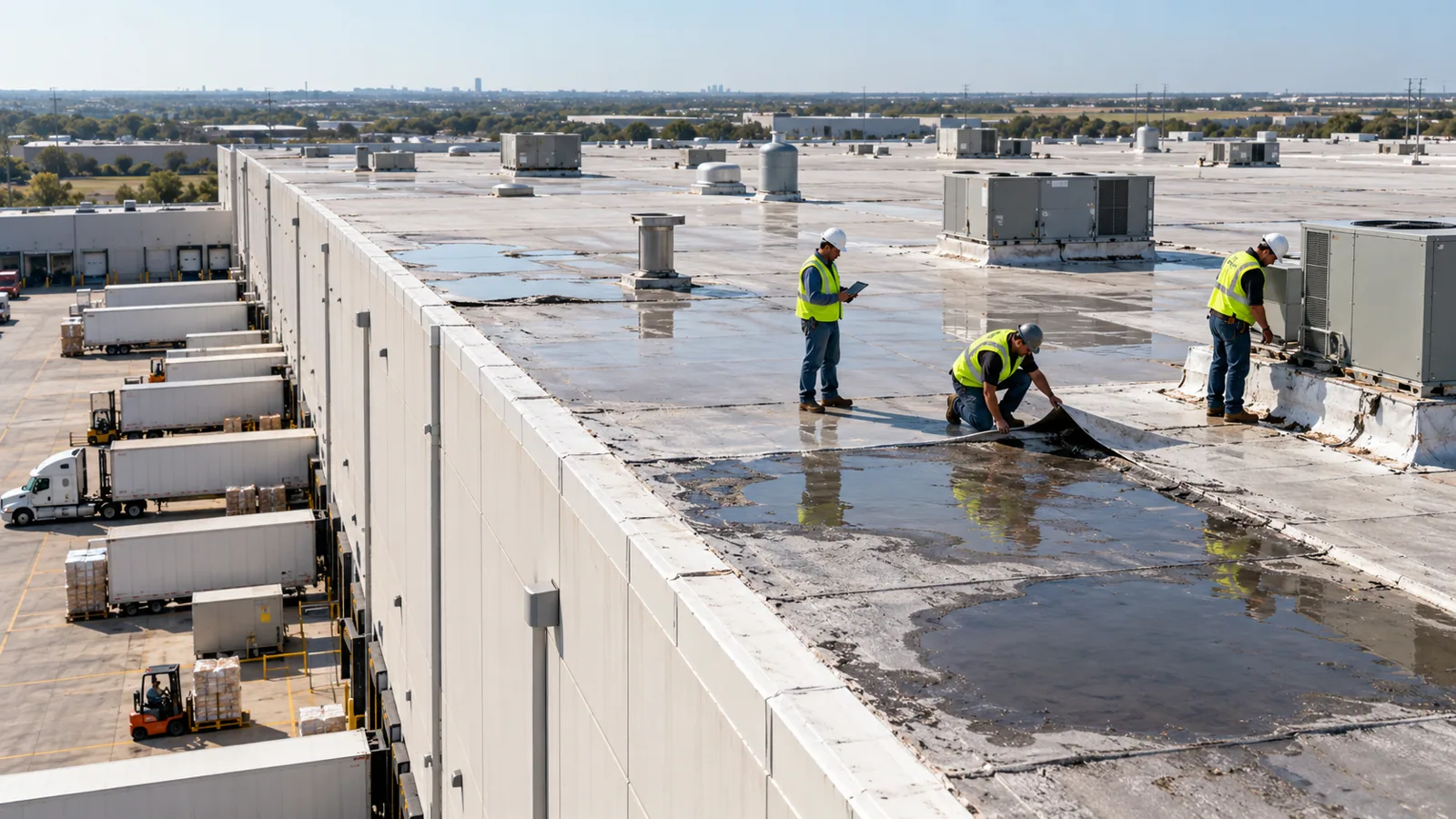
A useful planning entry names the building, roof section, assembly where known, observed defect, measured quantity, photos, and inspection limits. It distinguishes active water entry from wear that can be monitored. If a test cut or moisture survey is needed, the budget notes the decision the test supports and the restoration required. A cost allowance without a scope boundary is difficult to compare with a contractor proposal.
We record repairs already completed, repeat leak locations, drainage conditions, edge details, equipment interfaces, and access restrictions. A condition report gives the owner a dated baseline; a roof asset record can carry the findings into future budget cycles. The report should also say who must approve testing, tenant notice, and work outside the measured area.
Fishers' commercial center follows I-69 and State Road 37, while Carmel's Meridian Corridor includes a concentration of office employees. A portfolio spanning these locations may need different access and staging assumptions. The market facts help place the assets; field measurements and ownership records establish the actual quantities and decisions.
How should the team set project priority?
Start with conditions that are active or could expand: interior water, open seams, failed flashing, exposed insulation, unstable edge metal, or blocked drainage. We identify immediate protection and what permanent scope can be priced. A priority list should say why a task is ranked, the roof evidence behind it, and what access or testing remains. That is more useful than a score without a next action.
Indianapolis winter normals include about 25.5 inches of snowfall, with freeze-thaw conditions returning each season. The regional pattern makes drain, overflow, and edge inspection relevant before and after winter; the roof's observed condition sets priority. If snow or ice blocks access, the plan should carry a return trigger rather than assume the detail is clear. A drainage review can separate recurring maintenance from a membrane repair or capital project.
For multiple buildings, ranking should account for business impact, safety, access, repair recurrence, and procurement timing. A multi-site work plan can group inspections or mobilizations while keeping each roof's quantities separate. The owner can compare which tasks share access logistics and which need an independent schedule.
Roofing Capabilities
When should the budget compare repair and replacement?
A localized repair is appropriate when a failed seam, curb, or edge is isolated and adjacent material can support a compatible tie-in. We identify preparation, repair area, materials, protection below, and any qualification from concealed conditions. If opening the assembly reveals saturated insulation, corrosion, or deck damage, we secure the area and submit measured changes before expanding the job.
Several recurring leaks, broad moisture, weak attachment, or widespread perimeter failure may justify evaluating a recover or full replacement. A recover requires evidence that the existing roof is dry, stable, and compatible, with acceptable heights at drains, curbs, and doors. Replacement can involve removal, insulation, deck repairs, new flashing, and phased dry-in. A replacement estimate should show those quantities separately from immediate repairs.
Budget timing can depend on procurement windows, tenant access, long-lead material, roof height, weather, and other construction. We state the drivers and work sequence rather than promising a completion date before access is confirmed. For a property under contract, a transaction roof review can identify known conditions before the owner commits a capital allowance.
Roofing Capabilities
What does a realistic work window include?
Roof installation needs a dry-in plan that matches material conditions, roof access, and building use. The schedule identifies mobilization, removal, inspections, tie-ins, protection, and the point at which the crew leaves a section weather-ready. If a tenant or production line limits access to a few hours, that constraint can change the order and labor assumptions. We identify the authorized contact who can release each work area.
A facility with controlled production areas may have different security, equipment, and operating schedules from an office or distribution site. We confirm the building calendar, security requirements, equipment dependencies, and staging rules before setting a work window. A manufacturing facilities review can identify production constraints that belong in the schedule.
Occupied work may require notices, barriers, ceiling protection, and daily cleanup. A phased roofing sequence can preserve access in parts of the building while another roof section is under construction. The budget should identify temporary cover and any return visit separately, so an interrupted phase does not look like completed permanent work. A useful funding request also distinguishes base scope, alternates, unit prices for concealed areas, and owner decisions required before work proceeds. That lets reviewers compare proposals without treating an allowance as a final commitment.
How can the team update the plan after work?
After inspection or repair, we update the measured area, photographs, actual assembly, hidden conditions found, material installed, and open items. If the work exposed a broader issue, the capital plan can show the new quantity and the approval that remains. A future bid can use the same map references rather than reconstructing the earlier scope from an invoice description.
Carmel's Meridian Street Corridor and Fishers' I-69 core serve different employment settings. A regional owner may coordinate office properties alongside research or production buildings. Each roof still needs an independent condition record and access plan. A property management review can help route tenant communication and building approvals before scheduled work.
Send the asset list, prior reports, leak history, roof plans, funding horizon, and any planned sale, lease, or construction milestones. We will document the accessible condition, identify missing evidence, and lay out repair and renewal options with their assumptions visible. A reserve schedule can tie the expected bid month to procurement lead time, ownership approval, and the window when tenants can release the roof; we update those assumptions when dates change.
Talk to Our Roofing Team
Call 555-555-5555 or request a roof assessment. Tell us the address, the roof type if you know it and where water or damage is showing. We work across Fishers, Carmel, Noblesville, Westfield, Zionsville and the surrounding communities.
Frequently Asked Questions
Can you help set a roof replacement budget before bidding?
We can document condition, measured areas, access assumptions, and likely work sequence. Concealed conditions and testing needs are listed separately so the budget carries clear qualifications.
Which Fishers roof records help rank capital work across a portfolio?
We use consistent record fields while keeping each assembly, quantity, photo set, and operating constraint tied to its own building. Priority reflects observed condition and business impact.
When is a recover worth evaluating?
A recover is considered only if the existing roof is dry, stable, compatible, and clear of height or drainage conflicts. Testing may be needed before that option is carried into a budget.
Does winter weather change capital timing?
It can change access, installation conditions, and the available dry-in window. We note seasonal constraints and plan the sequence around the material and current roof conditions.
Can a repair project be separated from replacement planning?
Yes. Immediate stabilization and measured repairs can be priced separately from a larger renewal alternative. The owner can compare each using documented findings and access assumptions, then update the plan after the work and follow-up inspection.
Fishers, IN
Build a roof capital plan
Share the building list, roof maps, inspection history, repair records, funding horizon, and work calendar. We will connect field evidence to repair and renewal decisions.