Roofing Capabilities
Commercial Roof Due Diligence Surveys
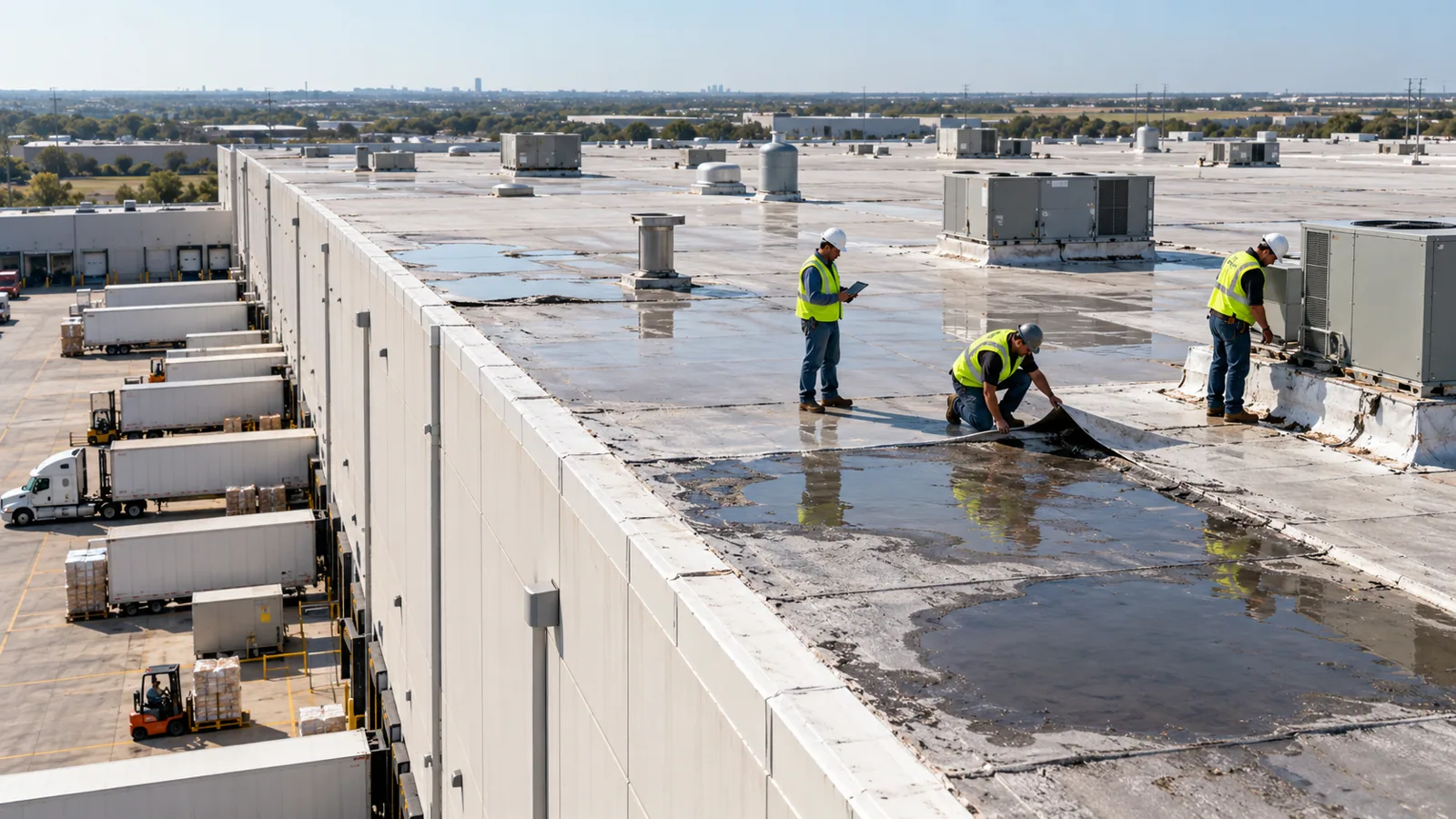
A roof condition discovered after closing can shift a buyer's repair budget and operating plan. We review available records, inspect accessible roof areas, and document what the field evidence supports before a transaction decision. The report identifies assemblies where visible, recurring leaks, repairs, access limitations, and conditions that need testing. It separates a measured repair from a broader renewal alternative and states what remains unknown.
Fishers Life Sciences & Innovation Park extends east of I-69 near 126th Street and includes research, suppliers, and contract manufacturing. Carmel's Meridian Corridor has a concentration of office employment. A portfolio transaction may include buildings serving very different operations, so each roof receives its own section map and findings. A survey near the 126th Street corridor begins with the property records and access authority.
What should the buyer provide before inspection?
Useful records include roof plans, system submittals, installation or replacement documents, prior condition reports, leak tickets, repair invoices, warranties, and known tenant restrictions. We compare those materials with observable field conditions and note where records conflict. If no drawing is available, we reference the building map or roof grid provided and identify the limitations of that location method.
The seller or manager identifies roof access, escort rules, occupied areas, and who can approve testing. A test cut, moisture survey, or interior opening may be needed to evaluate concealed layers; we describe its purpose, location, and restoration before proceeding. A photo-based condition report preserves dated evidence, while a roof asset record can carry information forward after the transaction.
Transaction timing may not allow every section to be inspected. We state which elevations were reached, what was blocked, and what evidence a return visit would add. The buyer can then distinguish an inspection observation from an allowance carried for unknown work. During a transaction, the team should know whether the report covers every section or only selected areas. We list elevation, tenant occupancy, roof access point, and visible obstructions, along with any plan the seller supplied. If the roof is under active construction, the report separates completed work from open punch items. Where documents conflict, we identify the dates or assembly descriptions in question and request clarification rather than choosing without evidence. This lets the buyer allocate follow-up before the access window closes. The report also states when weather altered an inspection step.
Which roof conditions can affect the transaction?
We inspect membrane seams, metal panels, drains, curbs, parapets, penetrations, roof edges, and prior patches. Photos show context and the observed detail. Interior leak reports are compared with roof slope and accessible routes, but a ceiling stain alone does not locate the entry point. If water may have moved through concealed layers, the report names the test needed to confirm it.
Indianapolis winters bring normal snowfall of about 25.5 inches and recurring freeze-thaw conditions. That makes drain, overflow, and perimeter observations relevant, though the condition at the property must be established in the field. We document whether an outlet is open, damaged, hidden, or inaccessible on the inspection date. A drainage assessment can separate maintenance tasks from roof renewal questions.
At a multi-building transaction, each roof may have a different assembly and phase. Roudebush VA Medical Center in Indianapolis is a multibuilding campus. For a portfolio with several roofs, we label each building and section before comparing condition or cost. A medical-campus roof review can keep access and reporting distinct by structure.
Roofing Capabilities
How should the buyer assess open questions?
For each issue, we state the evidence, location, likely consequence, and next step. A confirmed opening can be priced as a repair. Concealed moisture, unclear assembly, missing access, or a mechanical source may require testing or another contractor. The report identifies what decision depends on that evidence rather than filling gaps with a broad roof allowance.
Fishers' commercial districts range from the I-69 employment core to the airport business area and the life-sciences park. Buyers may encounter different tenant hours, roof equipment, and service routes among nearby assets. The city context can support site planning, but the roof map, lease records, and physical inspection determine asset-specific questions. A investor portfolio review can align those findings with the transaction team's reserve questions.
When an owner requests a replacement alternative, we separate it from immediate stabilization. A recover requires evidence that the retained system is dry, stable, and compatible, with workable heights at the details. A replacement scope may include removal, insulation, deck correction, and phasing. A renewal estimate should show measured items separately from contingencies for concealed conditions.

Roofing Capabilities
What does a lender or investment team need to compare?
Decision-makers can compare properties more consistently when the report uses the same categories: assembly, active leak, moisture evidence, drainage, perimeter, repair history, access, and next test. Each building keeps its own quantity and photo references. A portfolio summary can rank open work, but it should not imply identical remaining serviceability across different systems.
Carmel's Meridian office corridor and Fishers' research and manufacturing area call for access plans based on each property's current use and schedule. A lender or buyer may need to understand guest, tenant, laboratory, production, or delivery access before planning roof work. We identify the actual site contact and note whether the visit occurred during normal occupancy. A property management record can help route inspection follow-up and tenant access after closing.
Budget and schedule depend on roof height, staging, material lead time, testing, weather, occupied space, and procurement. We list those drivers without presenting a completion promise before scope approval. A capital planning review can carry the measured work into a funding discussion once the buyer decides which risks to address.
What should the diligence package state?
The package identifies the property and roof sections inspected, observed condition, photos, documents reviewed, tests performed, areas not reached, and next action. It records assumptions and separates known repair from unverified conditions. The reader can see whether a finding supports immediate work, further investigation, maintenance, or a broader replacement comparison.
For acquisitions around Fishers and Carmel, route geography helps orient the portfolio, while each facility supplies its current gate, roof plan, and inspection contact. We use the building identifier the owner or seller provides and keep findings tied to that asset. A multi-property review can compare findings without copying conditions from one address to another.
Send the transaction date, roof drawings, prior inspections, repair history, lease access notes, and specific underwriting questions. We will return a documented review that makes field evidence, unknowns, and possible next costs easier to assess.
Talk to Our Roofing Team
Call 555-555-5555 or request a roof assessment. Tell us the address, the roof type if you know it and where water or damage is showing. We work across Fishers, Carmel, Noblesville, Westfield, Zionsville and the surrounding communities.
Frequently Asked Questions
Can a roof survey estimate immediate repair costs?
When the defect and quantity are accessible, we can provide a separate repair proposal. Concealed conditions and areas not reached are identified as open questions or allowances.
Can a survey determine remaining roof life?
It documents current condition, repair history, and visible concerns. Any service-life estimate depends on records, maintenance, concealed layers, and the limits stated in the report.
What if the seller will not allow test openings?
We report the access restriction, describe which layers remain unknown, and identify a non-destructive or return option if available. The buyer can carry that uncertainty into its decision.
Can you inspect several buildings before a closing date?
Yes, if access and timing are confirmed. We keep findings separate by building and prioritize the sections most relevant to the buyer's stated questions.
Does the survey replace a warranty review?
No. The survey documents field conditions. The owner reviews the issued warranty terms and submits any required request to the party responsible for those terms.
Fishers, IN
Schedule a transaction roof survey
Share the property list, transaction deadline, roof plans, prior reports, leak history, and access rules. We will document inspected areas and identify remaining evidence needed.