Property Types We Roof
Big-Box Retail Roofing
A broad roof can conceal a small failed detail until water travels across several bays. We start with the reported interior area, then trace the water path back to a defined roof section. In Fishers, IN, winter snowfall and spring thaw make drainage routes, edges, and equipment curbs important parts of the field record. A large-format store also has delivery, customer, and staff routes that shape staging. We map those constraints before recommending repair or renewal. Fishers' commercial core follows I-69 and State Road 37, serving a market with retail, offices, and event venues. We plan around the store's deliveries and customer routes, then verify the membrane, insulation, and attachment at the building.
How should the large roof be divided?
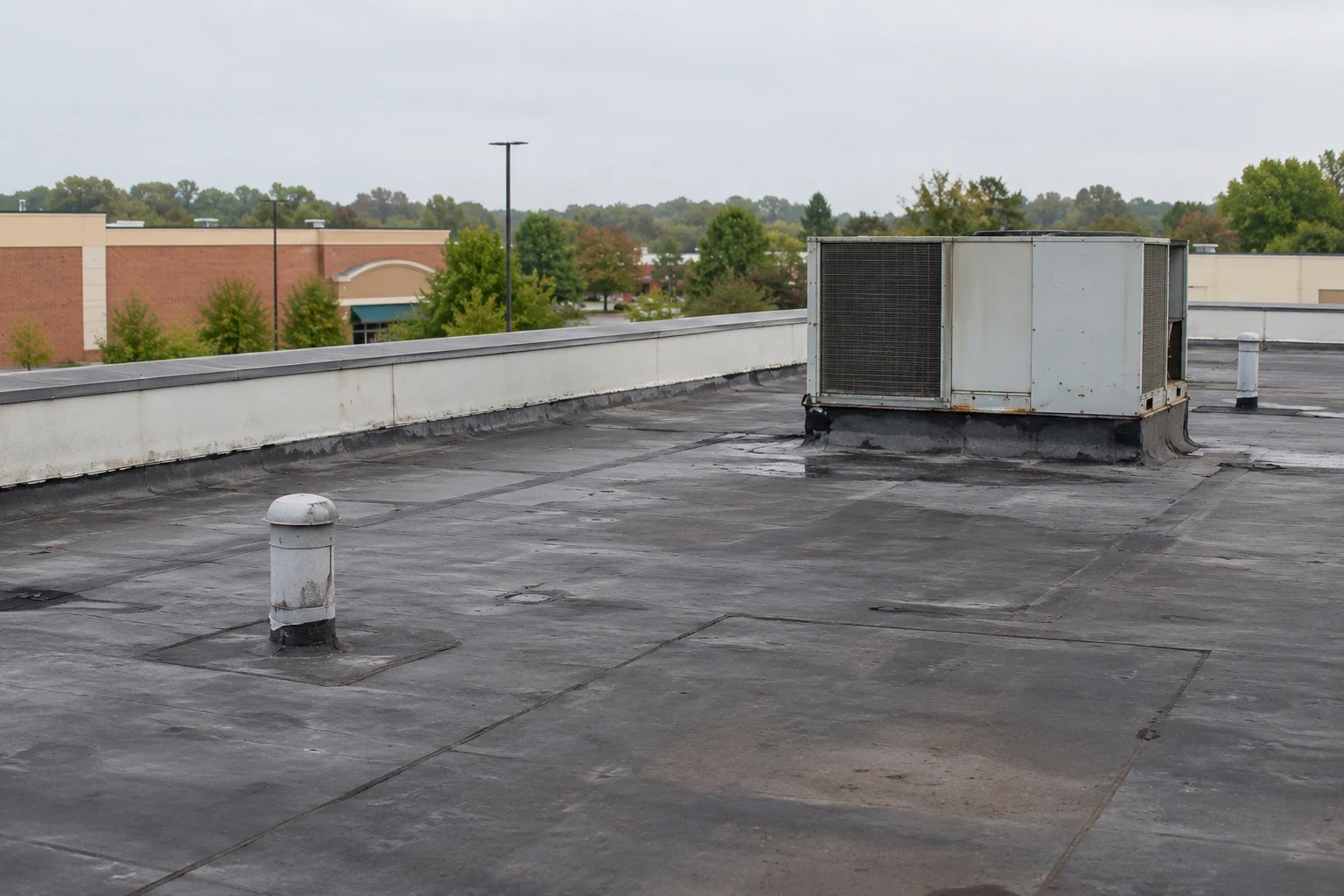
A single rating for the whole building can hide different conditions across roof elevations. We separate areas by drainage route, membrane transition, equipment cluster, and prior repair. Each map label ties a photograph and observation to one section. If a leak report cannot be matched to a visible defect, we record the evidence and identify whether moisture testing or a test opening is warranted. A photo condition report can provide that map for the owner and general contractor. We do not extend one core sample or repair finding across every bay. The quantity stays tied to the area inspected and the limits of access.
A facilities team can use the zone map to separate a leak response from preventive work. We note recurring seam issues, active water, repairs that have held, and sections with no observed concern during the visit. If the roof includes separate elevations or additions, the report identifies where the assembly changes. A warehouse roof review often tracks broad roof zones and service routes; retail adds customer entry, merchandising, and public safety considerations. Both need a location-specific map that avoids applying a condition from one part of the building to another.
Where does meltwater collect?
Indianapolis' normal annual snowfall is about 25.5 inches, with accumulation concentrated in winter. During thaw, water can run toward a blocked drain, remain behind debris, or test a seam near a low point. We inspect primary drains, overflows, scuppers, and transitions when conditions allow. If ice or unsafe footing blocks a roof zone, we leave it unverified and schedule a later check. A drainage route inspection distinguishes routine cleaning from a slope, outlet, or flashing question. The report records standing water at the time of inspection and avoids treating one weather observation as a full drainage design review.
Property Types We Roof
What changes around rooftop units?
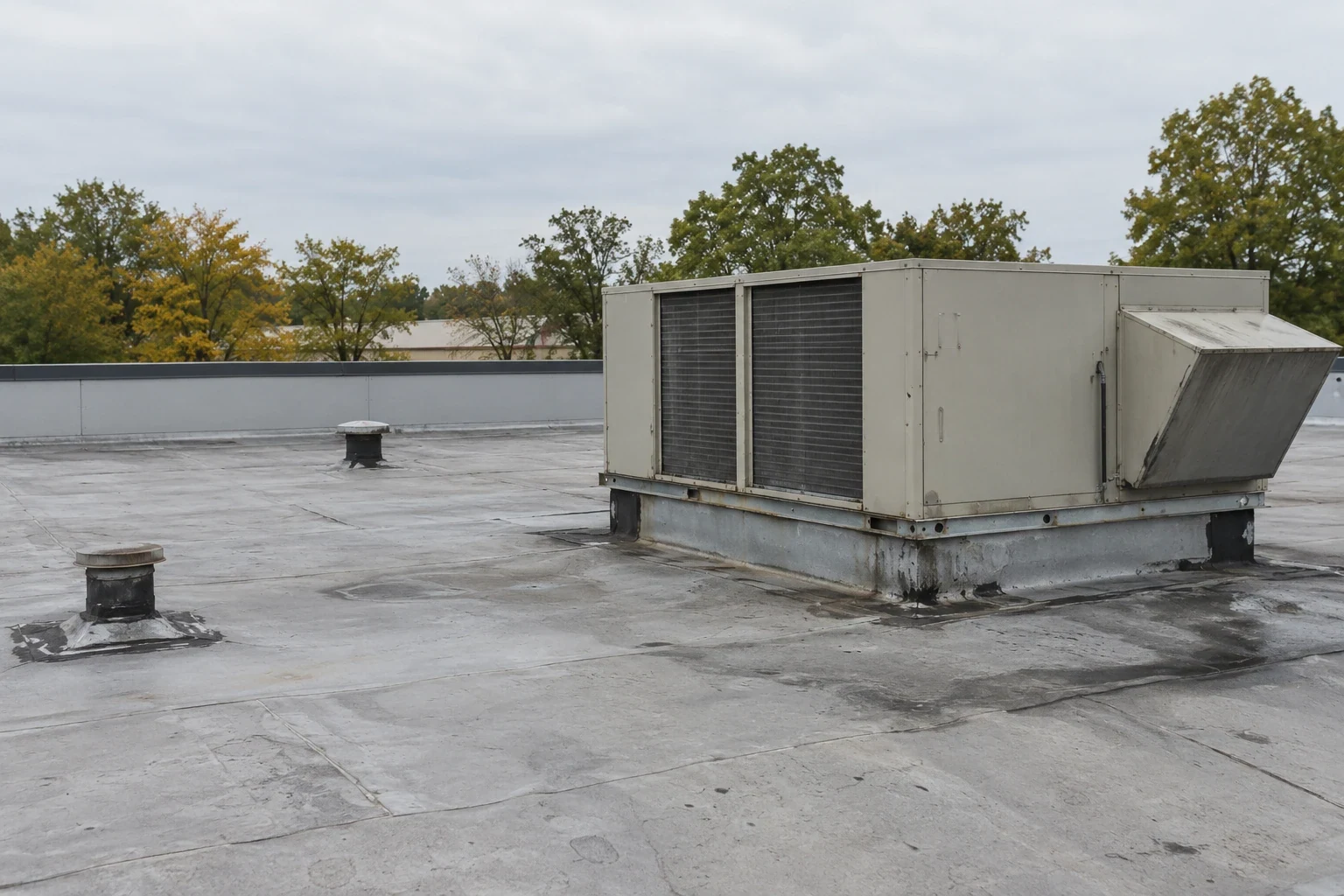
Large retail roofs can have many mechanical units, vents, and service paths. We inspect curb corners, support details, seams, and any area changed during recent service. If a unit is being replaced, the mechanical contractor confirms size and shutdown needs while roofing defines the curb and membrane tie-in. A curb and support scope can set that interface before equipment arrives. The project plan names the crew responsible for flashing and the point at which the detail will be reviewed. That handoff helps keep a completed roof section from being reopened without a recorded restoration plan.
A general contractor should review the removal plan with mechanical and electrical trades before mobilization. We identify units that need disconnection, penetrations that will be replaced, and details that must stay open until another contractor finishes. The roofing sequence names who inspects the completed curb and what evidence is recorded before the membrane closes. A distribution building assessment can address loading and movement at a different scale, while a retail site must preserve customer and store access. The scope should define all temporary protection and who authorizes added removal if concealed damage appears.
Property Types We Roof
How can customer access stay predictable?
The store contact identifies fire lanes, loading docks, entrances, delivery times, and accessible routes before a lift or material delivery is scheduled. We select work zones that can be secured at the end of each shift, then state how the crew will protect the roof during a rain delay. A phased reroof plan can coordinate noisy work, staging, and interior protection with store operations. If the schedule changes, the general contractor updates the access window and dry-in boundary. The plan gives the owner a view of which roof area is open, closed, or waiting on another trade.
Store operation affects crew movement as much as the roof plan. We coordinate lift placement, delivery hours, fire lanes, and material staging with the site contact. If the store shares a parking lot with another tenant, the owner can identify areas that cannot be closed and times when traffic increases. Weather procedures should state the maximum roof area that may be opened and how it will be closed before a storm. The daily field record lists completed zones and any area held for the next shift. That information makes schedule changes visible to the owner and contractor.

What evidence supports replacement?
We compare membrane condition, moisture, attachment, deck, drainage, edge details, and repair history before selecting a scope. Localized failure may fit a repair. A recover is considered only when the retained assembly is dry, secure, compatible, and clear at curbs and perimeter details. If removal is needed, a replacement proposal separates tear-off, insulation, equipment work, and daily dry-in. A PVC membrane is one possible system when the verified conditions and project requirements support it. Indiana's current state building code is based on the 2012 IBC with state amendments; the authority having jurisdiction confirms project requirements.
Talk to Our Roofing Team
Call 555-555-5555 or request a roof assessment. Tell us the address, the roof type if you know it and where water or damage is showing. We work across Fishers, Carmel, Noblesville, Westfield, Zionsville and the surrounding communities.
Property Types We Roof
How do regional routes affect mobilization?
Fishers District's broader event-center campus occupies 53 acres beside an original 18-acre lifestyle development. That nearby scale of activity makes scheduled access important, while the specific store controls its own delivery and staging rules. The Fishers District service area is a broad local context, not a stand-in for an individual property's condition. We confirm the truck route, lift location, gate process, and protected paths with the site contact. Closeout identifies roof zones, repairs, photos, and open conditions. Send the roof plan, repair history, access window, and construction schedule for a measured scope review.
A closeout file should preserve the assembly installed, insulation changes, drains, edge details, photographs, and approved field changes. It should also list any remaining work by another trade and the next roof review. When a later equipment replacement is planned, facilities can use the record to identify support details and flashing boundaries before an opening is made. We can review that record during maintenance and confirm whether the roof remains in the expected condition. The follow-up check focuses on the repaired or replaced section and does not assume that an inspection of one zone clears the whole roof.
Frequently Asked Questions
Does a large roof need one replacement project?
Not necessarily. We map conditions by drainage zone and test when findings could change the scope. Separate areas can be repaired, monitored, or renewed on different timelines.
How are leaks traced across a wide roof?
We compare the reported location with seams, drains, curbs, and transitions. The field record shows confirmed defects and any water path that still needs testing.
Can work be sequenced around deliveries?
Yes. The schedule identifies loading, lift access, customer routes, daily dry-in, and rain procedures. Store operations confirm the windows before materials arrive.
What should happen when snow blocks roof access?
We leave the area unverified, note the access limit, and return when conditions are safe. The follow-up checks the drain and adjacent details after melt.
What should a replacement scope show?
List roof sections, tear-off limits, insulation, equipment curbs, drains, edge work, daily closure, access, and concealed-condition approvals. Keep confirmed quantities separate from allowances.
Fishers, IN
Map the retail roof section
Share the roof plan, leak locations, equipment work, store access window, and construction schedule. We will document the evidence and next scope.