Industries We Serve
Insurance Restoration
A storm report can involve several roof details, older repairs, and active interior water at once. We inspect the building, photograph observable conditions, and separate recent damage from maintenance items or pre-existing wear that needs a different review. Restoration teams and adjusters need a record tied to roof sections, quantities, and dates. The owner still controls repair authorization, while the carrier makes its own coverage decision.
For each insurance restoration visit, we document observed roof conditions and compare them with the reported loss date. Fishers' commercial core follows I-69 and State Road 37; Allisonville Road has a separate west-side retail corridor. A storm inspection along Allisonville Road starts with the loss location, safe access, and the property contact.
What evidence should the first visit preserve?
We record the reported date, weather information provided, interior locations, roof map, assembly where identifiable, and the accessible area inspected. Photos show the detail, scale, and location of visible impact, such as displaced edge metal, a puncture, open seam, or damaged flashing. A stain or leak is documented as an interior condition, not proof of its cause until the roof path supports that conclusion.
The owner or restoration lead identifies any immediate protection already installed and who performed it. We record the dry-in material, boundaries, and remaining exposure separately from permanent repair. If a temporary cover blocks the detail, the report states what remains concealed and what access is needed for a follow-up. A claim documentation package can organize photographs, measurements, and repair scope for review without deciding coverage.
Where a contractor or adjuster is present, we agree on the roof plan references and note who supplied each document. The field report distinguishes measured dimensions from estimates and lists testing that could change the quantities. If a test opening is needed, the owner approves its location and restoration. Shared notes make it easier to compare conditions without representing a discussion as carrier approval. For each photo, we identify the roof-grid reference and view direction where useful. Separate records for temporary protection, permanent repair, and unrelated maintenance preserve a readable event timeline when documents are reviewed later. The owner can trace each recommendation to its supporting observation.
How can storm damage be separated from prior condition?
We inspect affected and nearby roof areas for impact marks, tears, loose fasteners, seam movement, flashing separation, and older patches. The comparison helps show whether damage is localized or part of a broader condition. We photograph the evidence before repairs begin when safe access allows. Any conclusion remains limited to what the inspection can observe and the records provided.
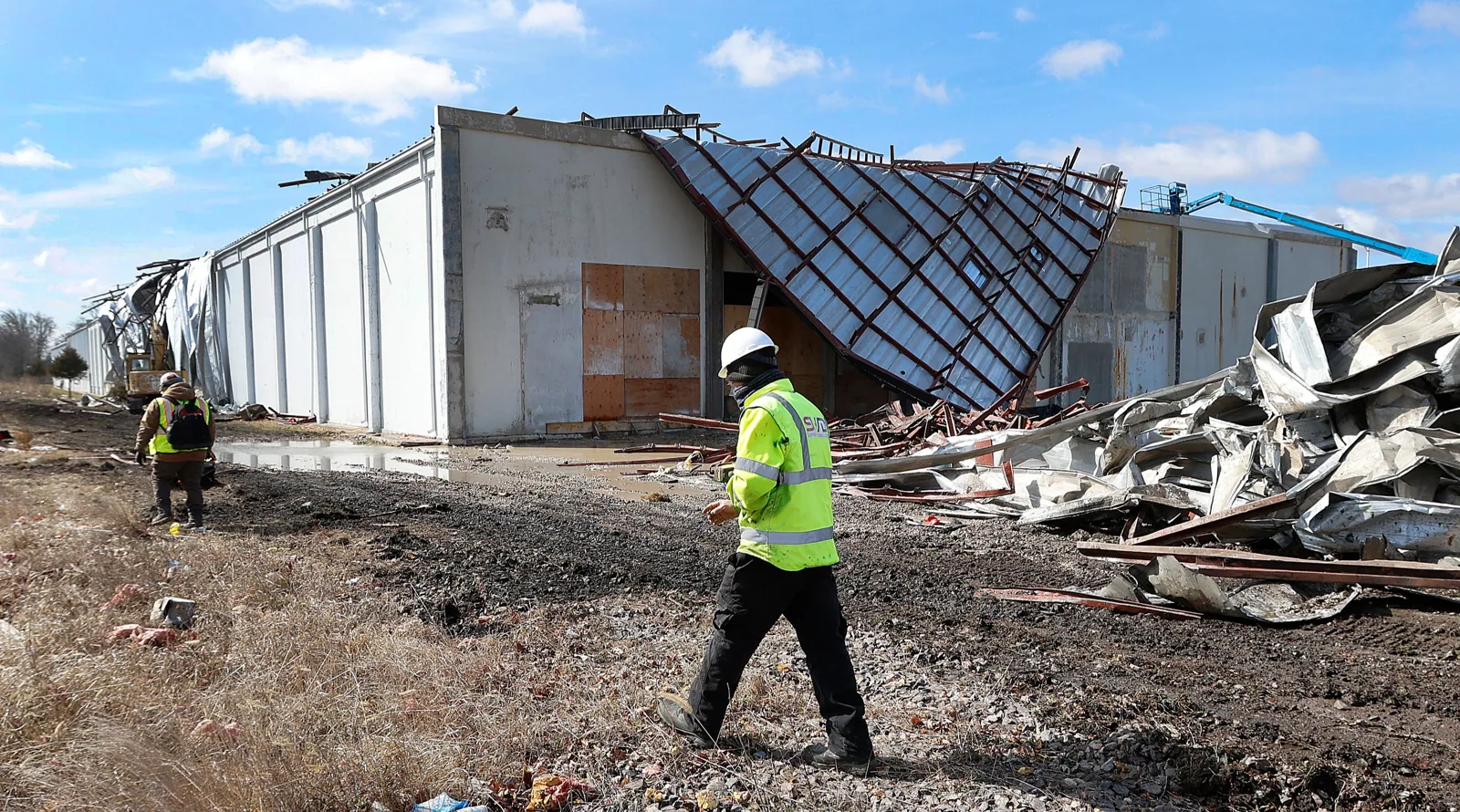
In 2024, an EF2 tornado touched down in Hamilton County, then crossed into Madison County. We document actual impact marks and separated details at the property under review. The building's date of loss, photos, maintenance records, and current field condition are evaluated together. A storm damage inspection can document the observed area and identify immediate stabilization separately from ordinary maintenance or deterioration.
Water can travel from a roof opening along deck flutes, insulation, or framing before it appears inside. We compare the report with drains, curbs, seams, and wall transitions. If the source is not visible, we explain whether a moisture survey or test cut would narrow the path. A roof inspection documents the accessible details and open questions so the owner can authorize the next step.
Industries We Serve
What should happen when water is still entering?
Active water near electrical equipment, inventory, tenant areas, or occupied space may need immediate containment. We establish a safe work area, inspect reachable roof details, and determine whether temporary dry-in is possible under current conditions. The owner receives the boundary, material, and remaining exposure. A temporary measure is not represented as permanent repair and should have a follow-up condition.
The I-69 route and SR37 business spine link Fishers with Indianapolis, though the property sets the approved entry and response access. Travel and site access can affect response timing, but the property contact controls the gate, roof route, and interior access. We confirm who can accept emergency work and which authority can approve permanent repair. An emergency roof visit records immediate stabilization and the next inspection requirement.
If a restoration contractor is already handling interior mitigation, we coordinate the roof boundary and share relevant photos with the authorized owner or representative. We do not direct interior drying or contents restoration outside the assigned roofing scope. The work order identifies each contractor's task, the temporary condition, and who will call for a return visit if water continues.
Industries We Serve
How should repair quantities be presented?
A repair proposal identifies system, location, measured area, preparation, materials, access, and any interior protection included. It separates visible work from allowances for concealed conditions. If removal reveals wet insulation, damaged deck, or unrelated deterioration, we photograph and measure it, secure the opening, and request authorization before adding quantity. The owner can then compare the change with the original scope.
When several roof areas are involved, each is listed separately with its own photos and measurements. A recover or replacement alternative should not be blended into an emergency patch. A renewal estimate can identify removal assumptions, insulation, edge details, phasing, and dry-in. The carrier and owner determine how to use those documents within their review process.
Lease obligations can place the property manager, tenant, and building owner in different roles. A property-management coordination record can identify access, tenant notices, and approval contacts; a restoration contractor handoff can map the roofing interface with other construction work. Each party receives the information it is authorized to use, and the scope keeps responsibility visible.
What belongs in the claim and repair file?
The final record identifies the property, roof sections inspected, observations, photographs, measurements, tests, work completed, temporary cover, and areas not accessible. It lists the items that remain open and the evidence needed to resolve them. The owner can keep the inspection separate from repair authorization and carrier correspondence. That distinction helps prevent a field report from being mistaken for a coverage outcome.
Allisonville Road's commercial center includes retail areas between 106th and 126th Streets, while Fishers District is a separate event and mixed-use area. Commercial properties across those settings may have different tenants, access routes, and prior maintenance. Fishers and Allisonville Road help orient dispatch; the field record ties each finding to the reported property and roof section. We verify the building, roof map, and reported date with the authorized contact. A condition record can preserve the baseline for a future repair or renewal review.
Share the loss date, roof plan, prior maintenance, temporary protection record, adjuster or restoration contact, and any required photo format. We will document observable roof conditions, state limitations, and return a measured scope for the owner to review.
Talk to Our Roofing Team
Call 555-555-5555 or request a roof assessment. Tell us the address, the roof type if you know it and where water or damage is showing. We work across Fishers, Carmel, Noblesville, Westfield, Zionsville and the surrounding communities.
Frequently Asked Questions
Does a roofing report decide whether insurance covers the loss?
No. We document roof conditions, photos, measurements, and repair needs. The owner and carrier use their own policy and review process to determine coverage.
Can you inspect a temporary tarp or emergency patch?
We record what is visible and note which roof details remain concealed. If safe access permits, we can assess the temporary work and identify the follow-up needed for permanent repair.
How do you distinguish storm damage from wear?
We compare nearby roof details, older repairs, maintenance records, and observed impact or separation. The report states the evidence and avoids assigning a cause when conditions do not support it.
What if the adjuster and contractor see different quantities?
We provide roof-plan references, photographs, and measurements for the area inspected. The owner can share the documentation with the parties and request a joint review of unresolved items.
Can emergency work be completed before claim review?
The owner authorizes immediate protection and repair. We document the condition, temporary work, and remaining exposure so later review can distinguish stabilization from permanent scope.
Fishers, IN
Arrange a roof loss inspection
Send the loss date, roof plan, affected rooms, prior maintenance, temporary cover details, and authorized claim contact. We will document the accessible conditions and identify the next scope decision.