Industries We Serve
Public Agencies
A leak in a public building can affect staff, visitors, records, equipment, or a service counter. We identify the building, roof section, reported room, and official authorized to release inspection or repair work. Public agencies need a scope that clearly states observed conditions, access limits, quantities, and approval points. That record helps a project move through review without confusing emergency protection with a permanent construction commitment.
Fishers' 2024 operating report lists 424 public road miles, and the city issued 137 commercial building permits. Public-building work also reaches nearby Carmel, where the Meridian Street Corridor has Indiana's second-highest concentration of office workers. We confirm the purchasing authority, facility contact, and procurement path for each roof project before setting inspection or repair scope.
What approval path governs the work?
The agency identifies who can authorize an inspection, test opening, emergency cover, proposal, and scope change. We ask about bid instructions, insurance documents, submittals, prevailing project requirements, and how questions or addenda are handled. The proposal reflects the issued scope and states exclusions, assumptions, quantities, and pricing validity. Any field condition that changes the work is documented for the designated official before additional removal begins.
A roof report can support planning without serving as an award, contract, or notice to proceed. If multiple departments review a repair, we identify the technical contact and the procurement contact so field questions reach the right person. A school facilities review may involve an academic calendar, while a municipal office or operations building can have public service hours and visitor routes. Each entity sets its own approval steps.
For emergency conditions, the agency can define what immediate stabilization is permitted before a full proposal is ready. We document the temporary protection, remaining exposure, and permanent work still awaiting approval. A time-sensitive roof response does not combine a dry-in with an unapproved replacement. The field record and work order identify the authority and limits for each task.
For a multi-building request, we keep each roof map and quantity schedule separate. A single solicitation may group sites for procurement, but mobilization, access, and repair limits still vary by building. We list the exact roof areas included, note alternate pricing separately, and identify which site contact can release each phase. That gives reviewers a consistent comparison while keeping field instructions tied to the facility being worked on.
How can facility service continue during repairs?
Before work, the facility contact maps public entrances, staff routes, delivery areas, emergency access, meeting schedules, and spaces that cannot close. We plan staging, lifts, noise, and debris handling around those routes. If a service counter or public meeting room is below the roof, the agency identifies acceptable barriers and notice. A daily plan states which areas are active and who can release them after cleanup.
Fishers' commercial core follows I-69 and State Road 37. Before mobilizing, we confirm authorized gates, loading points, public-parking limits, and vehicle circulation with the agency contact. If a project overlaps a sidewalk or access lane, the proposal identifies the expected boundary and the agency's role in approving it.
Some buildings remain occupied throughout the year, while others may have planned shutdown periods. We use the agency's calendar to stage roof sections and identify a weather-ready stopping point. An occupied-facility work sequence can set notices, protection, daily handoff, and the order for rooms or wings. A health-system coordination plan may also help when public operations serve patients or other vulnerable occupants.
Industries We Serve
What should the technical record establish?
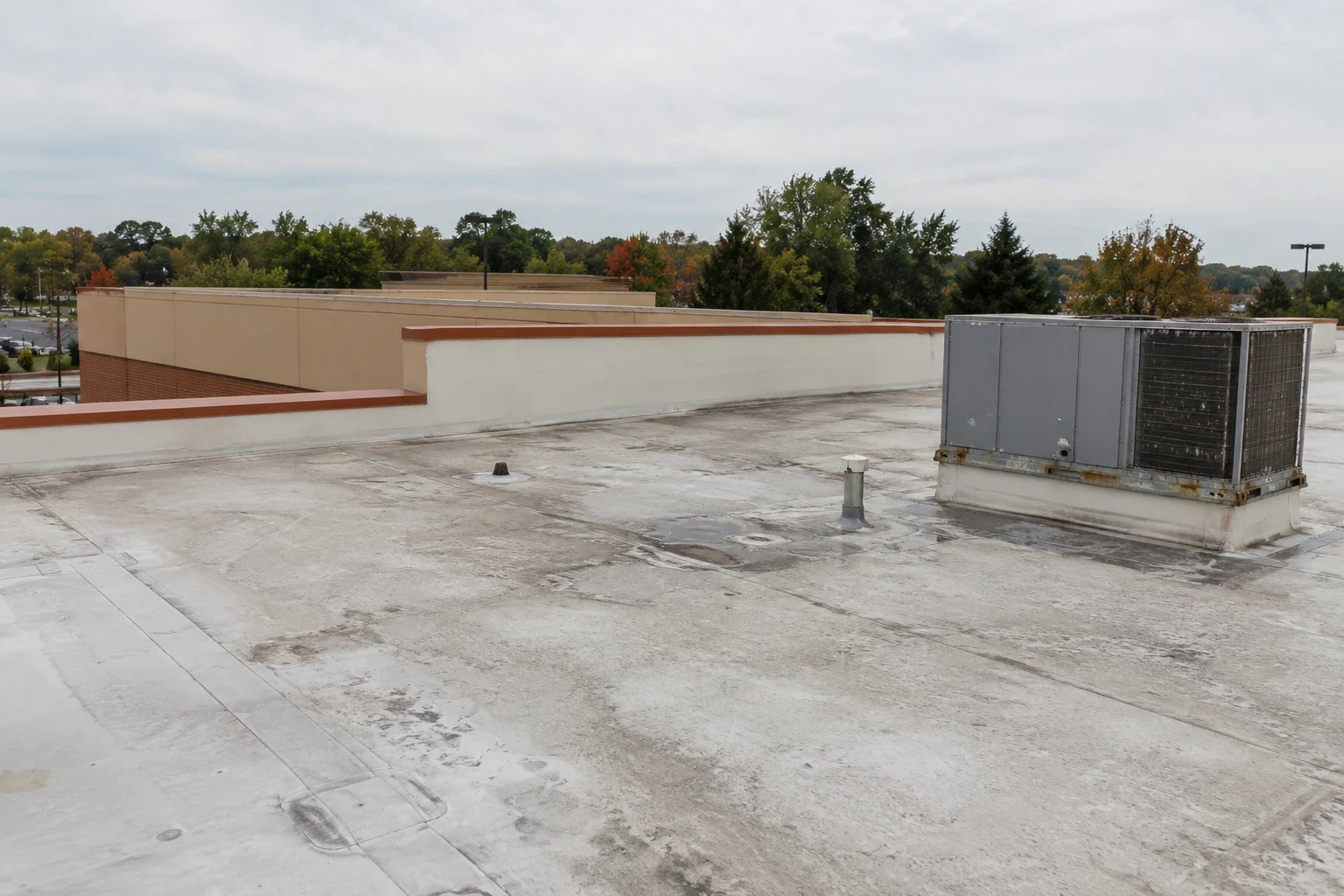
We compare the reported interior condition with roof slopes, seams, curbs, drains, parapets, and transitions. The inspection records the system where identifiable, accessible area, visible damage, and any route that remains unconfirmed. Photos are labeled to the roof map or building reference. If the assembly is concealed, the report names the test needed to determine what lies below and who must approve the opening.
Indianapolis averages about 25.5 inches of snowfall, with recurring winter freeze-thaw conditions. After melt, we inspect reachable drains, overflow paths, and edges, then record any snow or ice that prevents access and needs a return visit. A condition inspection helps the agency separate maintenance from a confirmed roof failure.
After a storm report, we inspect observable edge metal, panel joints, membrane seams, penetrations, and rooftop equipment. The agency receives the inspection date, site-specific photographs, and any condition that requires further testing before a repair scope is set. A storm-related roof assessment can separate immediate stabilization from routine conditions.
Industries We Serve
When does the record support capital work?
A local repair can fit when a seam, curb, or flashing failure is isolated and the surrounding assembly can accept a durable tie-in. We identify preparation, materials, quantity, access, and protection below. If removal exposes damp insulation, corrosion, or deck deterioration, we secure the opening and request authorization before increasing the scope. The estimate shows what is included and what remains contingent.
Recurring leaks, broad moisture, loose attachment, or widespread edge failure may justify a recover or replacement comparison. We consider a recover only when retained layers are dry, firmly attached, compatible, and clear of drainage and curb-height conflicts. Replacement can add removal, insulation, deck work, new flashing, and phased dry-in. A renewal estimate should state each building, approval assumption, and public-access restriction separately.
Public agencies often need maintenance records that persist across budget cycles. A capital review can organize immediate repairs, testing, and longer-range projects by building while preserving field evidence. If an incident involves an insurance claim, an insurance-restoration record can keep photos, date, and repair scope together with the agency's claim process.
What will the agency receive at closeout?
Closeout identifies the building, roof zone, work performed, material, photographs, test results, access limits, temporary protection, and remaining items. It states who approved any scope change and which trade owns a pending interface. The agency can attach the record to the project file, asset register, and maintenance schedule. A later team can see what was inspected and which condition remained unresolved. We tie site entry, test records, open units, roof references, and quantities to each facility's procurement file. When several buildings share one project, separate records keep the bid comparisons clear without blending their conditions.
For work near Fishers District, the facility contact identifies the building entrance, staging area, delivery schedule, and approved roof-access route. We coordinate arrival and entry with the project manager before mobilization.
Send the solicitation or work order, roof plan, leak report, approval contacts, facility hours, access restrictions, and required closeout format. We will inspect the authorized area, provide a documented scope, and identify each decision that requires agency approval.
Talk to Our Roofing Team
Call 555-555-5555 or request a roof assessment. Tell us the address, the roof type if you know it and where water or damage is showing. We work across Fishers, Carmel, Noblesville, Westfield, Zionsville and the surrounding communities.
Frequently Asked Questions
Can an inspection be scheduled before a bid is issued?
Yes, when the agency authorizes access and states whether testing or photographs are permitted. The record can describe conditions and limits without committing the agency to construction.
Who approves added work found after roof removal?
The official named in the work order or contract authorizes a scope change. We secure the opening and provide measurements and photos before proceeding beyond the approved amount.
Can public entrances stay open during roof work?
The facility sets which doors and paths must remain available. We plan staging and barriers around those routes and identify any short restriction before work starts.
What does an emergency roof visit cover?
It identifies active exposure, safe temporary protection, access limits, and the permanent work still requiring review. The report separates stabilization from any future replacement decision.
How should an agency compare multiple roof proposals?
Use the same building sections, quantities, system assumptions, exclusions, and access conditions. We can clarify those items in writing so review focuses on equivalent scope.
Fishers, IN
Request a public-facility roof assessment
Provide the work order, roof plan, access rules, public hours, approval contacts, and required proposal or closeout format. We will document the authorized scope and open decisions.