Property Types We Roof
Apartment Roofing
A roof leak in one apartment can move through a wall or ceiling before it reaches the reported room. We start with the resident's location and timing, then inspect the roof section above and trace nearby details. Fishers, IN, has winter snowfall and freeze-thaw conditions that put drains, edges, and penetrations through repeated seasonal exposure. The property manager needs a clear repair boundary and a notice plan that residents can follow. Fishers District's planned expansion includes apartments and townhomes alongside commercial uses. For an apartment project in the district, we inspect the existing building, verify its assembly, and record access limits before setting the repair or capital scope.
Which roof zone sits above the report?
A ceiling mark may be offset from the opening that admits water. We compare the unit or common-area location with roof seams, drains, parapets, penetrations, and prior repairs. The inspection records the visible condition and any test needed to confirm concealed moisture. Staff can note when the leak began, whether it followed rain or thaw, and whether plumbing or HVAC service occurred nearby. A leak investigation distinguishes temporary dry-in from permanent work. If the source remains uncertain, the report keeps that question open instead of assigning a roof repair without supporting evidence.
Resident reports work best when management records a consistent set of details. We ask for the unit or common area, date, weather, changes in the stain, and any recent work above or nearby. That information does not replace a roof inspection, but it helps narrow the section and distinguish rain entry from a plumbing event. If the apparent path crosses several units, the report preserves each location rather than merge them into one assumed opening. The roofing scope then ties photographs, tests, and repairs to the roof areas that support those observations.
How should residents receive work notices?
Management identifies occupied units, balconies, entrances, parking, and common areas that could be affected by staging or noise. We set a daily roof boundary and confirm when the section will be secure. The notice can give residents the expected access window, who handles questions, and how to report new water. A phased reroof plan can move across buildings or elevations with a distinct closeout for each work area. The contractor schedule should account for deliveries and fire access, while management handles resident-specific arrangements. If weather changes, the field record names the open or protected roof zone.
The building schedule should account for balconies, loading, parking, landscaping, and access to roof hatches. We confirm the lift and delivery route, identify where a barrier is needed, and agree on how each section will be secured before the crew leaves. If work exposes additional moisture, we stop at the approved quantity, protect the opening, and send photographs for review. Management can then choose whether to extend the work or keep the original boundary. That process gives residents and ownership an update grounded in what was found rather than a new assumption about the full roof.
Property Types We Roof
What should the team inspect after thaw?
Snow, thaw, and recurring precipitation create a seasonal inspection cycle in central Indiana. Meltwater can reveal a restricted drain or low area, while refreezing can delay safe roof access. We check strainers, overflows, scuppers, flashing, and nearby seams when conditions are safe. An inaccessible area remains open until a return visit. A drainage review records what was clear, where water remained, and whether a later slope evaluation is needed. The work order can prioritize a temporary repair now and a fuller review after ice clears.
Drainage details should be checked as a connected path, from the roof field to the outlet and overflow. We note low areas, loose strainers, ponding marks, and any obstruction that could hold meltwater near a seam. If a drain is clear but water remains, the inspection may need to compare slope, insulation movement, and deck condition. The repair scope can then distinguish routine cleaning from a correction to the roof assembly.
Property Types We Roof
What happens after rooftop service?
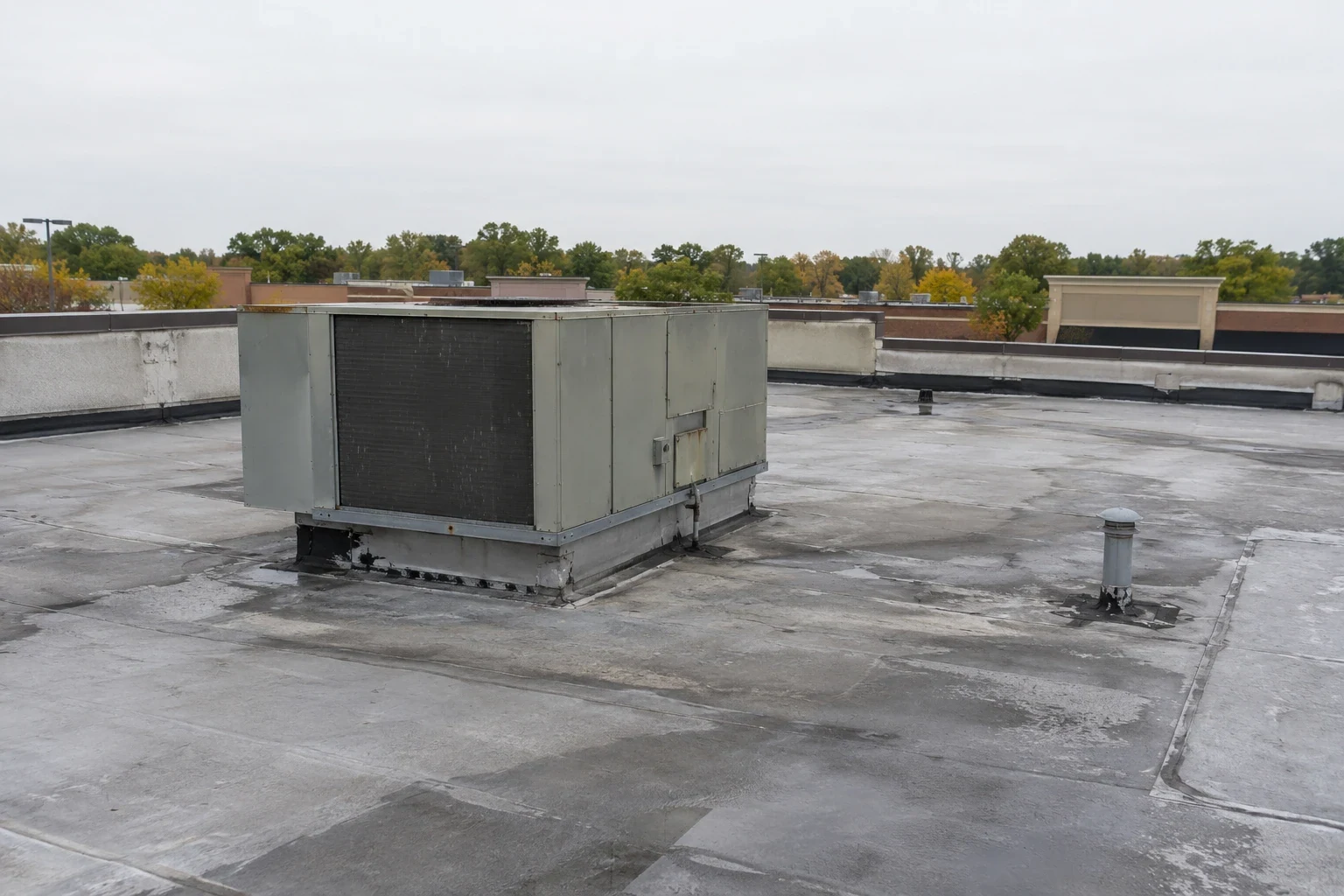
Apartment roofs may include HVAC units, exhaust, plumbing vents, and service pathways. We inspect the curb and flashing around a unit and compare the detail with any recent vendor work. If replacement is planned, the mechanical team confirms access and shutdown while roofing defines curb height, membrane tie-in, and inspection. A roof equipment interface review makes those responsibilities visible before the opening is made. Photographs record who restored the roof and where follow-up is due. A new tenant or equipment vendor should receive access rules and the known membrane detail.
A senior-living roof assessment has related occupied-building needs, while apartment projects often coordinate a larger number of resident notices and shared entry routes. In both cases, the roof plan should identify buildings, elevations, drains, equipment, and any areas not inspected. The manager can match those labels to work orders and future budgets. We do not infer one building's condition from another, even when they share a property name or age. A repair boundary remains specific to the location where the evidence was recorded.

How should a manager compare repair and renewal?
A local seam or curb failure may support a defined repair; repeated leaks, widespread moisture, or failing attachment may justify broader work. We inspect each roof section, record repairs, and compare recover with replacement when retained layers are suitable. A recover review checks moisture, attachment, drainage, and perimeter height before another layer is proposed. System selection matches confirmed roof layers to the building and project requirements. A hotel roof scope also coordinates occupied rooms, while multifamily work adds resident notices and unit access. Before finalizing an apartment roof assembly, confirm the current Indiana code edition and applicable local amendments for the project.
After a major vendor visit, management should keep the service ticket and any roof restoration record together. We inspect around the curb, penetration, or conduit that was disturbed, then photograph the repaired detail. If the vendor could not finish flashing because of weather, the roof section remains open until the tie-in is completed. A later maintenance visit can compare the same area and identify movement or new water. That sequence keeps small service changes from becoming an undocumented part of the assembly and gives the next contractor a clear starting point.
Talk to Our Roofing Team
Call 555-555-5555 or request a roof assessment. Tell us the address, the roof type if you know it and where water or damage is showing. We work across Fishers, Carmel, Noblesville, Westfield, Zionsville and the surrounding communities.
Property Types We Roof
Which local access factors should be documented?
Fishers' commercial core follows I-69 and State Road 37, while the Nickel Plate District is a mixed-use downtown center. For an apartment project near the Nickel Plate District, we confirm the truck route, roof access, staging, and resident circulation with the property contact. Closeout includes repairs, photographs, remaining limitations, and the next inspection. Share the roof plan, resident reports, access window, prior repairs, and budget timing for a sequenced review.
Frequently Asked Questions
Can residents stay during roof replacement?
Often, when the work zones, access, daily closure, and resident notice are planned. Management identifies routes and unit restrictions before the sequence begins.
Should each building receive its own inspection?
Yes. Roofs may differ by assembly, drainage, and repair history even within one property. The report keeps findings tied to the specific building and section.
What details help trace water from a Fishers apartment roof?
Give management the room, time, weather, and any recent plumbing or equipment service. We compare that report with roof details and identify the test needed if the path is concealed.
Can repair hold until the next budget year?
We identify active water and immediate exposure first. The report separates urgent protection from work that can be priced and sequenced for a later budget window.
How do you keep a roof warranty record useful?
The closeout lists materials, repair details, access limits, and later vendor work. The owner can keep that record with the maintenance calendar and request a follow-up check after new equipment service.
Fishers, IN
Set the apartment roof work boundary
Send the building, leak location, resident access limits, roof plan, and budget window. We will document the condition and next action.