Property Types We Roof
Restaurant Roofing
A roof opening above a kitchen can interrupt service before the owner sees water at the ceiling. We identify the affected roof section, inspect the exhaust and equipment details, and define the repair limit. Indianapolis normals show recurring precipitation and winter snowfall, with freeze-thaw cycles that can keep water at a drain or curb on Fishers roofs. We document the roof-side evidence before selecting a repair or wider scope. Downtown Fishers' Nickel Plate District brings dining, homes, shops, and workplaces into one mixed-use center. We confirm the restaurant's roof assembly and coordinate deliveries and access with the operator.
What surrounds the kitchen exhaust?
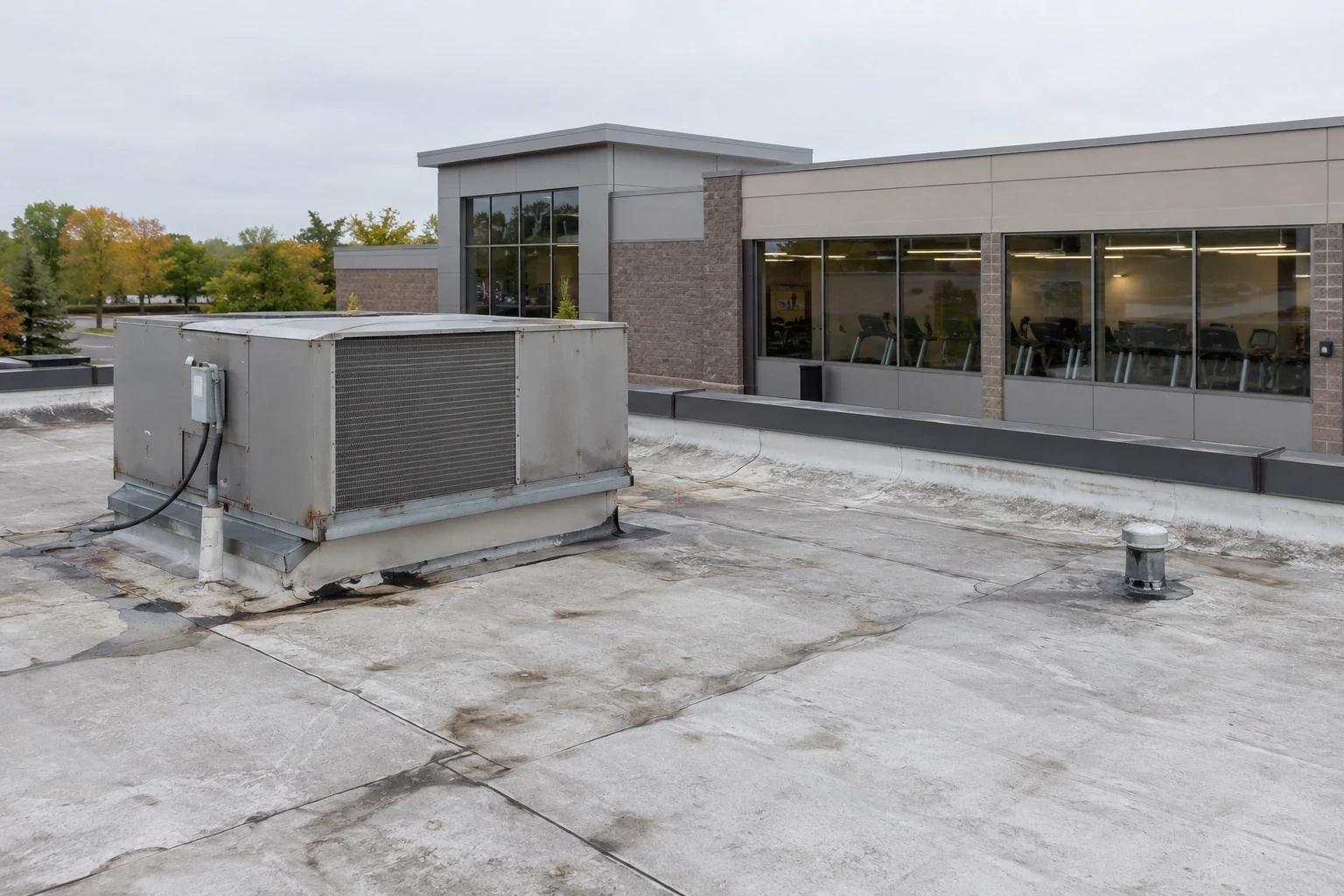
A fan curb, grease discharge, duct, and nearby membrane form one working detail. We inspect flashing, surface condition, fasteners, seams, and the route used by service technicians. If exhaust residue is visible, we record its location and assess the material below it rather than assume the whole roof is affected. A new fan or hood creates another opening that needs a clear handoff between mechanical and roofing trades. A curb and support review can define the flashing boundary and any follow-up inspection. We note where another vendor controls equipment shutdown or cleaning.
The roof report should distinguish surfaces affected by exhaust from areas that show unrelated wear. We record the discharge location, visible residue, condition of the membrane, and nearby flashing. If a cleaning vendor will work near a seam, the manager should identify how the roof is protected and who checks the detail afterward. The general contractor can use the marked area to coordinate mechanical service without expanding the roofing scope unnecessarily. A later inspection compares the same roof zone and notes whether the change continued, remained stable, or needs another test.
How do you trace a dining-room leak?
Water can travel across insulation before it reaches the ceiling. We compare the reported room, date, weather, and service history with drains, wall transitions, seams, and equipment curbs above. If the source is not visible, the report states what test could confirm the route and how an opening will be restored. A leak investigation separates temporary dry-in from permanent work. Staff can help by noting whether the leak followed rain, thaw, or a recent equipment visit. We use those clues to inspect the correct roof zones rather than place a patch at the ceiling location alone.
A restaurant in a shared center may have different access than a freestanding site. We confirm whether a lift can use a shared drive, whether another tenant's loading space is involved, and how customer entry remains clear. The operator or property manager identifies notices and traffic routes before material delivery. If the roof cannot be reached during service hours, the sequence can compare early access, a closed day, or a phased repair. The work plan states the opening limit and daily secure condition, so a rain delay does not leave an unclear responsibility between roofing and operations.
Property Types We Roof
When can crews work without disrupting service?
The operator identifies meal periods, deliveries, receiving, waste pickup, and any time when noise or lift activity must be limited. We coordinate staging and material movement, then select a section that can be closed by the end of the access window. A phased roof work plan defines daily dry-in and rain procedures. If weather changes, the crew secures the open boundary before leaving. The schedule should also identify who can approve a change and how staff will receive notice. These details allow the owner to compare after-hours work with a phased daytime sequence.
Many kitchen problems emerge after service work, so the owner should keep the mechanical ticket with roof photographs. We check the curb, corner flashing, membrane seam, and any conduit that crossed the work area. A grocery roof assessment considers refrigeration and receiving interfaces; restaurants often have concentrated exhaust and service access instead. A hotel roof review also requires coordination around occupied operations, though the restaurant's meal periods and deliveries shape this sequence. The scope remains attached to observed conditions at this building.
Property Types We Roof
What should winter checks include?
Normal winter snowfall is concentrated in January, February, and December, with monthly totals of 8.8, 6.0, and 6.4 inches. Thaw can move water toward a restricted drain before a later freeze limits access. We inspect strainers, overflows, scuppers, and nearby seams when the roof is safe to reach. A drain review records whether debris, slope, or a failed detail needs attention. If ice blocks an area, we leave it unverified until a return visit. The record should show conditions at the time of inspection, not project a single observation into a full-season diagnosis.
What does the proposal need to show?
A local flashing or seam failure may fit a focused repair. Repeated water, wet insulation, or deck damage can shift the work to a larger section or replacement. We compare options using the same field evidence and list access, staging, tear-off, insulation, flashing, drains, and interior protection. A grocery roof review addresses other food-service equipment demands, while restaurant scopes need careful coordination with kitchen exhaust and operating hours. A TPO system is considered only if compatible with the verified assembly and project requirements. Before design or permit review, confirm the current Indiana roof requirements and amendments with the local authority having jurisdiction.
Talk to Our Roofing Team
Call 555-555-5555 or request a roof assessment. Tell us the address, the roof type if you know it and where water or damage is showing. We work across Fishers, Carmel, Noblesville, Westfield, Zionsville and the surrounding communities.
Property Types We Roof
How do nearby routes affect access?
Allisonville Road has a commercial center between 106th and 126th Streets, and Fishers District includes an event-center campus with dining and retail. For a Nickel Plate District restaurant, the property contact confirms the truck route, staging area, and roof entry. Closeout identifies the equipment details checked, repairs completed, photos, and remaining conditions. Send the roof plan, recent mechanical work, service schedule, and access limits for a defined scope.
A completed repair should have an identified follow-up condition. We note whether the detail should be checked after rainfall, after another equipment visit, or at a seasonal inspection. If the owner plans a larger project, we preserve the temporary work and permanent work as separate entries. That distinction is important when comparing repair history with replacement timing. The closeout can include photographs, materials, access notes, and the person who accepted the roof area. Facilities and restaurant staff then have a shared record to use when a later water report arrives.
We identify the next inspection date and the event that should trigger an earlier return.
Before setting a repair window, we confirm whether the work affects a kitchen exhaust fan, make-up-air unit, or duct support. The operator identifies which equipment must remain available, and the mechanical contact confirms any shutdown or reset. We keep roof flashing, equipment service, and interior cleaning in their assigned scopes. If an opening cannot be closed before service resumes, the plan identifies the temporary protection, the person accepting it, and the next scheduled access.
Frequently Asked Questions
How can Fishers restaurant roof work fit prep and service hours?
Some tasks fit an early window, but access, preparation, and weather protection set the sequence. We identify the work area and daily dry-in before confirming the schedule.
What happens after a kitchen fan is replaced?
We inspect the curb, flashing, and membrane tie-in after the mechanical work. The record should identify who restored the roof and whether a follow-up check is needed.
Does an exhaust stain prove roof damage?
No. We inspect the visible surface and nearby flashing, then define cleaning or repair from the roof material and observed condition.
How do you handle an active leak during service?
We first protect the interior and establish a safe roof-side response. Emergency stabilization is recorded separately from the permanent repair boundary.
What should the owner keep after repair?
Keep the roof location, repair photographs, equipment work order, access notes, and follow-up results together. That field record helps assess later reports.
Fishers, IN
Define the restaurant roof boundary
Send the roof section, leak dates, equipment work order, operating hours, and access window. We will document the condition and next step.